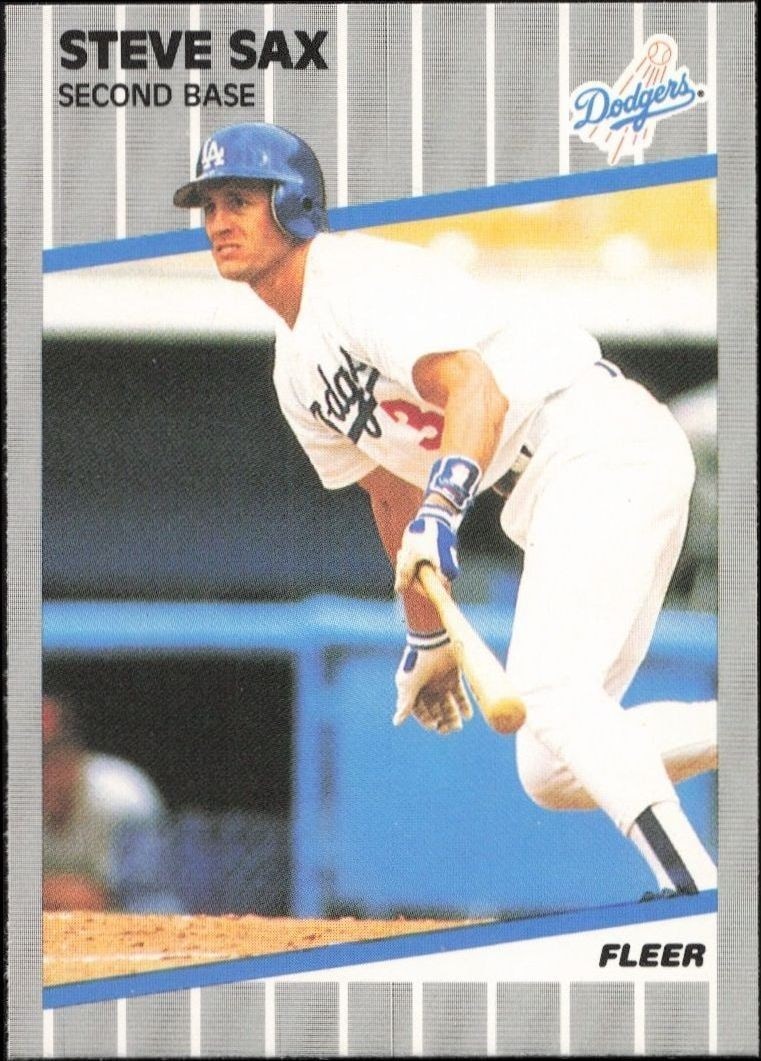






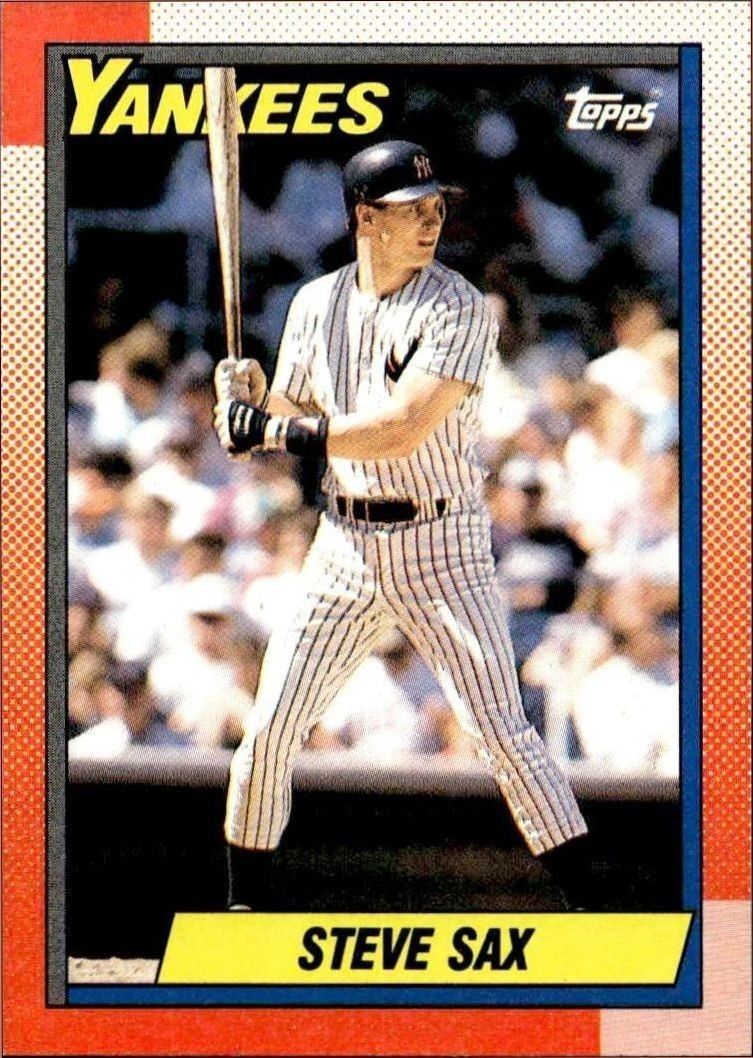
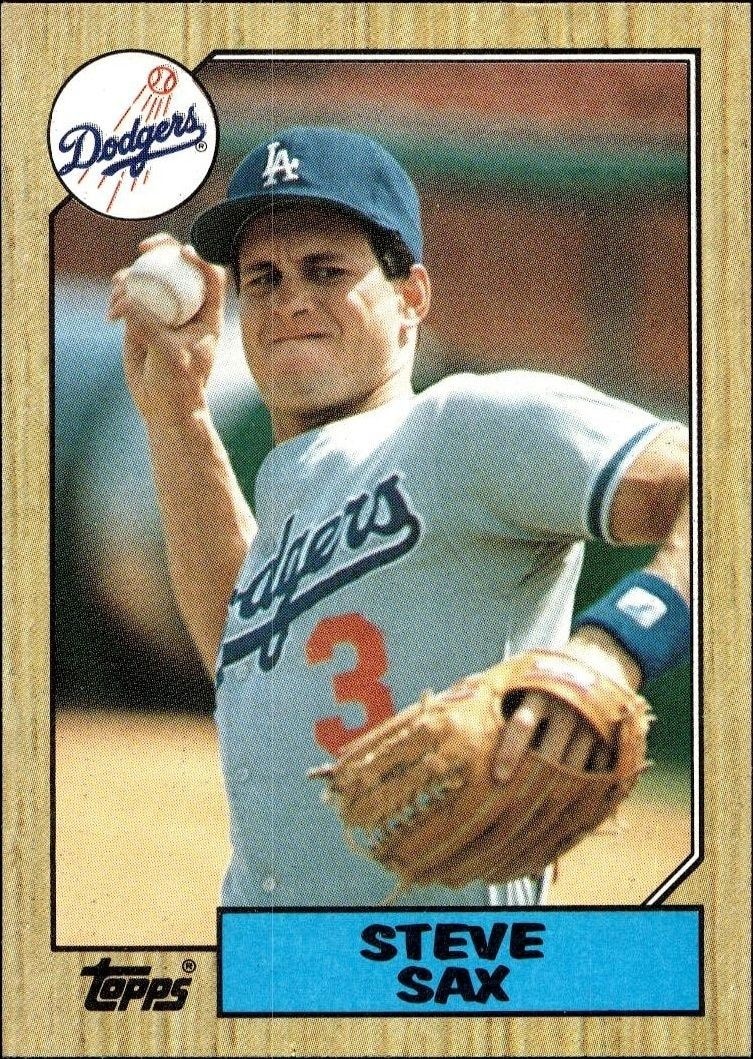
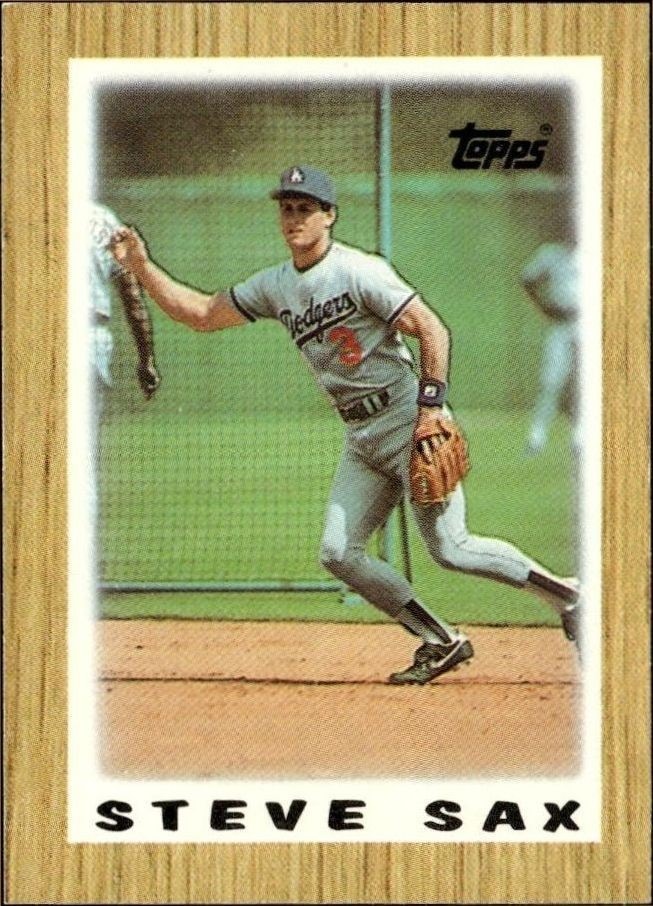
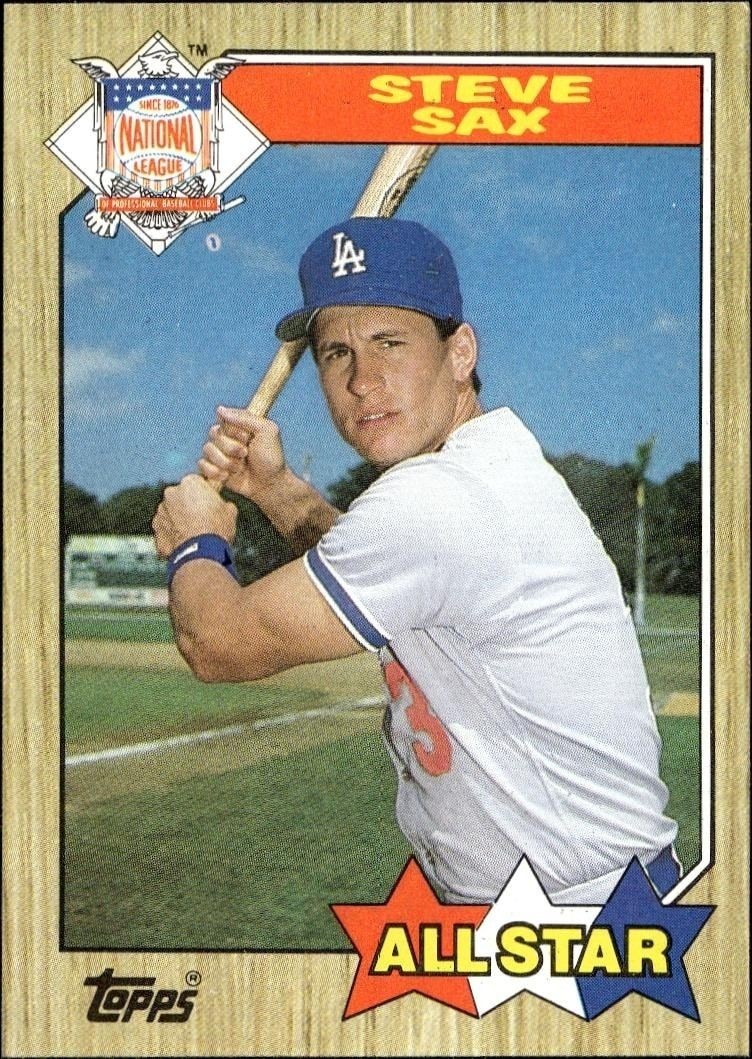
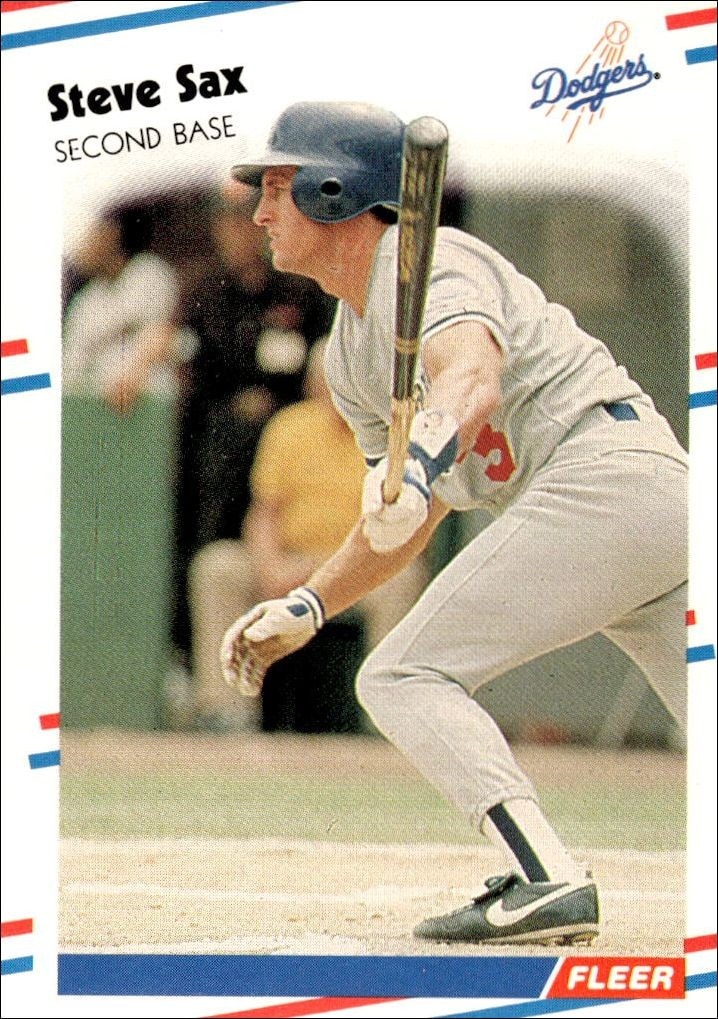
Steve Sax #40 from the 1989 Topps baseball trading card set, featuring the Los Angeles Dodgers infielder.
1989 • Topps
Major League Baseball • Los Angeles Dodgers
Excellent
40
New
Shipping Calculated at Checkout
30-day Returns| Condition | Value | Source | Trend | Price Details |
|---|---|---|---|---|
$1.08As of 10/1/2026 | Guide Estimate | |||
$8.67As of 10/1/2026 | Guide Estimate | |||
$18.33As of 10/1/2026 | Guide Estimate | |||
$30.00As of 10/1/2026 | Guide Estimate | |||
$40.00As of 10/1/2026 | Guide Estimate | |||
$19.00As of 10/1/2026 | Guide Estimate | |||
$31.00As of 10/1/2026 | Guide Estimate | |||
$19.00As of 10/1/2026 | Guide Estimate | |||
Raw / Ungraded
PriceCharting Price Guide · Guide Estimate evidence · captured Oct 1, 2026
History is building. At least two days of matching observations are needed to show a trend.
Each point is the last stored observation that day for this printing, condition, grader, autograph status and source. Gaps mean no observation; guide estimates and asking prices are not completed sales.Steve Sax appears as card number 40 in the 1989 Topps baseball trading card set. This release captures Sax during his tenure with the Los Angeles Dodgers, representing a notable period in the team's history. The 1989 Topps set remains one of the most recognizable bases sets from the late 1980s, widely sought after by collectors for its distinct design and historical context. As a standard base card, number 40 holds a fixed position within the set's checklist, making it a straightforward addition for those tracking the full series. This 1989 Topps card features Steve Sax of the Los Angeles Dodgers. The 1989 Topps release continues to be a staple in vintage sports card collections, offering a tangible link to the league's past. Whether building a team-specific collection or assembling a complete run of the 1989 Topps series, this card provides a clear representation of the product's identity. The straightforward numbering and standard inclusion make it a predictable yet valuable component for enthusiasts of the sport.
1 day ago
We'll pre-fill the product details from this catalog entry, so your listing lands on this exact page. Just add photos of your copy, pick its condition, and set your price.
The catalog profile below summarizes the card identity, featured subject, and notable collectible traits.
The subject, team, league, and sport context tied to this card.
Production details and format-specific attributes.
Material
Card Stock
Language
English
Compare prices, grades, photos, and shipping from approved sellers.
New
Excellent
See how many public collections currently include this card.
0 collectors have this card
This 1989 Topps base card of Steve Sax represents an entry-level tier within the broader Dodgers and MLB market, reflecting its status as a common base set item rather than a premium insert. While the subject is a recognized figure from the 1980s, the lack of special attributes or grading distinctions suggests it trades at the lower end of the market value spectrum. Its current positioning indicates strong availability relative to demand, keeping its valuation modest compared to graded or short-print counterparts.
As a standard base card from the 1989 Topps set, this item carries no serial numbering, short-print designations, or parallel variations that would artificially constrain supply. The scarcity mechanics are entirely driven by the inherent mass production of the base set, meaning supply is effectively uncapped compared to limited edition releases. Consequently, the card relies solely on condition rarity for any differentiation in scarcity within the collector market.
The investment profile is influenced by the card's position as a rookie-adjacent or early-career piece from a major brand, though it lacks the specific rookie designation premium often seen in later or higher-grade issues. Collector demand is likely driven by nostalgia for the Dodgers' era rather than speculative growth, resulting in stable but low-volume trading activity. Without special attributes to drive scarcity, long-term appreciation is generally limited to condition-sensitive segments of the market.