




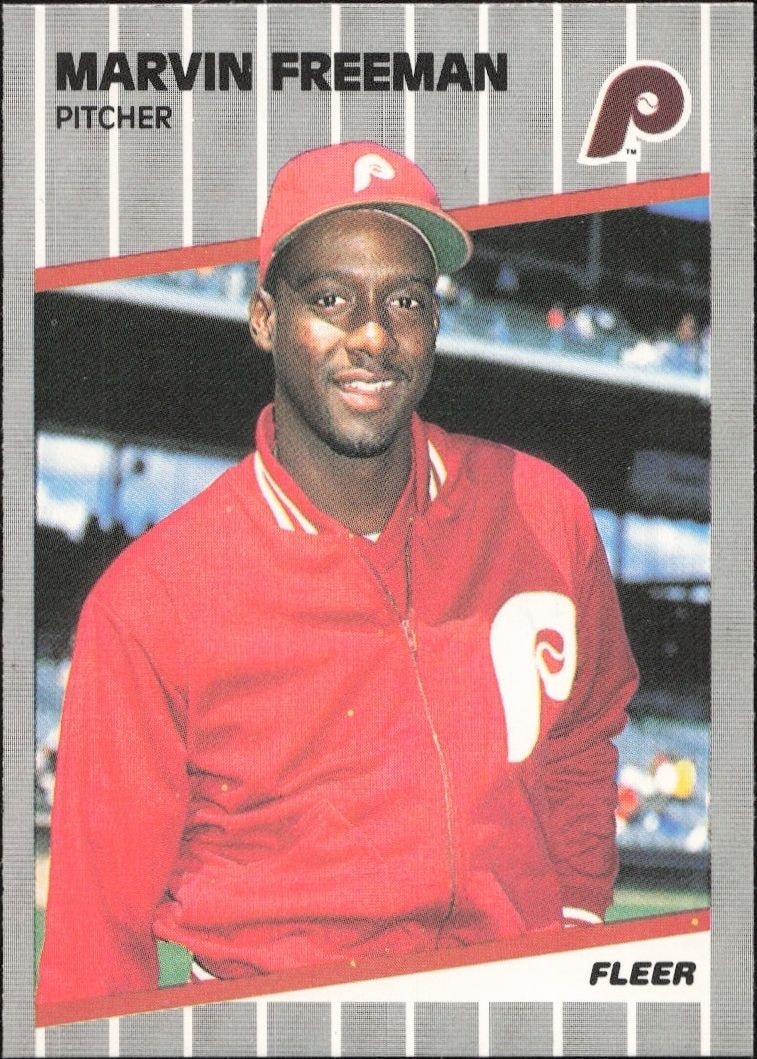
The 1990 Topps Marvin Freeman #103 baseball card is a definitive piece of Philadelphia Phillies history, capturing the pitcher during his early major league years.
1990 • Topps
Major League Baseball • Philadelphia Phillies
Excellent
103
New
Shipping Calculated at Checkout
Arrives in 4-6 daysEstimated delivery October 23, 2026 - October 25, 2026
Seller returns October 19, 2026.30-day Returns| Condition | Value | Source | Trend | Price Details |
|---|---|---|---|---|
$1.24 | Guide Estimate | -0.8% | ||
$11.59 | Guide Estimate | 0% | ||
$39.99 | Guide Estimate | 0% | ||
$44.00 | Guide Estimate | 0% | ||
Raw / Ungraded
PriceCharting Price Guide · Guide Estimate evidence · captured Oct 15, 2026
The 1990 Topps Marvin Freeman #103 baseball card represents a specific moment in Philadelphia Phillies history, featuring the pitcher during his early major league tenure. Released by Topps in 1990, this standard issue card is cataloged as number 103 within the brand's comprehensive annual set. For collectors of vintage sports memorabilia, this card serves as a tangible link to the era when Freeman was establishing himself as a reliable arm for the Phillies. Marvin Freeman, known for his distinctive sidearm delivery, made his major league debut in 1988. By 1990, he was a fixture in the Phillies' rotation. This card captures that period of his career, offering collectors a piece of the team's history without the premium associated with rookie cards or rare parallels. Collectors often seek out specific players from this era to complete their personal archives or to build focused collections around Philadelphia Phillies history. The 1990 Topps Marvin Freeman #103 card is a key component for those interested in the team's lineup during the early 1990s. Its accessibility makes it an excellent addition for hobbyists who appreciate the nostalgia of 90s baseball design. Whether you are a dedicated fan of Marvin Freeman or a broader collector of vintage baseball cards, this release offers a straightforward and authentic piece of sports history. The card's catalog number ensures easy identification for those organizing their collections by set and year. It remains a popular choice for those looking to add depth to their 1990s baseball holdings, providing a clear representation of the player and the team during a significant period in Major League Baseball.
1 day ago
We'll pre-fill the product details from this catalog entry, so your listing lands on this exact page. Just add photos of your copy, pick its condition, and set your price.
The catalog profile below summarizes the card identity, featured subject, and notable collectible traits.
The subject, team, league, and sport context tied to this card.
Production details and format-specific attributes.
Material
Card Stock
Language
English
Compare prices, grades, photos, and shipping from approved sellers.
New
Excellent
See how many public collections currently include this card.
0 collectors have this card
This 1990 Topps Marvin Freeman card represents a baseline entry-level asset within the broader Philadelphia Phillies roster, trading at a modest valuation consistent with non-star position players from this era. The current pricing reflects its status as a common base card, lacking the premium drivers associated with rookie parallels or high-grade examples of Hall of Famers. While accessible for budget-focused collectors, it does not command the significant price tiers seen in marquee player cards from the same set.
The card possesses no special scarcity attributes, identifying it as a standard base issue within the 1990 Topps baseball set. As a common parallel, its supply is determined by the original print run rather than serial numbering or short-print mechanics, making it widely available to the general collector market. This lack of unique identifiers means the card relies entirely on condition and player demand for any deviation from its intrinsic base value.
As a non-rookie base card, this item lacks the rookie-card premium mechanics that typically drive long-term appreciation for player cards. Demand is primarily sustained by collectors seeking specific team completions or affordable inserts, rather than speculative growth based on career trajectory. The outlook suggests stable, low-volatility holding characteristics suitable for filling gaps in a set rather than generating significant capital gains.