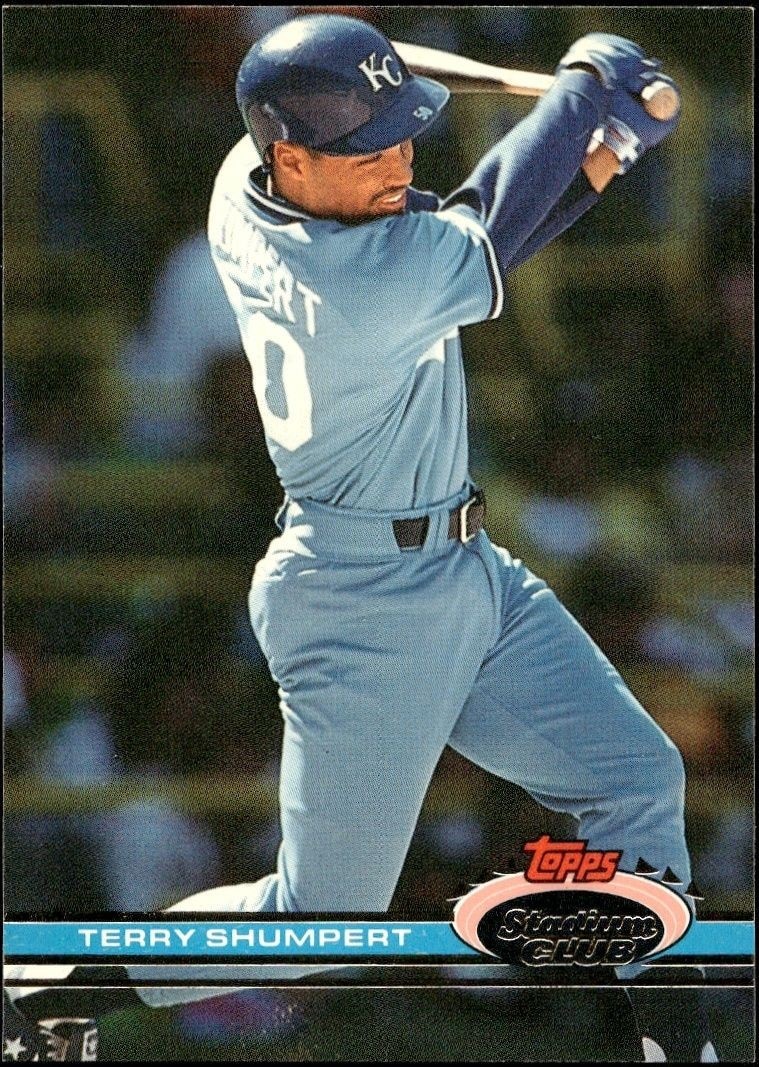



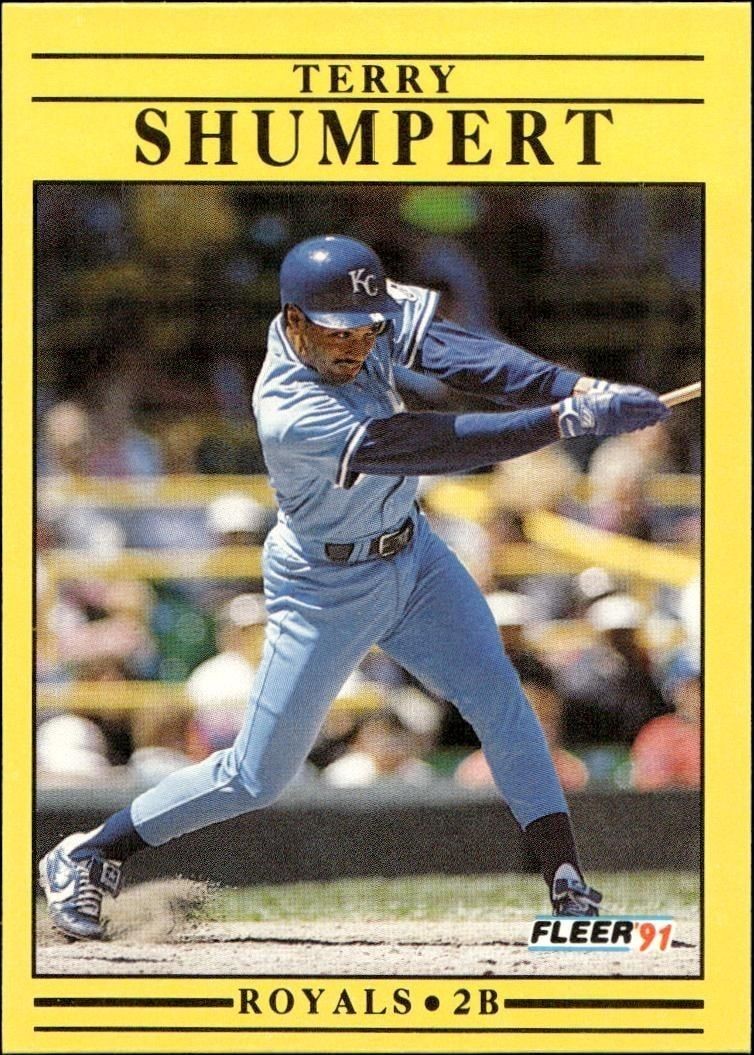
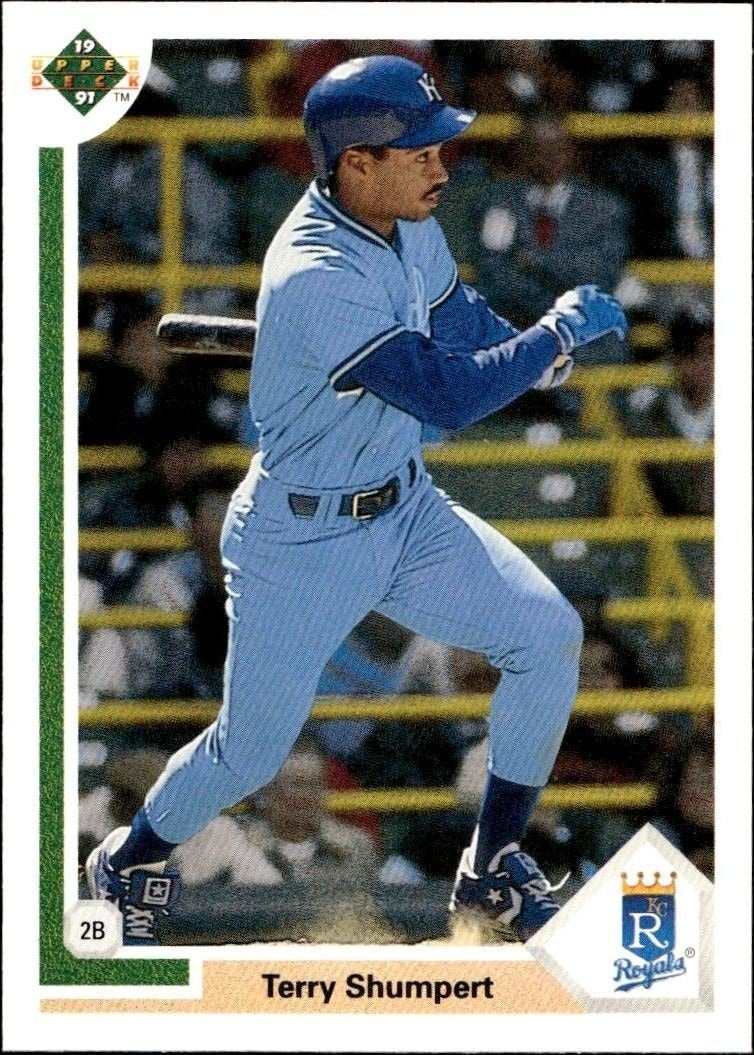
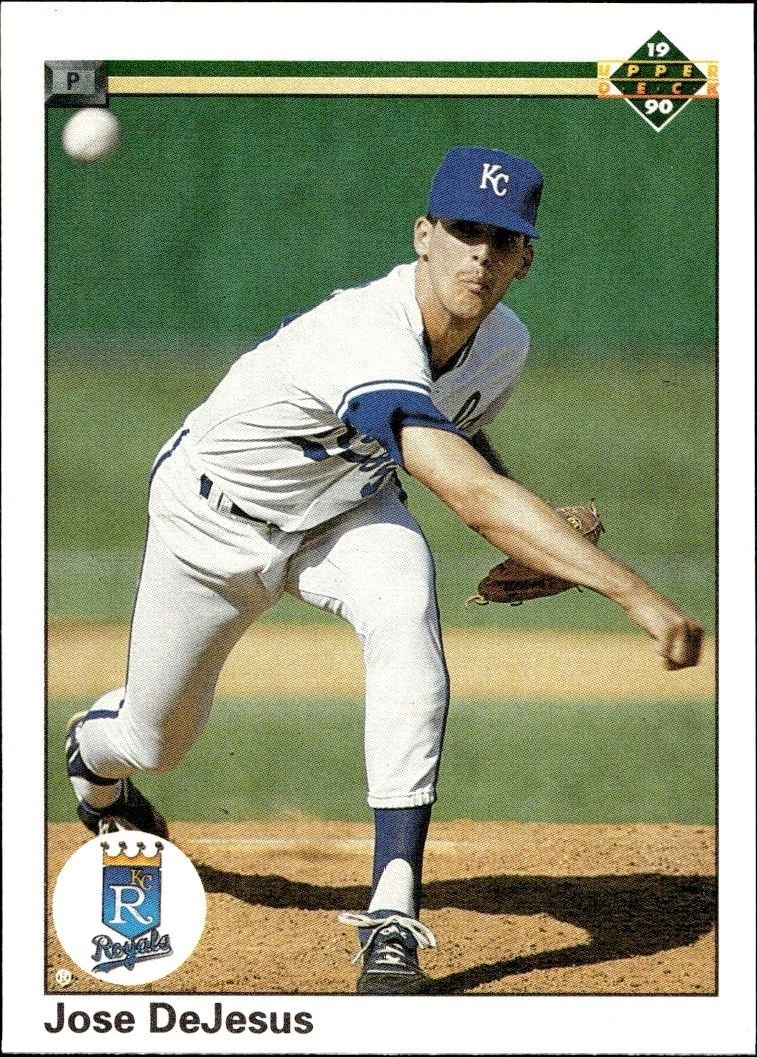
The 1990 Upper Deck High Number baseball card of Terry Shumpert, cataloged as #733, features the Kansas City Royals player.
1990 • Upper Deck • High Number
Major League Baseball • Kansas City Royals
Near Mint
733
New
Shipping Calculated at Checkout
30-day Returns| Condition | Value | Source | Trend | Price Details |
|---|---|---|---|---|
$1.55 | Guide Estimate | |||
Raw / Ungraded
PriceCharting Price Guide · Guide Estimate evidence · captured Oct 26, 2026
History is building. At least two days of matching observations are needed to show a trend.
Each point is the last stored observation that day for this printing, condition, grader, autograph status and source. Gaps mean no observation; guide estimates and asking prices are not completed sales.This 1990 Upper Deck High Number card, number 733, features Terry Shumpert of the Kansas City Royals. As part of the MLB baseball trading card market, this release identifies Shumpert during his tenure with the Royals. The card is a standard sports card from the Upper Deck brand's 1990 lineup. ## What is the card number for Terry Shumpert in 1990 Upper Deck High Number? The card number for Terry Shumpert in the 1990 Upper Deck High Number set is 733. This number helps collectors locate and organize specific cards within the checklist. ## Which team did Terry Shumpert play for on the 1990 Upper Deck card? Terry Shumpert is featured as a member of the Kansas City Royals on this 1990 Upper Deck card. The team affiliation is a key identifier for collectors tracking players by franchise. ## Is the 1990 Upper Deck High Number #733 a rookie card? No, the 1990 Upper Deck High Number #733 is not a rookie card for Terry Shumpert. It is a standard base card issued in his later career years with the Royals.
2 days ago
We'll pre-fill the product details from this catalog entry, so your listing lands on this exact page. Just add photos of your copy, pick its condition, and set your price.
The catalog profile below summarizes the card identity, featured subject, and notable collectible traits.
The core identity of the card within the set.
The subject, team, league, and sport context tied to this card.
Production details and format-specific attributes.
Material
Card Stock
Language
English
Compare prices, grades, photos, and shipping from approved sellers.
New
Near Mint
See how many public collections currently include this card.
0 collectors have this card
FAQ
The card number for Terry Shumpert in the 1990 Upper Deck High Number set is 733. This number helps collectors locate and organize specific cards within the checklist.
Terry Shumpert is featured as a member of the Kansas City Royals on this 1990 Upper Deck card. The team affiliation is a key identifier for collectors tracking players by franchise.
No, the 1990 Upper Deck High Number #733 is not a rookie card for Terry Shumpert. It is a standard base card issued in his later career years with the Royals.
This 1990 Upper Deck High Number card represents an entry-level tier within the player's catalog, reflecting Terry Shumpert's status as a role player rather than a franchise cornerstone. The current pricing suggests it trades in line with general market expectations for non-premium rookie or early-career baseball cards from this era. Its value is largely driven by its position as a standard base card rather than any significant grading or condition premium.
The card lacks any special scarcity attributes such as serial numbering, short printing, or parallel variations, placing it squarely in the base set category. This means its supply is determined by the standard production run for the 1990 Upper Deck High Number series without additional constraints. Collectors seeking uniqueness will find this item represents the common denominator of the set's distribution.
As a standard issue from a pre-2000 set featuring a player with limited long-term Hall of Fame cachet, the card offers minimal appreciation potential. Demand is likely limited to casual collectors completing base sets or those with a specific nostalgic connection to the Kansas City Royals of that period. Investors should view this as a low-risk acquisition for completion purposes rather than a vehicle for capital growth.