

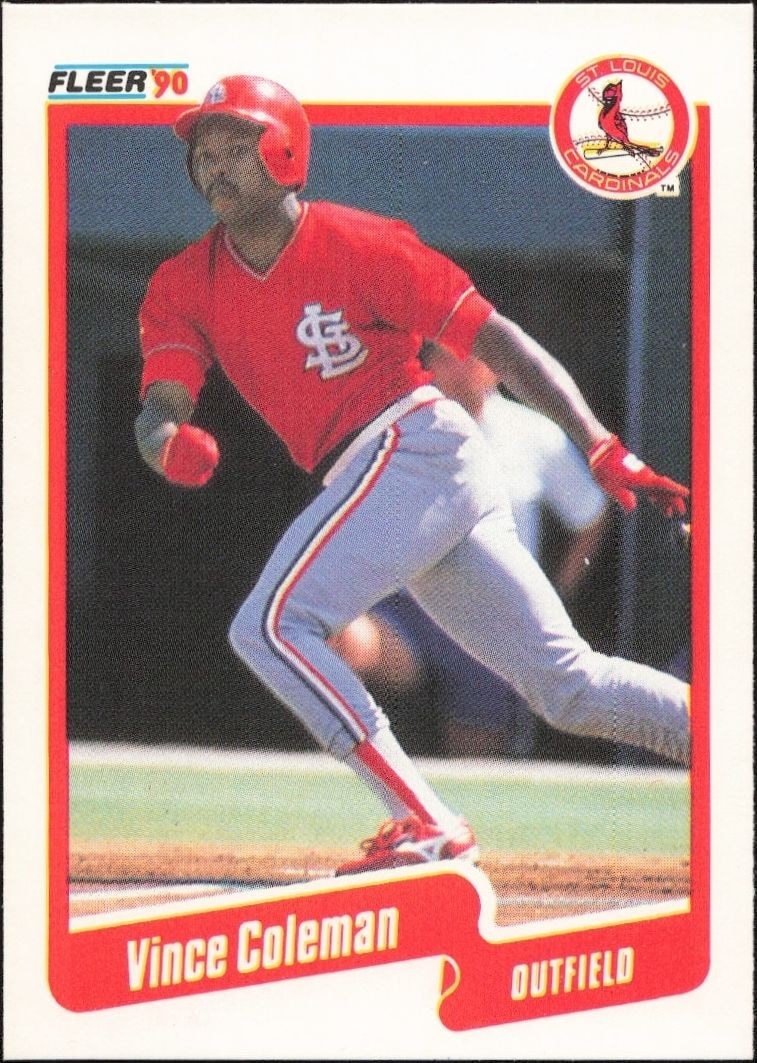
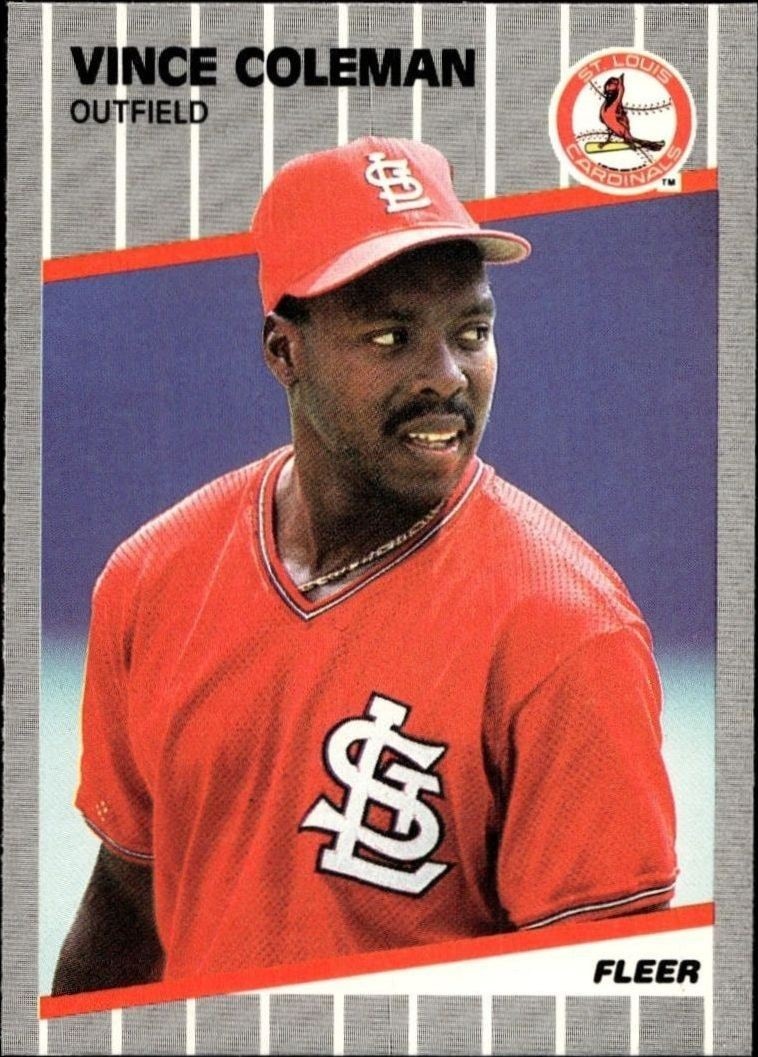
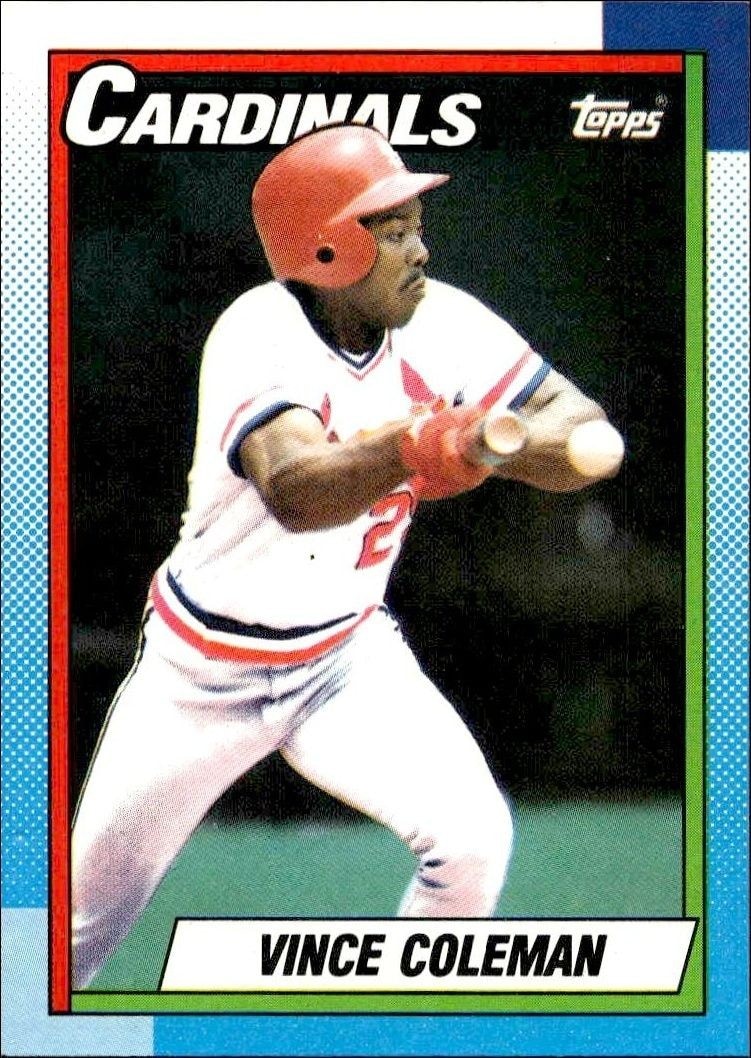



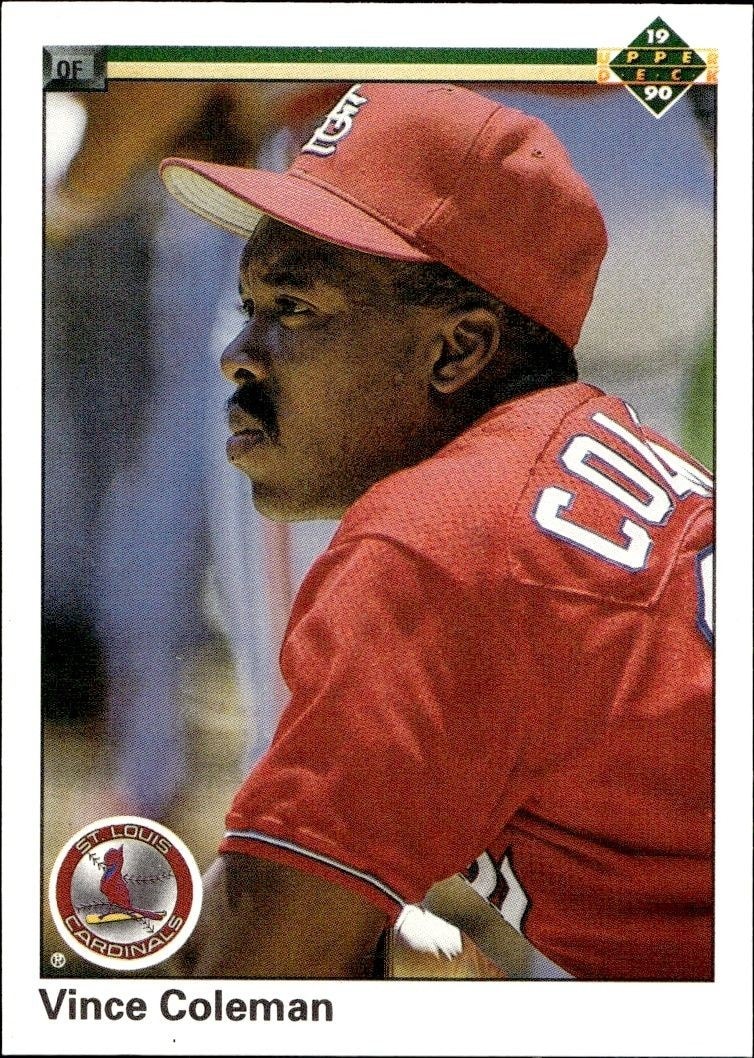
Vince Coleman's 1990 Upper Deck Low Number baseball card, cataloged as #68. This release captures the Cardinals star during a pivotal era of his career.
1990 • Upper Deck • Low Number
Major League Baseball • St. Louis Cardinals
Near Mint
68
New
Shipping Calculated at Checkout
Arrives in 5-7 daysEstimated delivery October 23, 2026 - October 25, 2026
Seller returns October 19, 2026.30-day Returns| Condition | Value | Source | Trend | Price Details |
|---|---|---|---|---|
$1.15 | Guide Estimate | |||
$5.99 | Guide Estimate | |||
Raw / Ungraded
PriceCharting Price Guide · Guide Estimate evidence · captured Oct 16, 2026
History is building. At least two days of matching observations are needed to show a trend.
Each point is the last stored observation that day for this printing, condition, grader, autograph status and source. Gaps mean no observation; guide estimates and asking prices are not completed sales.Vince Coleman, card #68 in this set, represents a significant chapter for St. Louis Cardinals fans and vintage baseball enthusiasts. Known for his electrifying speed and defensive prowess, Coleman was a defining figure in the National League during this period, and this card documents his presence on the roster at a time when he remained a premier talent. As Upper Deck expanded its footprint in the hobby, this subset offered a refined alternative to the standard issues, appealing to those who appreciate the era's design evolution. The card serves as a tangible connection to the early 1990s baseball landscape, capturing Coleman in the Cardinals uniform during his peak years. For investors and completers, this release holds value as a representative artifact of the brand's growing influence on the primary market. The Low Number designation within the 1990 Upper Deck lineup highlights a deliberate approach to cataloging, grouping players into a streamlined collection. Vince Coleman's inclusion here underscores his status among the league's elite performers. Whether you are building a team set, focusing on Cardinals history, or collecting vintage Upper Deck products, this card provides a foundational piece for any serious portfolio. The 1990 release remains a staple for those interested in the intersection of design history and athletic achievement, offering a clear, uncluttered view of one of the game's most dynamic players.
15 hours ago
We'll pre-fill the product details from this catalog entry, so your listing lands on this exact page. Just add photos of your copy, pick its condition, and set your price.
The catalog profile below summarizes the card identity, featured subject, and notable collectible traits.
The core identity of the card within the set.
The subject, team, league, and sport context tied to this card.
Production details and format-specific attributes.
Material
Card Stock
Language
English
Compare prices, grades, photos, and shipping from approved sellers.
New
Near Mint
See how many public collections currently include this card.
0 collectors have this card
This 1990 Upper Deck card sits in a modest price tier, reflecting its status as a standard base issue rather than a premium insert or parallel. While it captures Vince Coleman during his tenure with the St. Louis Cardinals, the lack of special attributes or low-numbering keeps its value accessible to casual collectors. It trades in line with other common vintage base cards from the early 1990s baseball market.
The card does not possess specific scarcity mechanics such as serial numbering, short-print designations, or one-of-one variations. As a standard base release, it represents the highest tier of production volume within the Low Number series, meaning supply is effectively unlimited relative to graded specimens. There are no parallel variants or limited edition markers to constrain its availability.
As a non-rookie card from a mid-tier brand, this item lacks the rookie-card premium mechanics that typically drive significant long-term appreciation. Collector demand is likely driven by nostalgia for the 1990s era rather than specific career milestones or Hall of Fame status, given the absence of unique identifiers. It serves best as an affordable entry point for completing base set collections rather than a standalone investment asset.