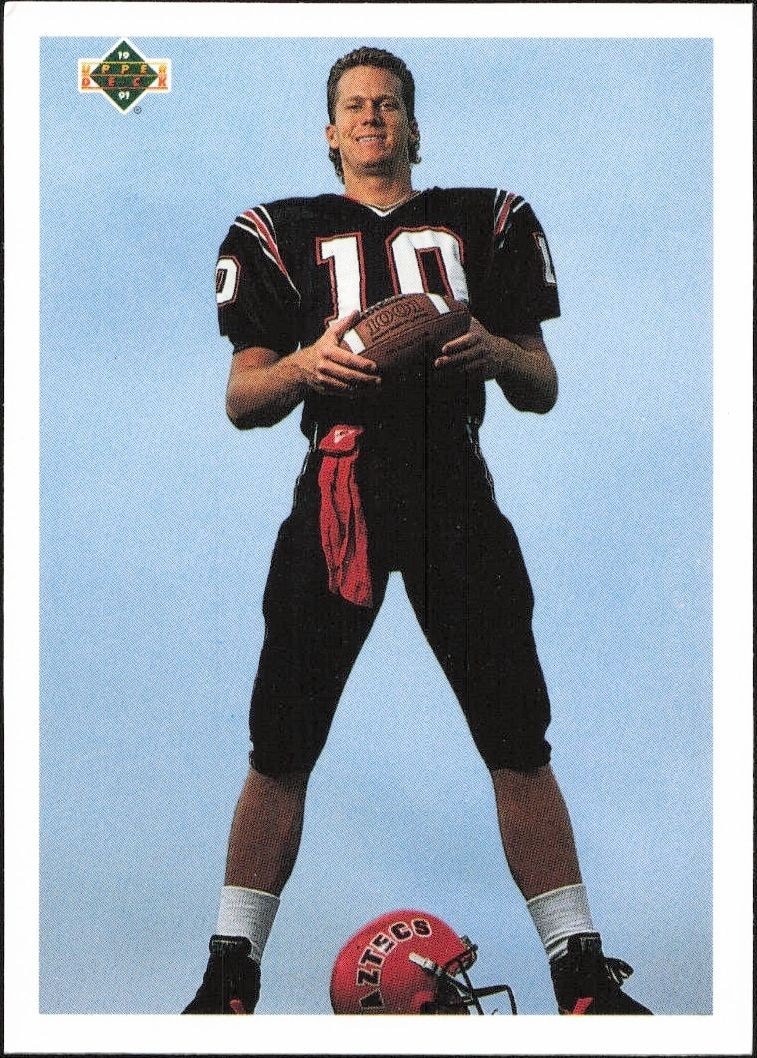



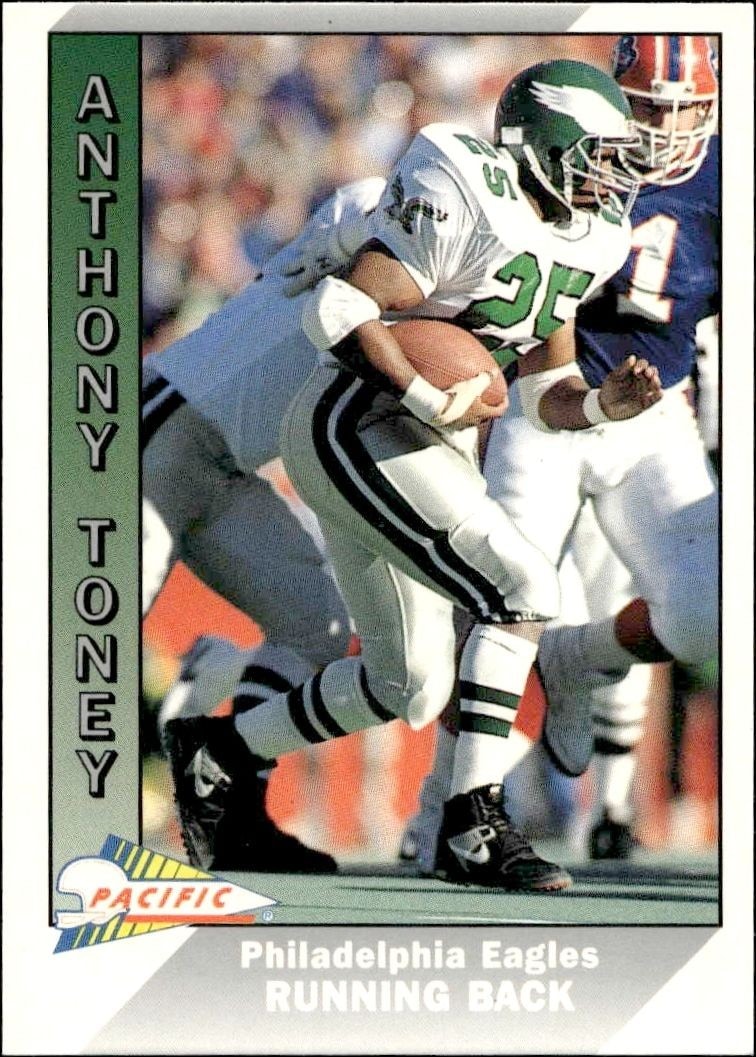
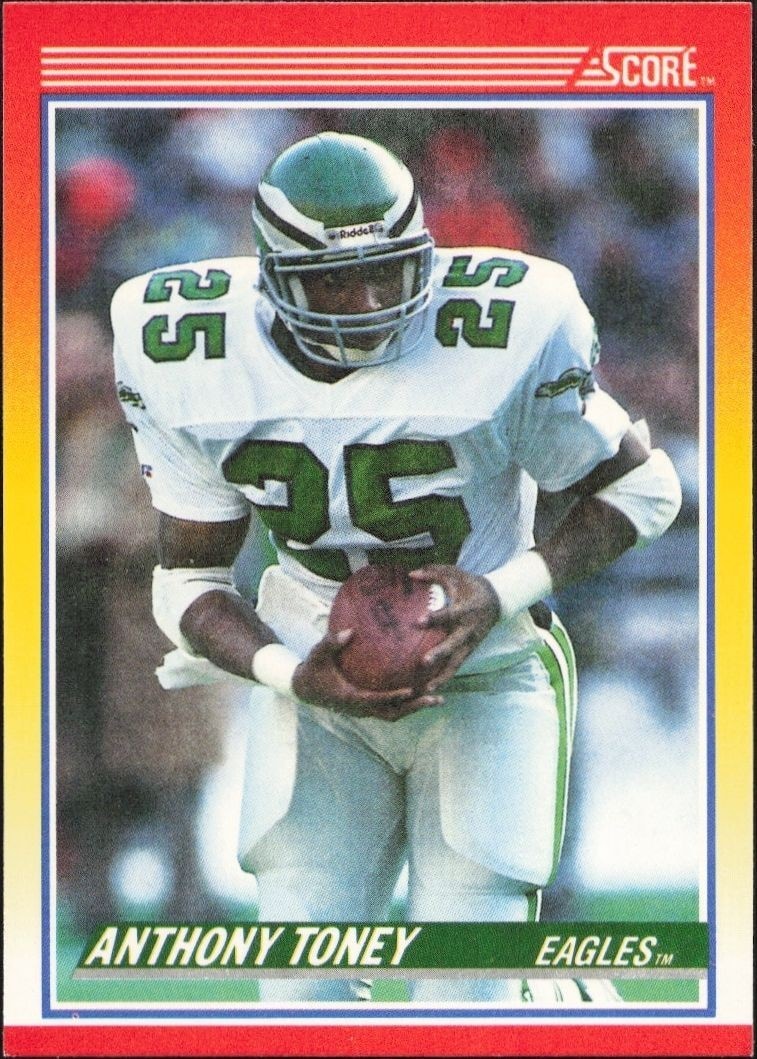
The 1991 Upper Deck Anthony Toney #252 football card features the Philadelphia Eagles running back in a key release from the brand's early years. This product represents a specific card number from the set.
1991 • Upper Deck
National Football League • Philadelphia Eagles
Near Mint
252
New
Shipping Calculated at Checkout
Arrives in 5-7 daysEstimated delivery October 23, 2026 - October 25, 2026
Seller returns October 19, 2026.30-day Returns| Condition | Value | Source | Trend | Price Details |
|---|---|---|---|---|
$1.48As of 9/25/2026 | Asking Prices | |||
Raw / Ungraded
eBay Active Listings · Asking Prices evidence · captured Sep 25, 2026
History is building. At least two days of matching observations are needed to show a trend.
Each point is the last stored observation that day for this printing, condition, grader, autograph status and source. Gaps mean no observation; guide estimates and asking prices are not completed sales.The 1991 Upper Deck Anthony Toney #252 football card captures a specific moment in the career of the Philadelphia Eagles running back. Released during a pivotal era for sports card manufacturing, this product from Upper Deck represents the brand's continued dominance in the market following its groundbreaking debut. Anthony Toney, a veteran presence in the NFL, is featured on card number 252. For collectors focusing on team sets or player milestones, this card serves as a necessary component for those completing the 1991 Upper Deck football collection. The card highlights Toney's tenure with the Philadelphia Eagles, offering a tangible connection to his performance on the field during that season. Upper Deck's production values during this period were renowned for their sharp photography and durable card stock, making these items desirable for both casual fans and serious investors in sports memorabilia. The identity of this product is firmly rooted in the 1991 Upper Deck football lineup. Collectors often seek out specific card numbers to complete their sets, and #252 is a distinct entry within this catalog. The card's design reflects the minimalist yet bold style that characterized the brand's output in the early nineties. Whether you are building a comprehensive collection of Eagles history or focusing on the broader landscape of 1990s football cards, this product holds a place in the hobby. The enduring appeal of 1991 Upper Deck products ensures that cards like this one remain relevant and sought after by enthusiasts looking to preserve a piece of sports history.
3 hours ago
We'll pre-fill the product details from this catalog entry, so your listing lands on this exact page. Just add photos of your copy, pick its condition, and set your price.
The catalog profile below summarizes the card identity, featured subject, and notable collectible traits.
The subject, team, league, and sport context tied to this card.
Production details and format-specific attributes.
Material
Card Stock
Language
English
Compare prices, grades, photos, and shipping from approved sellers.
New
Near Mint
See how many public collections currently include this card.
0 collectors have this card
This 1991 Upper Deck Anthony Toney card sits at a modest entry point within the broader Philadelphia Eagles and NFL football market, reflecting the player's role as a rotational contributor rather than a franchise cornerstone. Its current valuation suggests it trades significantly below premium tier cards featuring Hall of Fame caliber players or iconic rookie issues from the same era. The lack of special attributes keeps its price tier aligned with standard base cards, offering a low-barrier option for collectors building historical team sets.
The card possesses no specific scarcity mechanics such as serial numbering, short-print designations, or parallel variations, meaning it is produced as a standard base card within the 1991 Upper Deck football set. This unvarnished presentation results in a relatively high supply compared to limited-edition inserts, which typically command higher premiums due to constrained availability. Consequently, the card's value is driven primarily by condition and completeness of collection rather than intrinsic rarity.
As a non-rookie card from the early 1990s, this item lacks the rookie-card premium that typically drives significant appreciation in football collectibles. Collector demand is likely focused on those completing specific team or set-based collections rather than speculative investment in individual player value growth. While stable as a component of a vintage NFL archive, it does not exhibit the high-growth potential associated with graded rookies or rare parallels.