


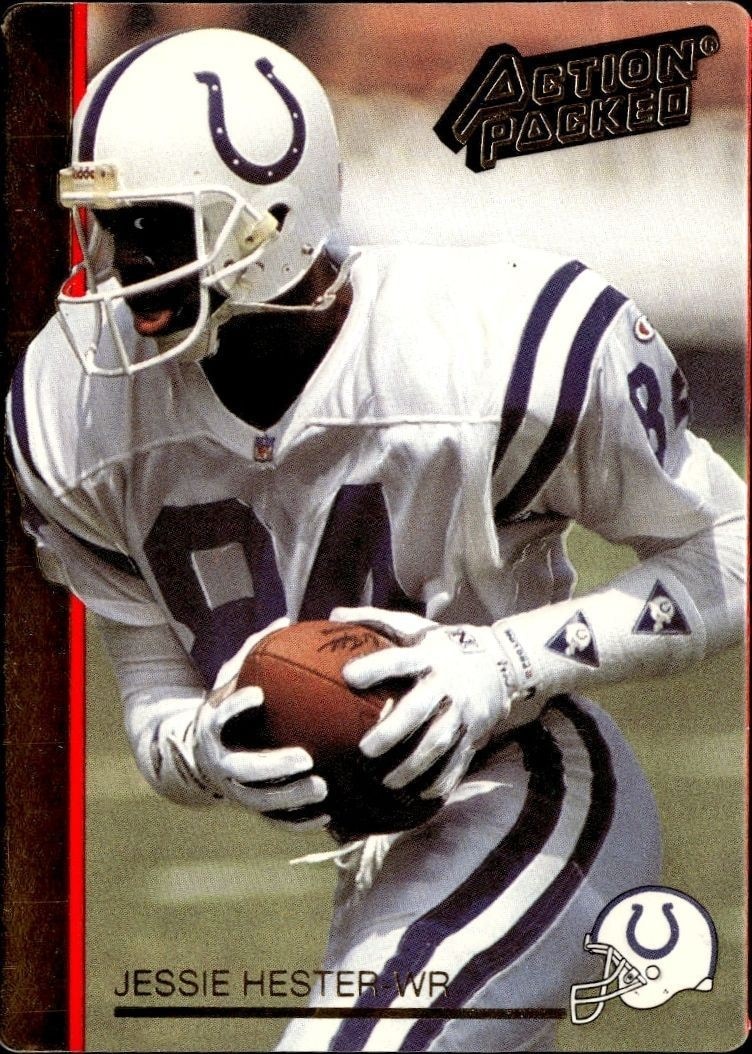

The 1991 Upper Deck Jessie Hester #414 sports card captures the Indianapolis Colts running back during the early 1990s NFL era.
1991 • Upper Deck
National Football League • Indianapolis Colts
Near Mint
414
New
Shipping Calculated at Checkout
Arrives in 5-7 daysEstimated delivery October 23, 2026 - October 25, 2026
Seller returns October 19, 2026.30-day Returns| Condition | Value | Source | Trend | Price Details |
|---|---|---|---|---|
$1.27 | Guide Estimate | |||
Raw / Ungraded
PriceCharting Price Guide · Guide Estimate evidence · captured Oct 15, 2026
History is building. At least two days of matching observations are needed to show a trend.
Each point is the last stored observation that day for this printing, condition, grader, autograph status and source. Gaps mean no observation; guide estimates and asking prices are not completed sales.The 1991 Upper Deck Jessie Hester #414 card represents a specific moment in Indianapolis Colts history, featuring the running back during the early 1990s NFL season. As part of the landmark 1991 Upper Deck football set, this release is widely recognized for bringing high-quality photography and modern production values to sports trading cards for the first time. Collectors often seek out this card number to complete their vintage sets or to highlight the early career of a player who contributed to the team's backfield rotation. Jessie Hester’s appearance on card #414 offers a tangible connection to the on-field action of that era. For investors and hobbyists focused on football history, owning a piece of the 1991 Upper Deck base set provides exposure to a pivotal year in the trading card industry. The card serves as a catalog entry for anyone tracking the career paths of NFL running backs from the late 1980s and early 1990s. Whether you are building a comprehensive collection of Colts memorabilia or focusing on the broader Upper Deck brand, this product fits seamlessly into a curated archive of sports history. The enduring appeal of 1990s football cards lies in their visual style and the nostalgia associated with the era’s gameplay. This card stands as a distinct identifier for Hester’s tenure with the Colts, making it a relevant addition for those studying the league’s roster changes during the period. By focusing on the factual identity of the card, collectors can appreciate its role in the broader landscape of football trading cards without the noise of speculative trends.
21 hours ago
We'll pre-fill the product details from this catalog entry, so your listing lands on this exact page. Just add photos of your copy, pick its condition, and set your price.
The catalog profile below summarizes the card identity, featured subject, and notable collectible traits.
The subject, team, league, and sport context tied to this card.
Production details and format-specific attributes.
Material
Card Stock
Language
English
Compare prices, grades, photos, and shipping from approved sellers.
New
Near Mint
See how many public collections currently include this card.
0 collectors have this card
This 1991 Upper Deck card of Jessie Hester occupies a niche value tier, reflecting his role as a rotational player for the Indianapolis Colts rather than a franchise cornerstone. The current pricing suggests a modest premium over raw base cards of similar vintage, driven by the enduring appeal of early 90s NFL sets among vintage collectors. Its market position remains stable but subdued, typical for non-star athletes from this era where demand is limited to specific team completists.
As a standard base card with no noted special attributes, this item lacks the scarcity mechanics associated with serial numbering, short prints, or parallel variants. Its availability is determined by standard production volumes, meaning supply is relatively abundant compared to limited-edition counterparts. The absence of unique identifiers or restricted print runs keeps its intrinsic rarity low within the broader Upper Deck football portfolio.
The card’s outlook is anchored in the collector demand for 1991 Upper Deck, a brand with established historical significance, rather than individual player performance metrics. Without rookie card status or special insert features, the primary driver for value appreciation is the general growth of vintage sports card markets. Investors should view this as a low-risk entry point for team-specific sets rather than a high-growth asset tied to individual career legacy.