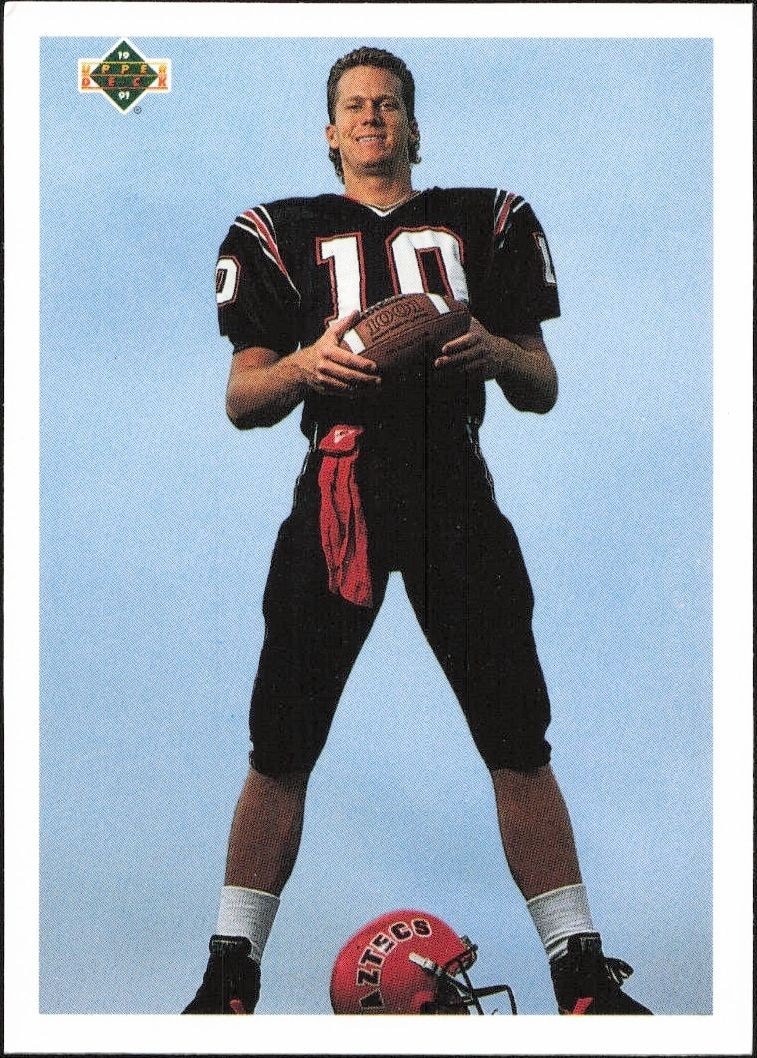




Explore the 1991 Upper Deck football card featuring Michael Young, designated as number 553 in the set.
1991 • Upper Deck
National Football League • Denver Broncos
Near Mint
553
New
Shipping Calculated at Checkout
Arrives in 5-7 daysEstimated delivery October 29, 2026 - October 31, 2026
30-day Returns| Condition | Value | Source | Trend | Price Details |
|---|---|---|---|---|
$1.52 | Guide Estimate | |||
Raw / Ungraded
PriceCharting Price Guide · Guide Estimate evidence · captured Oct 15, 2026
History is building. At least two days of matching observations are needed to show a trend.
Each point is the last stored observation that day for this printing, condition, grader, autograph status and source. Gaps mean no observation; guide estimates and asking prices are not completed sales.The 1991 Upper Deck football card numbered 553 features Michael Young, who is associated with the Denver Broncos in this product. Released in 1991, this issue belongs to the Upper Deck brand, which established itself as a significant manufacturer in the sports trading card market during that era. For collectors focusing on the NFL, cards from this year represent a distinct period of hobby history, capturing the league's roster at the time. Michael Young is the subject of card number 553 in the 1991 Upper Deck set. While the catalog data does not confirm rookie status, this card serves as a historical snapshot of a player linked to the Denver Broncos. Collectors often seek out cards from the early 1990s to complete sets or to track the career paths of athletes from that decade. The uniform design and presentation of the 1991 Upper Deck release offer a nostalgic look at NFL branding and player photography from that specific year. Whether you are building a dedicated collection of Denver Broncos memorabilia or exploring the broader landscape of 1990s football cards, the 1991 Upper Deck #553 provides a tangible connection to the sport's past. The card's identity is defined by its brand, year, and number, making it a standard entry for those interested in the history of sports card manufacturing. As the hobby continues to grow, understanding the context of sets like the 1991 Upper Deck release helps collectors appreciate the evolution of design and production values over time. This product represents a specific intersection of team affiliation, player identity, and manufacturer history. For investors and hobbyists alike, the 1991 Upper Deck Michael Young card offers a clear example of how the NFL was represented in the trading card market during the early nineties. It remains a relevant item for those who value the tangible artifacts of sports history.
3 days ago
We'll pre-fill the product details from this catalog entry, so your listing lands on this exact page. Just add photos of your copy, pick its condition, and set your price.
The catalog profile below summarizes the card identity, featured subject, and notable collectible traits.
The subject, team, league, and sport context tied to this card.
Production details and format-specific attributes.
Material
Card Stock
Language
English
Compare prices, grades, photos, and shipping from approved sellers.
New
Near Mint
See how many public collections currently include this card.
0 collectors have this card
This 1991 Upper Deck Michael Young card sits at the lower end of the market value spectrum, reflecting its status as a non-premium insert within a highly competitive football set. As a backup player for the Denver Broncos during this era, Young does not command the significant pricing premiums associated with star athletes or rookie highlights. The current valuation indicates a stable but modest tier, typical for base cards of role players from the early 1990s football landscape.
The card lacks any special scarcity attributes such as serial numbering, short-print designation, or parallel finishes, categorizing it as a standard base issue. This lack of exclusive features means the supply is determined entirely by the original print run, which is generally high for base cards of this vintage. Consequently, the card does not benefit from the supply constraints that typically drive up value in specialized subsets or limited editions.
As a non-rookie card from 1991, this item does not carry the rookie-card premium mechanics that often drive long-term appreciation in football collecting. The primary demand driver is limited to nostalgia for the specific set and era, rather than career trajectory or future Hall of Fame potential. Investors should view this as a low-risk, low-reward addition to a broader collection rather than a standalone asset with significant growth potential.