1 / 2
About This Card
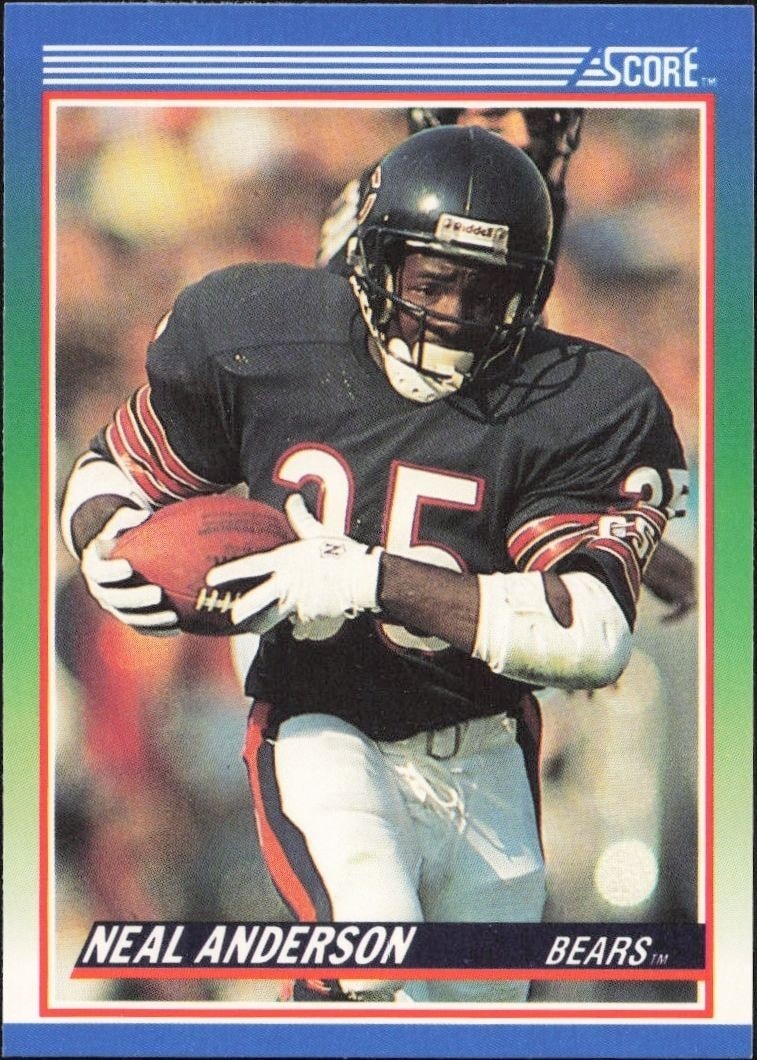
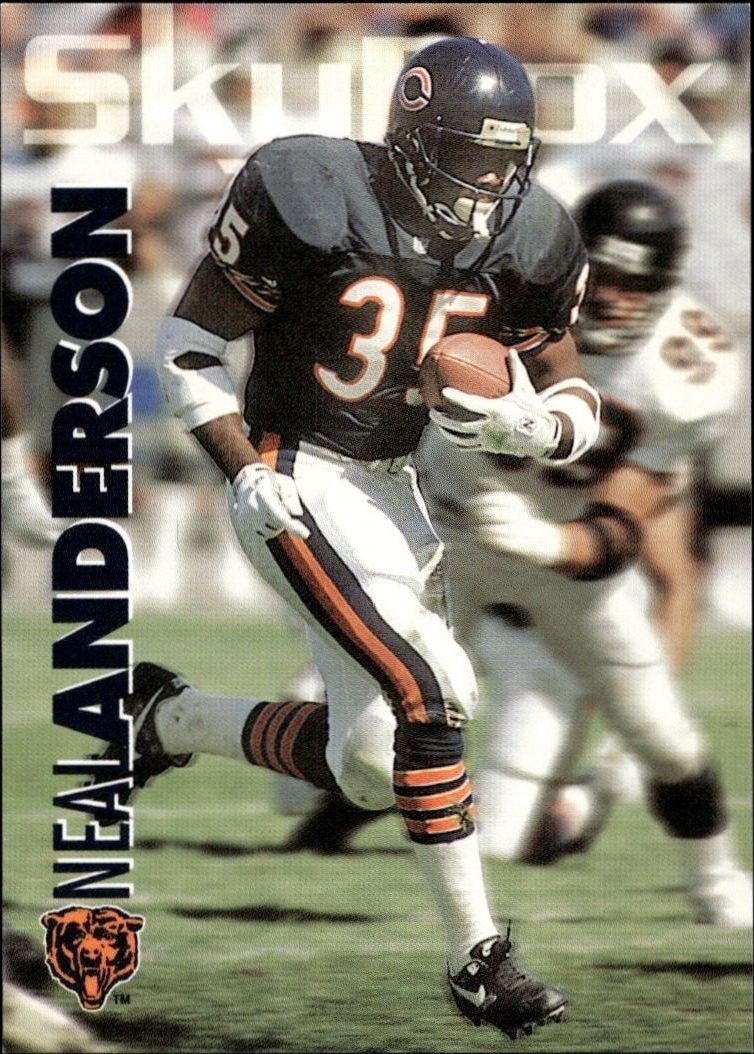
Discover the 1991 Upper Deck Neal Anderson #72 football card, a staple of 1990s NFL trading cards featuring the Chicago Bears running back.
Neal Anderson
1991 • Upper Deck
National Football League • Chicago Bears
Seller Offer
1 available$3.19
Active-Listing Market: $1.20
Updated 4 days ago166% above
Condition
Near Mint
Card Number
72
Loading express checkout
Primary Seller
New
Shipping Calculated at Checkout
Arrives in 4-6 daysEstimated delivery November 20, 2026 - November 22, 2026
30-day ReturnsMarket & Price History
| Condition | Value | Source | Trend | Price Details |
|---|---|---|---|---|
$1.20 | Guide Estimate | |||
- $1.20
- Source
- Guide Estimate
- Trend
- Price Details
30-day Price History
Raw / Ungraded
PriceCharting Price Guide · Guide Estimate evidence · captured Nov 12, 2026
History is building. At least two days of matching observations are needed to show a trend.
Each point is the last stored observation that day for this printing, condition, grader, autograph status and source. Gaps mean no observation; guide estimates and asking prices are not completed sales.Product Overview
Description
The 1991 Upper Deck Neal Anderson #72 football card stands as a definitive snapshot of the Chicago Bears' dominant ground game during the early 1990s. As a key component of the 1991 Upper Deck Football set, this release captures Anderson in his prime, showcasing the player who was instrumental in Chicago's Super Bowl XXVI championship run. The card's design reflects the bold, straightforward aesthetic that characterized Upper Deck's debut year, prioritizing high-quality photography and clean typography over the complex graphic overlays that would later define the hobby. For collectors, the 1991 Upper Deck Neal Anderson #72 card offers a tangible connection to one of the most successful offenses in NFL history. Anderson’s physical style of play and his ability to break long runs made him a fan favorite, and this card serves as a primary collectible for those tracking the careers of 1990s gridiron stars. Building a collection centered on 1990s football often begins with foundational issues like this one. The 1991 Upper Deck Neal Anderson #72 card is particularly sought after by fans of the Chicago Bears and those interested in the evolution of NFL trading cards. Whether you are completing a team set, focusing on specific player milestones, or simply appreciating the design language of the era, this card represents a significant piece of sports memorabilia. It bridges the gap between the vintage era and the modern boom, offering a clean, iconic image of a player who defined his position during his tenure with the Bears. The card’s enduring appeal lies in its historical context and the player’s lasting impact on the game. By acquiring this piece, collectors add a verified element of NFL heritage to their holdings, ensuring that the legacy of the 1991 Chicago Bears remains preserved in the hobby.
Last Listing Activity
11/1/26
Seller Action
Have one of these to sell?
We'll pre-fill the product details from this catalog entry, so your listing lands on this exact page. Just add photos of your copy, pick its condition, and set your price.
Product Specs
Card Details
The catalog profile below summarizes the card identity, featured subject, and notable collectible traits.
Featured Subject
The subject, team, league, and sport context tied to this card.
Print Details
Production details and format-specific attributes.
Material
Card Stock
Language
English
Available Offers
Available Offer for This Card (1)
Compare prices, grades, photos, and shipping from approved sellers.
Featured Offer
New
Condition
Near Mint
Seller PriceShipping Extra
$3.19
Arrives in 4-6 days
Estimated delivery November 20, 2026 - November 22, 2026Collector Ownership
Owned by Collectors
See how many public collections currently include this card.
0 collectors have this card
SuperCatch Expert Analysis
Market Value Insight
This 1991 Upper Deck Neal Anderson card represents a baseline entry point for Chicago Bears memorabilia, trading at a modest tier relative to the broader set due to the absence of special parallel or serial-numbered attributes. While Anderson holds significance as a key contributor to the Bears' Super Bowl XX victory, this specific issue lacks the condition premiums or rarity markers that typically drive higher valuation brackets. Consequently, it serves as an accessible asset for collectors focusing on team history rather than individual player investment spikes.
Rarity Breakdown
As a base card without noted special attributes, this item does not benefit from scarcity mechanics such as serial numbering, short-print status, or one-of-one designations. Its supply is effectively unlimited within the context of the 1991 Upper Deck set, meaning it trades purely on availability and condition rather than constrained print runs. The lack of parallel variants or limited edition labeling places it at the lowest end of the rarity spectrum for this product.
Investment Outlook
The investment potential is limited by its status as a standard base card from a mass-produced era, lacking the rookie-card premium or unique identifier drivers that fuel strong demand. Collectors seeking this item are likely motivated by team affiliation with the Chicago Bears rather than speculation on individual career trajectory or grading submission trends. Without special attributes to constrain supply, the card is unlikely to command a premium above typical market rates for base issues.
AI-Generated Editorial Analysis
FAQ
Frequently Asked Questions
Is the 1991 Upper Deck Neal Anderson #72 card a rookie card?
No, this is not Neal Anderson's rookie card. He debuted in 1984, and his rookie cards appear in earlier issues from 1985 and 1986. The 1991 Upper Deck release features him as an established veteran and key contributor to the Bears' offense.
What makes the 1991 Upper Deck football set significant?
The 1991 Upper Deck Football set is historically significant as the first major trading card release from Upper Deck. It introduced a new standard for card size, photography quality, and design simplicity that shifted industry trends and influenced subsequent sets from other manufacturers.
Who is Neal Anderson and why is this card popular?
Neal Anderson was a standout running back for the Chicago Bears, known for his powerful running style and contributions to their Super Bowl XXVI victory. This card is popular among Bears fans and 1990s football collectors due to Anderson's iconic status during the team's dominant era.