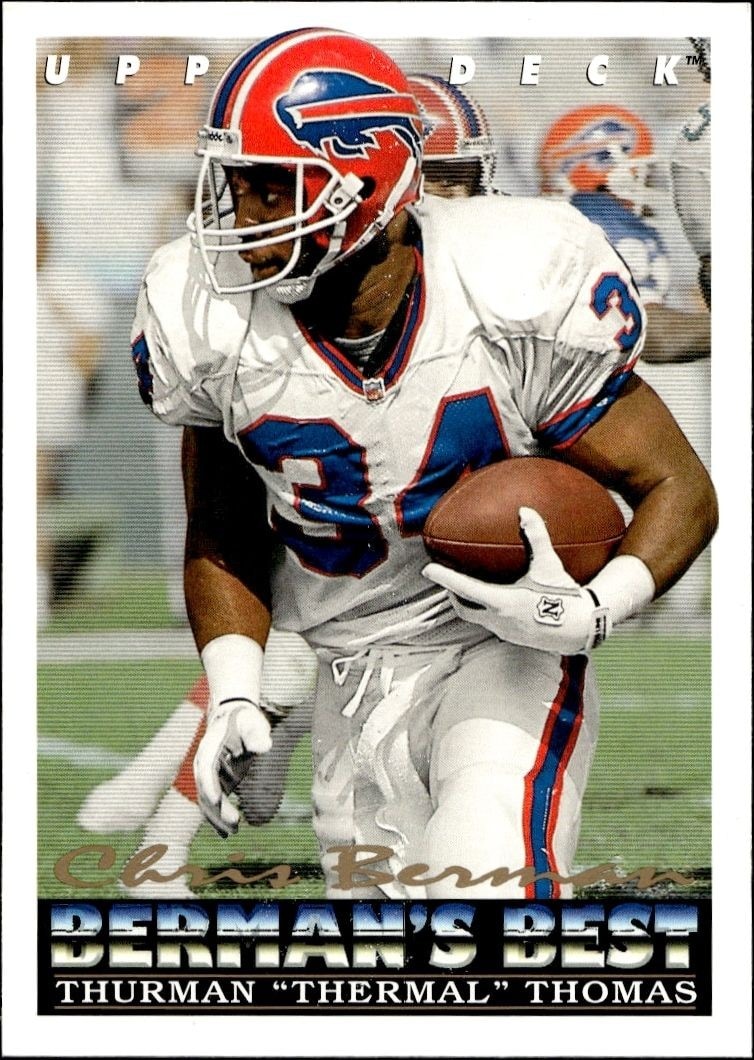



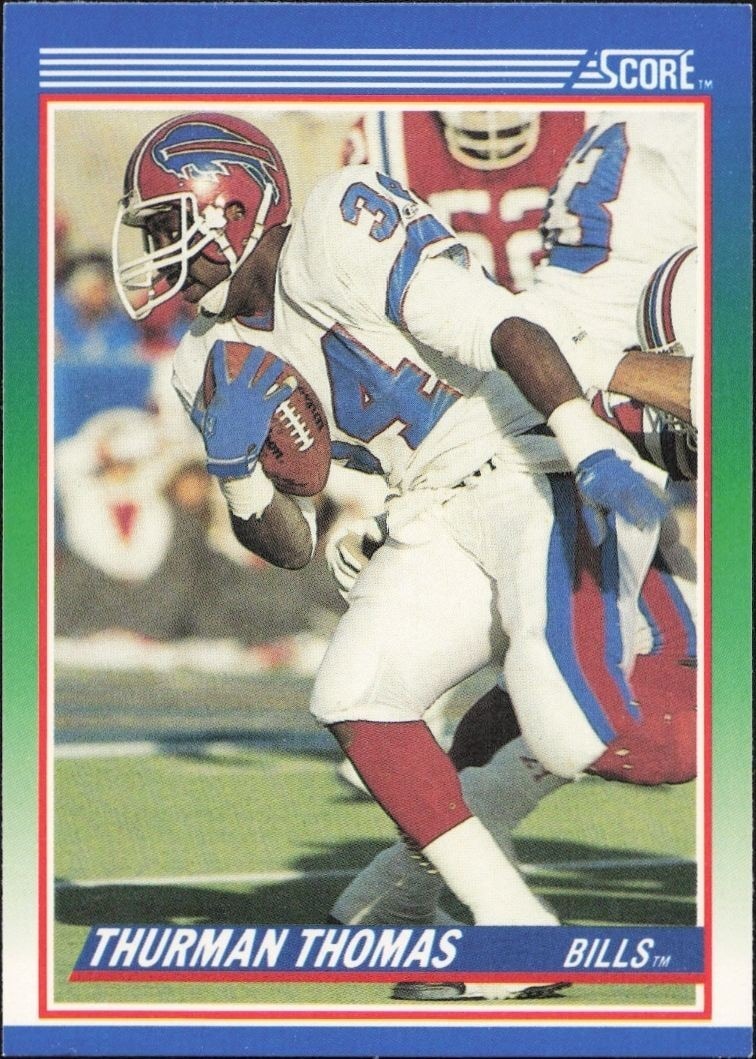


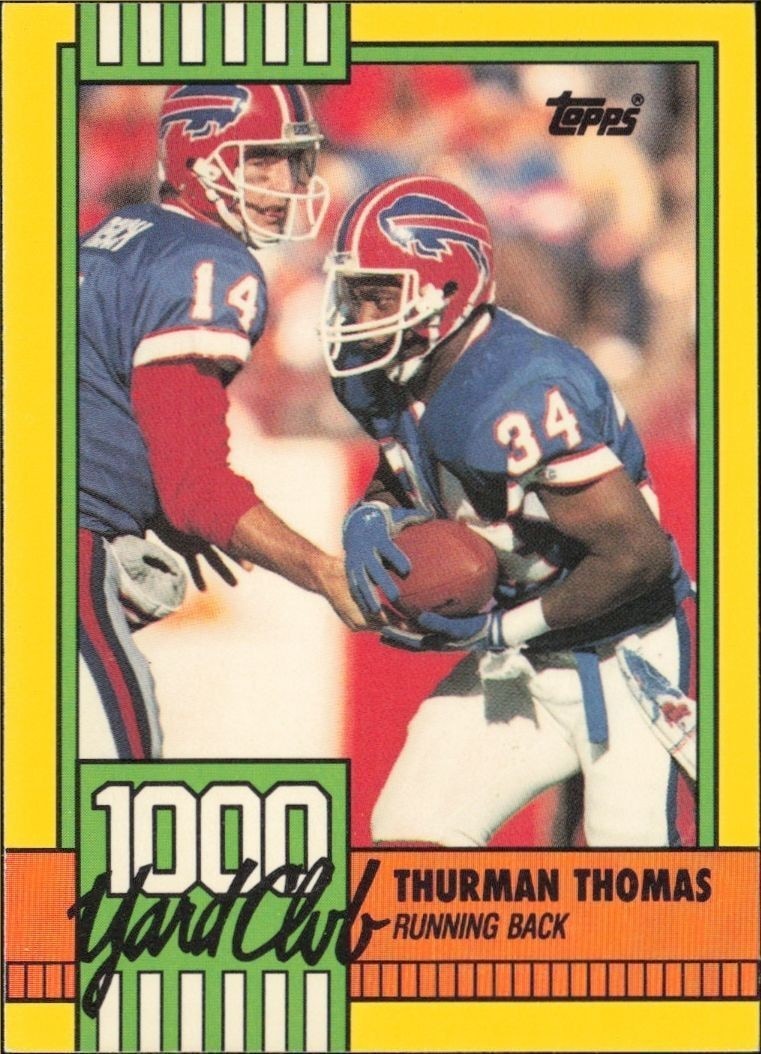

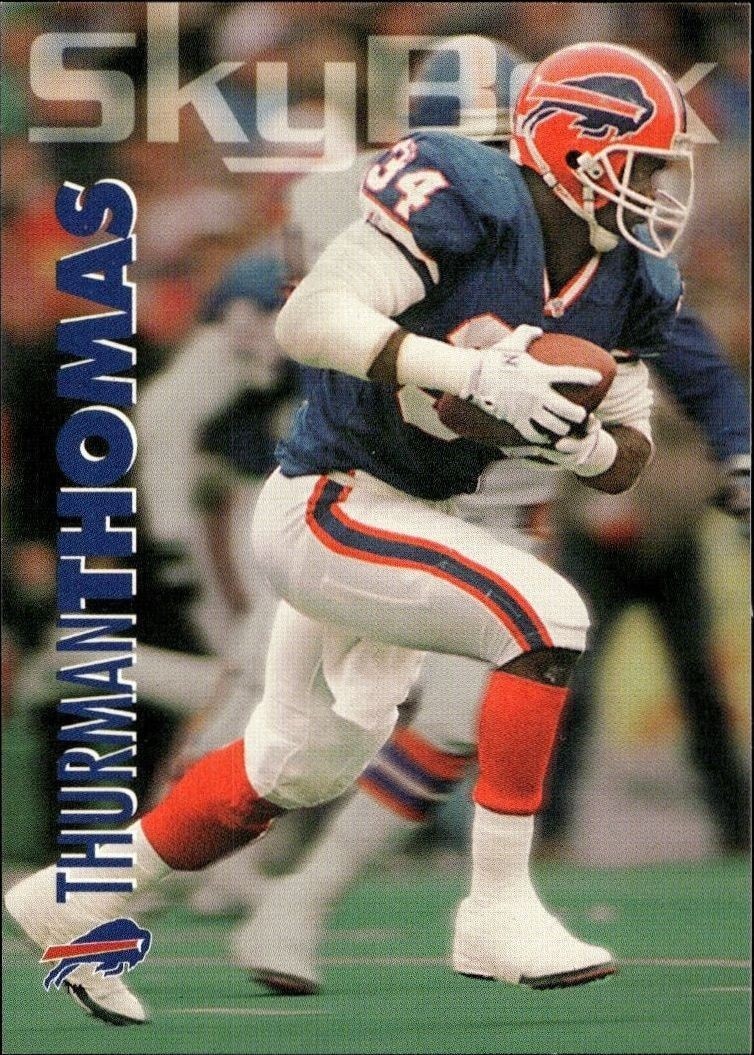
The 1991 Upper Deck Thurman Thomas #452 football card features the Buffalo Bills running back from a pivotal era in NFL history.
1991 • Upper Deck
National Football League • Buffalo Bills
Near Mint
452
New
Shipping Calculated at Checkout
Arrives in 5-7 daysEstimated delivery October 23, 2026 - October 25, 2026
Seller returns October 19, 2026.30-day Returns| Condition | Value | Source | Trend | Price Details |
|---|---|---|---|---|
$0.82 | Guide Estimate | -13.7% | ||
$2.21 | Guide Estimate | -1.8% | ||
$9.99 | Guide Estimate | +0.1% | ||
$29.29 | Guide Estimate | +12.7% | ||
$46.00 | Guide Estimate | +31.4% | ||
$21.00 | Guide Estimate | +31.3% | ||
$35.28 | Guide Estimate | +30.7% | ||
$21.00 | Guide Estimate | +31.3% | ||
Raw / Ungraded
PriceCharting Price Guide · Guide Estimate evidence · captured Oct 18, 2026
The 1991 Upper Deck Thurman Thomas #452 football card serves as a tangible link to the Buffalo Bills' running game during the early 1990s. Released by Upper Deck, this card number anchors the collector's experience within the brand's initial major sports release, a year that marked a significant shift in trading card design and manufacturing standards. For enthusiasts of NFL history, this card represents a specific moment in the career of a player who was central to the Bills' offensive identity during that period. Collecting this product allows hobbyists to explore the aesthetic and structural conventions of early 90s sports cards. The 1991 Upper Deck release is widely recognized for introducing a standardized, glossy finish that distinguished it from competitors of the era. Whether building a team set, a career retrospective, or a focused collection of 1990s sports cards, this card provides a foundational piece for understanding the market's evolution. The 1991 Upper Deck Thurman Thomas #452 card is a staple for those interested in the intersection of sports history and collectible design. It stands as a representative example of how major manufacturers began to treat sports figures with a new level of production value. For investors and casual collectors alike, the 1990s represent a golden age of card collecting, and this card number is an integral component of that narrative. It invites deeper exploration into the players, teams, and cultural moments that defined football in the early 1990s.
21 hours ago
We'll pre-fill the product details from this catalog entry, so your listing lands on this exact page. Just add photos of your copy, pick its condition, and set your price.
The catalog profile below summarizes the card identity, featured subject, and notable collectible traits.
The subject, team, league, and sport context tied to this card.
Production details and format-specific attributes.
Material
Card Stock
Language
English
Compare prices, grades, photos, and shipping from approved sellers.
New
Near Mint
See how many public collections currently include this card.
0 collectors have this card
This 1991 Upper Deck Thurman Thomas card represents a baseline entry point in the collector's market, currently trading at a modest price tier relative to the player's broader portfolio. As a standard issue from a major brand, it lacks the condition premiums or rarity modifiers that typically elevate a card's value, making it accessible for casual acquisition. The current market positioning reflects its status as a common base card rather than a high-demand centerpiece for serious investors.
The card is identified as a standard base issue with no noted special attributes such as serial numbering, short printing, or parallel variants. This absence of scarcity mechanics means the supply is determined solely by the original print run, which is typically high for base cards of this era. Consequently, the item does not benefit from the supply constraints that drive value in limited-edition or unique variants.
As a non-rookie card from 1991, this item does not carry the rookie-card premium that often drives long-term appreciation for Hall of Fame-caliber players. The lack of distinctive parallels or serial numbers limits its appeal to specialized collectors seeking rarity, resulting in stable but modest demand. Investors should view this as a low-risk, low-reward component for completing base sets rather than a standalone growth asset.