



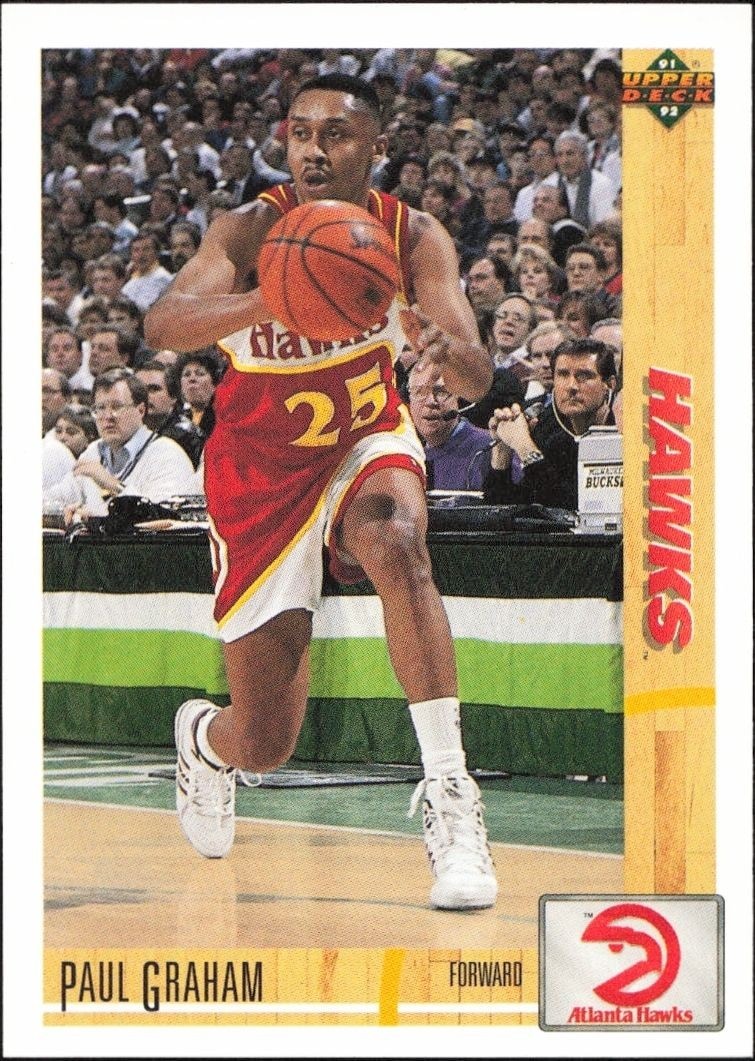
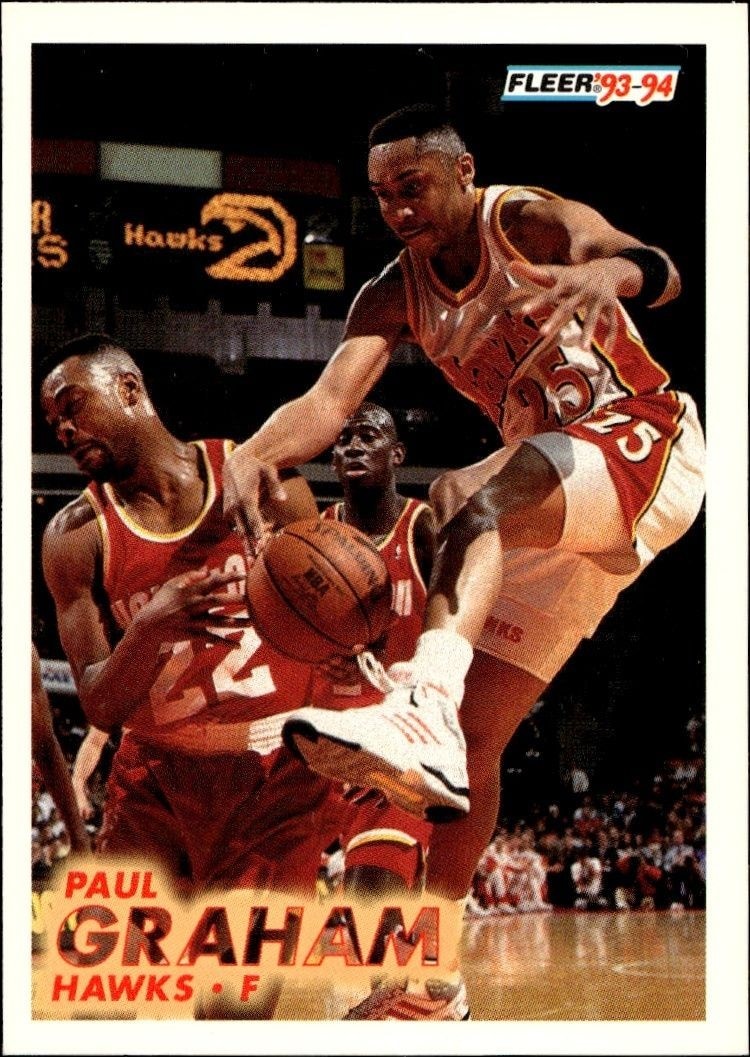
The 1992-93 Fleer Paul Graham #3 basketball card captures the Atlanta Hawks guard during his NBA tenure, offering a tangible link to early 90s league history.
1992-93 • Fleer
National Basketball Association • Atlanta Hawks
Excellent
3
New
Shipping Calculated at Checkout
Arrives in 4-6 daysEstimated delivery October 31, 2026 - November 2, 2026
30-day Returns| Condition | Value | Source | Trend | Price Details |
|---|---|---|---|---|
$1.49 | Asking Prices | 0% | ||
Raw / Ungraded
eBay Active Listings · Asking Prices evidence · captured Oct 24, 2026
The 1992-93 Fleer Paul Graham #3 basketball card represents a specific moment in NBA history, documenting the career of the guard who played for the Atlanta Hawks during this era. As part of the Fleer brand's output for the 1992-93 season, this issue is cataloged under card number 3, providing a standardized reference point for collectors building their library. Fleer was a dominant force in the trading card market during this period, and its releases remain significant for understanding the visual and cultural landscape of basketball memorabilia from the early 1990s. Collectors often seek out cards from this set to complete chronological series or to acquire representative examples of players who contributed to the league's growth during this time. Paul Graham's tenure with the Hawks is a notable chapter in franchise history, and this card serves as a documented artifact of that association. The product type is a standard sports trading card, designed to capture the player's likeness and statistical context for hobbyists. For those interested in the broader narrative of NBA teams and their rosters, this card offers a direct connection to the Atlanta Hawks' lineup from the 1992-93 campaign. The value of such items often lies in their role as historical records rather than just collectibles. Enthusiasts of vintage basketball cards appreciate the consistency and branding that Fleer brought to the hobby, making cards like this one essential for understanding the evolution of sports card design. Whether you are focusing on team-specific collections or player-based archives, this card fits into the larger picture of 1990s basketball culture. The straightforward presentation and clear identification make it a reliable addition to any organized set. By owning this card, you hold a piece of the documented history of the Atlanta Hawks and the wider NBA landscape of the early 90s.
6 days ago
We'll pre-fill the product details from this catalog entry, so your listing lands on this exact page. Just add photos of your copy, pick its condition, and set your price.
The catalog profile below summarizes the card identity, featured subject, and notable collectible traits.
The subject, team, league, and sport context tied to this card.
Production details and format-specific attributes.
Material
Card Stock
Language
English
Compare prices, grades, photos, and shipping from approved sellers.
New
Excellent
See how many public collections currently include this card.
0 collectors have this card
This card trades at a modest price point, reflecting Paul Graham's status as a role player rather than a franchise cornerstone during the 1992-93 Fleer set. Its current valuation sits well below the premium tiers commanded by the era's superstar athletes, indicating steady but limited collector interest. The single active listing suggests a thin market with low liquidity for this specific base card.
As a base card with no noted special attributes, this item lacks the supply constraints associated with serial numbering, short prints, or parallel variations. Its scarcity is determined entirely by the original print run of the 1992-93 Fleer basketball set, which typically resulted in high availability for non-stellar players. Consequently, it does not possess the distinct rarity mechanics that drive secondary market premiums in this product line.
The card serves primarily as a fill-in for complete set collectors rather than an appreciation-focused asset, given the absence of rookie card status or special parallel designation. Demand is likely driven by those seeking to complete the base set rather than speculative buying. Without unique scarcity features or superstar status, long-term value growth is expected to remain minimal and correlated with general set-building trends.