



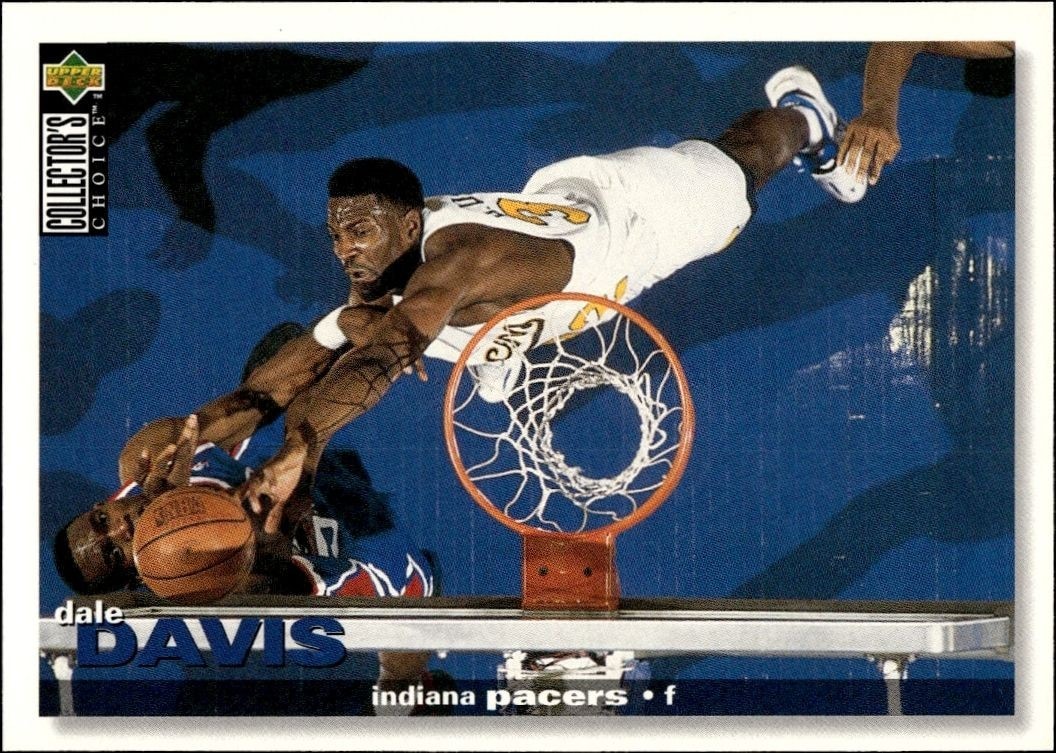


The 1992-93 Topps #237 features Dale Davis of the Indiana Pacers, capturing a pivotal moment in the franchise's history during the league's competitive expansion.
1992-93 • Topps
National Basketball Association • Indiana Pacers
Near Mint
237
New
Shipping Calculated at Checkout
Arrives in 5-7 daysEstimated delivery October 23, 2026 - October 25, 2026
Seller returns October 19, 2026.30-day Returns| Condition | Value | Source | Trend | Price Details |
|---|---|---|---|---|
$1.25As of 9/18/2026 | Guide Estimate | |||
Raw / Ungraded
PriceCharting Price Guide · Guide Estimate evidence · captured Sep 19, 2026
History is building. At least two days of matching observations are needed to show a trend.
Each point is the last stored observation that day for this printing, condition, grader, autograph status and source. Gaps mean no observation; guide estimates and asking prices are not completed sales.Released during the 1992-93 NBA season, the Topps #237 Dale Davis card represents a significant entry for collectors focused on Indiana Pacers history. Dale Davis was a crucial component of the Pacers' frontcourt during this period, establishing himself as a reliable rebounder and defensive presence in the league. This card, numbered 237 in the base set, serves as a tangible link to that specific era of professional basketball, offering fans and historians a piece of the team's ongoing narrative. Collectors often seek out cards from this production year to complete chronological collections or to acquire specific player subsets. For those tracking Dale Davis's career trajectory, this card documents his development as a key rotation player before his later contributions to championship-contending teams. Whether you are a long-time fan of the Indiana Pacers or a dedicated collector of 1990s basketball memorabilia, the 1992-93 Topps Dale Davis card offers a straightforward and authentic addition to any portfolio. The card's straightforward design and clear player identification make it a staple for those who appreciate the foundational aesthetics of the era. Building a collection around the 1992-93 season allows enthusiasts to experience the raw energy of the NBA during a time of significant growth and international interest. By focusing on the catalog identity of this product, collectors can ensure they are acquiring a genuine piece of sports history, independent of specific grading or condition variables. This approach highlights the enduring appeal of the Topps brand and the lasting legacy of players like Dale Davis.
23 hours ago
We'll pre-fill the product details from this catalog entry, so your listing lands on this exact page. Just add photos of your copy, pick its condition, and set your price.
The catalog profile below summarizes the card identity, featured subject, and notable collectible traits.
The subject, team, league, and sport context tied to this card.
Production details and format-specific attributes.
Material
Card Stock
Language
English
Compare prices, grades, photos, and shipping from approved sellers.
New
Near Mint
See how many public collections currently include this card.
0 collectors have this card
This 1992-93 Topps Dale Davis card sits at the lower end of the market tier, reflecting its status as a standard base issue from a major production run. While it offers an accessible entry point for Indiana Pacers collectors, it lacks the condition scarcity or premium attributes that drive significant value appreciation above raw market averages. The current pricing reflects a saturated supply typical of unvarnished rookie-era cards for role players.
The card carries no special scarcity attributes, existing solely as a standard base card within the 1992-93 Topps basketball set. This means it represents the highest possible print run among the brand's offerings, with supply constrained only by original manufacturing limits rather than serial numbering or short-print mechanics. Consequently, it does not benefit from the limited supply dynamics that elevate parallels or inserts.
As a rookie card for a player with a notable NBA career, it holds foundational interest for teams and Pacers specialists, though it trades below the premium tier reserved for graded or parallel versions. Long-term value is driven by general nostalgia for early 90s basketball rather than specific scarcity mechanics, making it a stable but low-growth asset. Demand remains steady among casual collectors seeking affordable roster completions rather than high-end investors.