



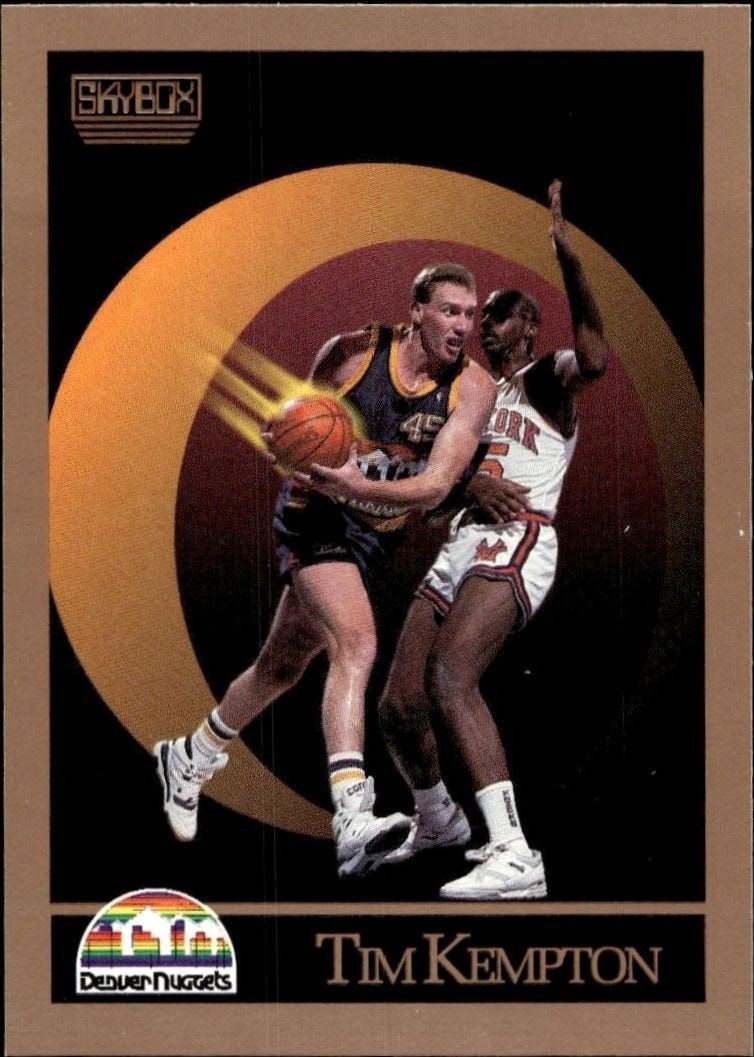
The 1992-93 Topps Tim Kempton #375 basketball trading card features the Phoenix Suns forward during his tenure with the team. This catalog entry details the card's identity within the historic Topps basketball release.
1992-93 • Topps
National Basketball Association • Phoenix Suns
Near Mint
375
New
Shipping Calculated at Checkout
Arrives in 4-6 daysEstimated delivery October 24, 2026 - October 26, 2026
30-day Returns| Condition | Value | Source | Trend | Price Details |
|---|---|---|---|---|
$1.00 | Asking Prices | |||
Raw / Ungraded
eBay Active Listings · Asking Prices evidence · captured Oct 9, 2026
History is building. At least two days of matching observations are needed to show a trend.
Each point is the last stored observation that day for this printing, condition, grader, autograph status and source. Gaps mean no observation; guide estimates and asking prices are not completed sales.The 1992-93 Topps basketball set remains a cornerstone for collectors focusing on the NBA's competitive landscape during the early 1990s. Within this release, card number 375 highlights Tim Kempton, who was a key frontcourt contributor for the Phoenix Suns during that season. For enthusiasts building collections centered on NBA history or specific team rosters, this card provides a tangible connection to that era of professional basketball. Topps produced this series with a design that prioritized clear player identification and team affiliation, making it a staple for hobbyists who value the structural integrity of set-building. The card captures Kempton in his Phoenix Suns uniform, serving as a reference point for fans tracking the franchise's personnel changes throughout the decade. Collectors often seek out complete runs of the 1992-93 Topps basketball set to document the league's depth during a period marked by significant roster turnover and stylistic shifts in play. As a standard base card, this product does not feature autograph or memorabilia inserts, which allows it to serve as an accessible entry point for new investors entering the sports card market. It offers a straightforward way to add a specific player to a growing collection without the premium costs associated with parallels or rookie cards. The catalog details provided here confirm the card's official status within the Topps product line, ensuring authenticity regarding the manufacturer, year, and subject identity. For those interested in the broader context of 1990s basketball trading cards, this piece represents the standard issue format that defined the hobby for millions of fans worldwide.
14 hours ago
We'll pre-fill the product details from this catalog entry, so your listing lands on this exact page. Just add photos of your copy, pick its condition, and set your price.
The catalog profile below summarizes the card identity, featured subject, and notable collectible traits.
The subject, team, league, and sport context tied to this card.
Production details and format-specific attributes.
Material
Card Stock
Language
English
Compare prices, grades, photos, and shipping from approved sellers.
New
Near Mint
See how many public collections currently include this card.
0 collectors have this card
As a non-premium base card from a standard 1992-93 Topps set, this item sits at the entry-level price tier, reflecting its status as a mass-produced staple rather than a scarce collectible. While Tim Kempton holds niche value among Phoenix Suns nostalgia collectors, the card lacks the grading premiums or special finishes that typically elevate a player's market standing. Consequently, it trades at a modest valuation relative to the broader basketball market, serving more as a budget-friendly acquisition for set completionists.
This listing carries no special scarcity attributes, meaning it is a standard base card without serial numbering, short-print status, or parallel variations. The absence of limited edition mechanics implies an abundant supply, as these cards were produced in high volumes for the general consumer market. Without unique identifiers to constrain availability, the item relies entirely on its player association for any potential differentiation in the secondary market.
The card functions primarily as a speculative hold for collectors focusing on specific team rosters or vintage 90s basketball nostalgia rather than broad market appreciation. Its value is driven by the demand for completing base sets from this specific Topps release, with limited upside potential due to the lack of rookie card status or premium parallel design. Investors should view this as a low-risk, low-reward component for portfolio diversification rather than a growth asset.