



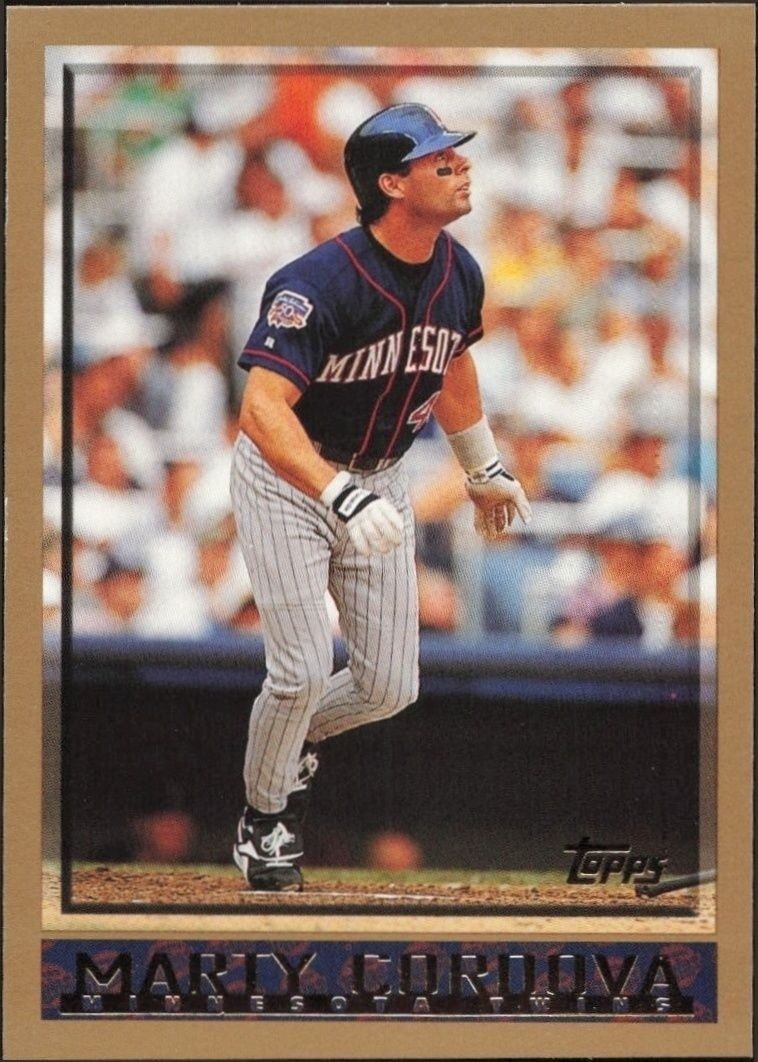
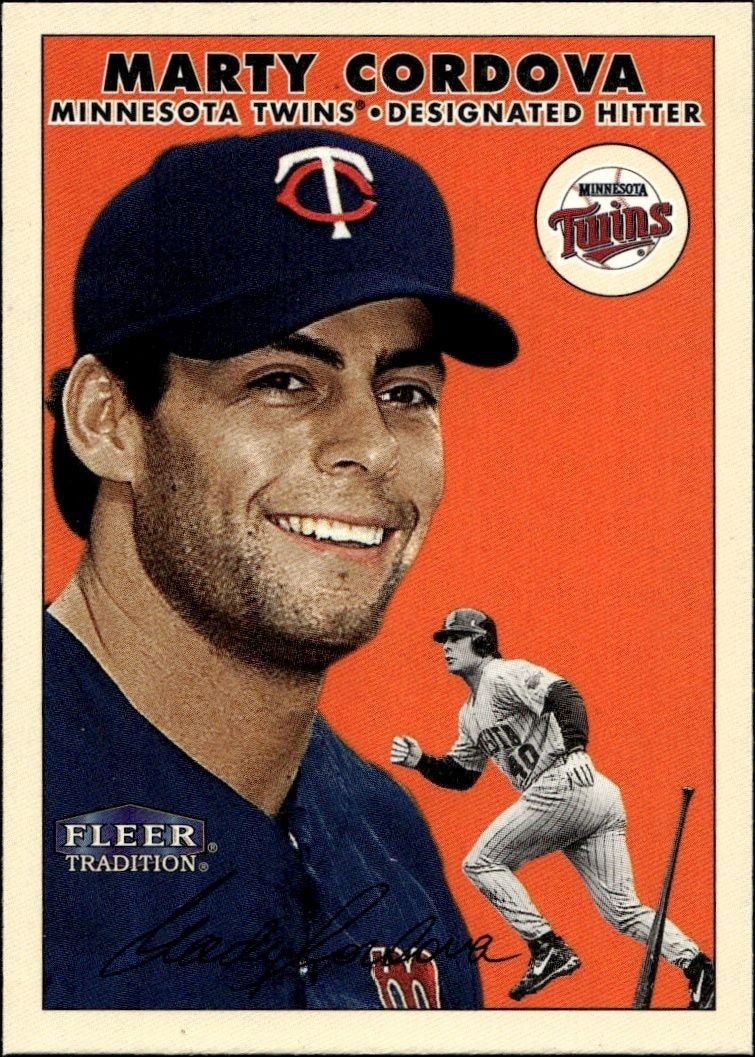
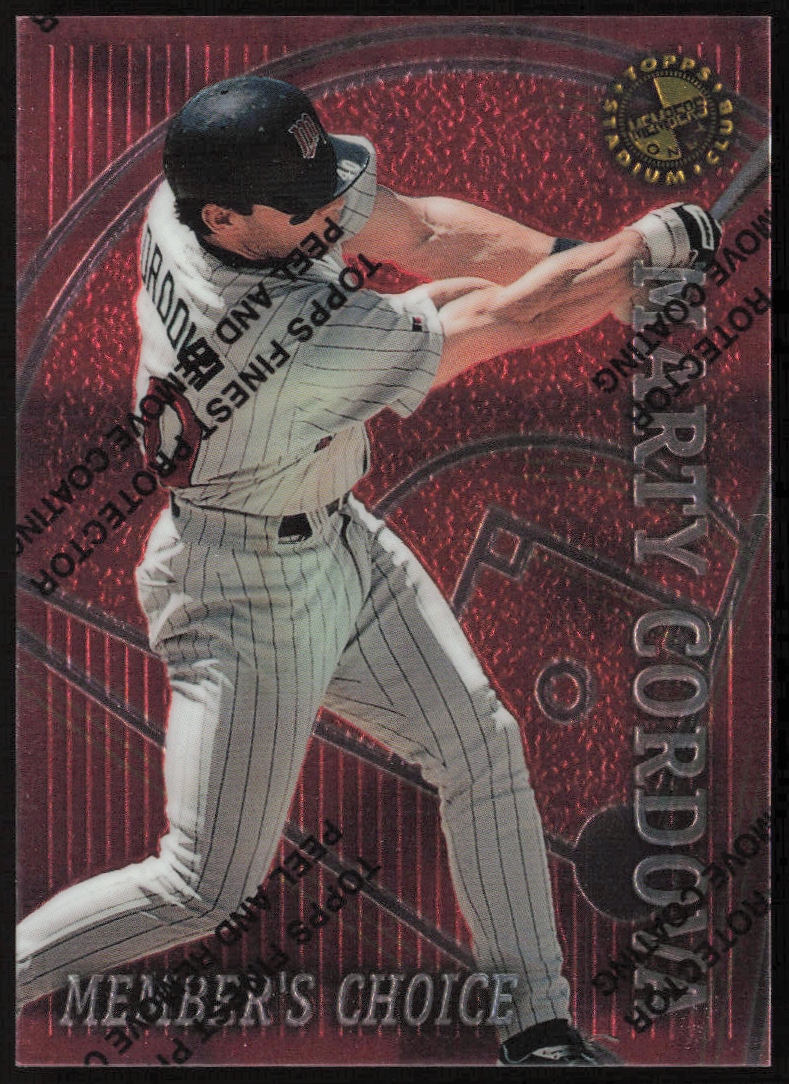
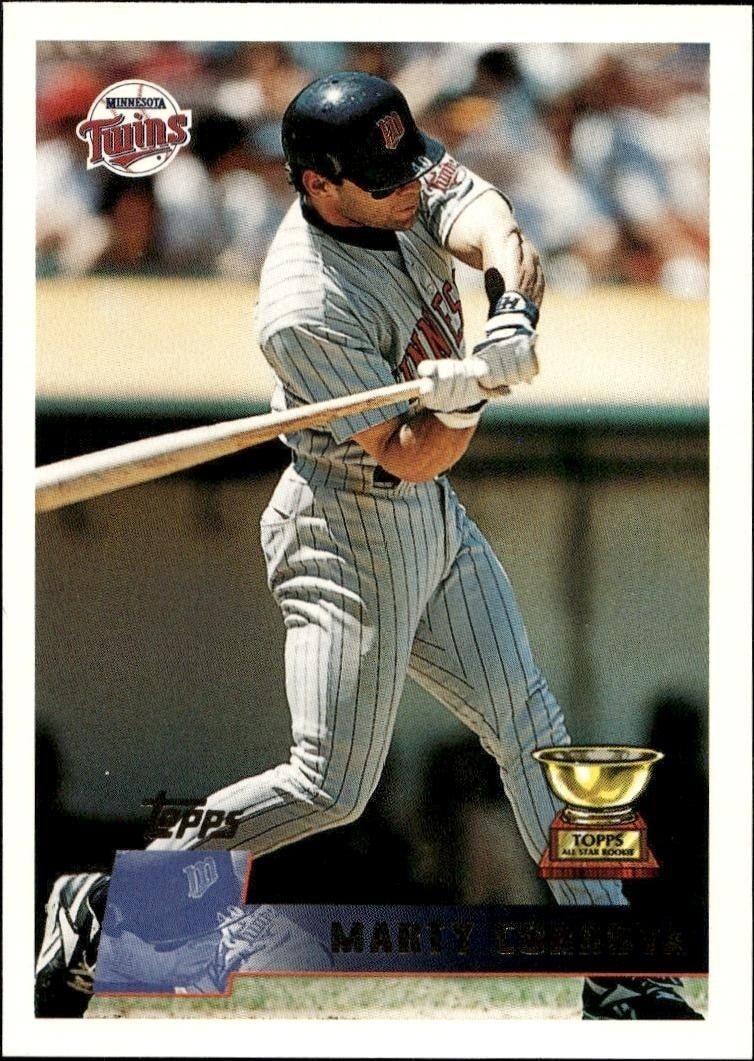
The 1997 Score #34 Marty Cordova card is a standard issue baseball trading card featuring the Minnesota Twins outfielder. This catalog entry covers the base version of the 1997 Score set.
1997 • Score
Major League Baseball • Minnesota Twins
Near Mint
34
New
Shipping Calculated at Checkout
This seller is away until 10/19/2026 — orders are still accepted and ship after they return.30-day Returns| Condition | Value | Source | Trend | Price Details |
|---|---|---|---|---|
$0.25 | Guide Estimate | |||
Raw / Ungraded
PriceCharting Price Guide · Guide Estimate evidence · captured Oct 13, 2026
History is building. At least two days of matching observations are needed to show a trend.
Each point is the last stored observation that day for this printing, condition, grader, autograph status and source. Gaps mean no observation; guide estimates and asking prices are not completed sales.The 1997 Score #34 Marty Cordova card represents a specific entry in one of baseball's most recognizable trading card series. Issued in 1997, this card features Minnesota Twins outfielder Marty Cordova during his tenure with the club. The Score brand has maintained a consistent design identity for decades, making its annual releases staples for collectors who appreciate traditional baseball card aesthetics. Marty Cordova established himself as a key contributor for the Twins during the mid-to-late 1990s. His inclusion in the 1997 Score set captures a period where he was an active and reliable presence in the major leagues. For hobbyists focusing on team-specific collections, this card serves as a necessary component for assembling a complete Minnesota Twins set from this era. The straightforward design of the base card allows the focus to remain on the player and the team affiliation, which is characteristic of the Score format. Collecting 1990s baseball cards has seen a resurgence in interest, with many enthusiasts seeking out affordable and visually clean examples from this decade. The 1997 Score set offers a wide array of players from various teams, providing a snapshot of the league during that specific season. While some collectors pursue high-end parallels or inserts, the base cards like the Cordova #34 remain fundamental to the hobby. They offer an accessible entry point for new collectors and a nostalgic touch for veterans who grew up with these releases. The card's catalog number, 34, helps identify its place within the broader set structure, aiding in organization and tracking for serious collectors. Whether you are building a set of your favorite team or focusing on a specific player's career history, this card fits seamlessly into a well-curated collection.
1 day ago
We'll pre-fill the product details from this catalog entry, so your listing lands on this exact page. Just add photos of your copy, pick its condition, and set your price.
The catalog profile below summarizes the card identity, featured subject, and notable collectible traits.
The subject, team, league, and sport context tied to this card.
Production details and format-specific attributes.
Material
Card Stock
Language
English
Compare prices, grades, photos, and shipping from approved sellers.
New
Near Mint
See how many public collections currently include this card.
0 collectors have this card
This 1997 Score card of Marty Cordova represents a baseline entry-level asset within the Minnesota Twins memorabilia market, currently trading at a modest price point that reflects its status as a non-premium parallel or base card. While it lacks the rarity premiums associated with autographed or short-printed items, it maintains a stable, accessible valuation for collectors seeking affordable team-specific inventory. The presence of only one active listing suggests a thin market, which may lead to slight price volatility for immediate buyers.
As a standard issue from the 1997 Score set, this card does not carry specific scarcity mechanisms such as serial numbering, short-print status, or unique parallels that would artificially constrain supply. Its availability is driven by the general production volume of base cards from the late 1990s, making it a common find in bulk lots or graded slabs. Without special attributes, the card relies on the inherent nostalgia of the era rather than limited edition mechanics for its collectible appeal.
The investment potential for this item is primarily tied to the broader resurgence of 1990s baseball card collecting rather than individual player appreciation or card scarcity. As a rookie-adjacent era card for a Twins player, it serves as a low-risk, high-volume entry point for collectors building specific team or decade-themed collections. Demand remains steady among niche enthusiasts, but significant capital appreciation is unlikely without the addition of autographs or higher-grade population outliers.