





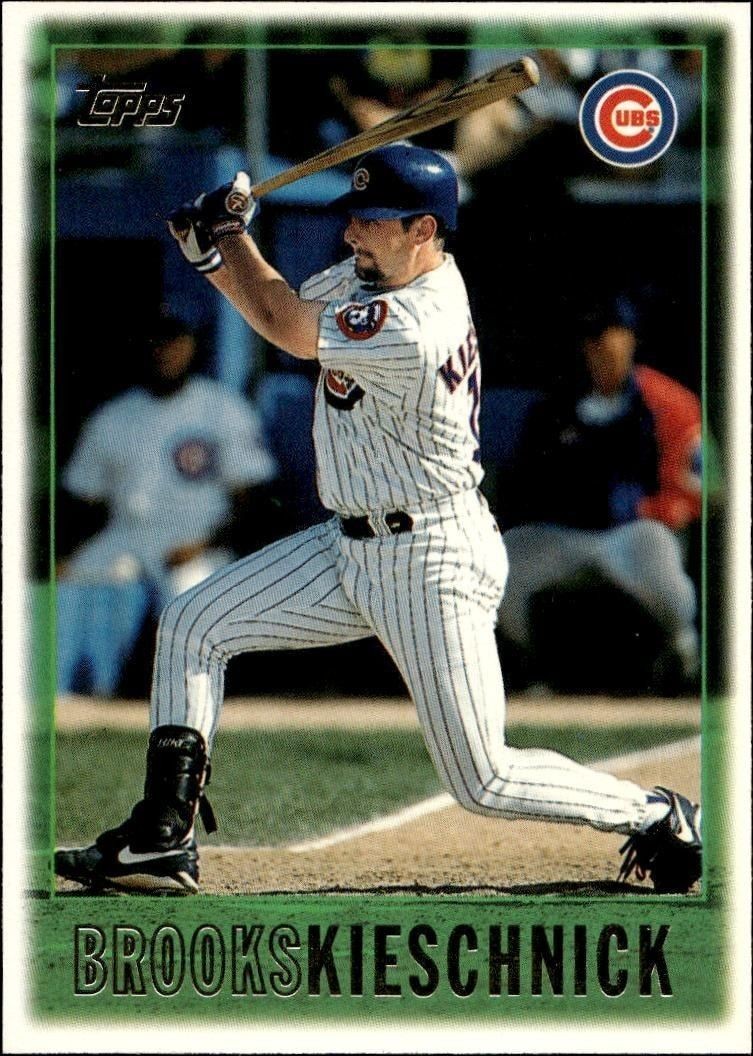
The 1998 Topps Series 2 Brooks Kieschnick #472 baseball card captures the Tampa Bay Devil Rays in the Topps brand's 1998 release.
1998 • Topps • Series 2
Major League Baseball • Tampa Bay Devil Rays
Near Mint
472
New
Shipping Calculated at Checkout
Arrives in 5-7 daysEstimated delivery October 23, 2026 - October 25, 2026
Seller returns October 19, 2026.30-day Returns| Condition | Value | Source | Trend | Price Details |
|---|---|---|---|---|
$1.11 | Guide Estimate | |||
Raw / Ungraded
PriceCharting Price Guide · Guide Estimate evidence · captured Oct 7, 2026
History is building. At least two days of matching observations are needed to show a trend.
Each point is the last stored observation that day for this printing, condition, grader, autograph status and source. Gaps mean no observation; guide estimates and asking prices are not completed sales.The 1998 Topps Series 2 Brooks Kieschnick #472 baseball card represents a specific moment in the Tampa Bay Devil Rays franchise history. As part of the Topps brand's 1998 release, this card features the player in a standard base set configuration, identified by card number 472. Collectors often seek out cards from this era to document the early years of the franchise, making this piece a relevant addition for those focused on team history or specific player milestones. The Topps brand is renowned for its consistent design language and comprehensive coverage of Major League Baseball. The 1998 Series 2 set expanded upon the primary release, offering additional cards and variations for enthusiasts. Brooks Kieschnick's inclusion in this series highlights his role during that specific season. For collectors building a set of 1998 Topps baseball cards, this card is a necessary component to achieve completeness. Brooks Kieschnick was a versatile athlete known for his contributions on the field. This card serves as a tangible connection to that period in his career. The standard design of the 1998 Topps Series 2 cards provides a clean backdrop for the player's image and statistics. Whether you are a fan of the Tampa Bay Devil Rays or a generalist collector of 1990s baseball cards, this product offers a straightforward way to engage with the sport's history. The appeal of 1998 Topps cards lies in their accessibility and historical significance. They represent a time when baseball card collecting was booming, and every team was well-represented. This card, featuring Brooks Kieschnick, is no exception. It stands as a record of a player's performance and presence in the league. For investors and hobbyists alike, understanding the context of the 1998 Topps Series 2 set enhances the value of owning individual cards like #472. It is a piece of memorabilia that speaks to the broader narrative of the sport during that decade.
23 hours ago
We'll pre-fill the product details from this catalog entry, so your listing lands on this exact page. Just add photos of your copy, pick its condition, and set your price.
The catalog profile below summarizes the card identity, featured subject, and notable collectible traits.
The core identity of the card within the set.
The subject, team, league, and sport context tied to this card.
Production details and format-specific attributes.
Material
Card Stock
Language
English
Compare prices, grades, photos, and shipping from approved sellers.
New
Near Mint
See how many public collections currently include this card.
0 collectors have this card
Brooks Kieschnick's 1998 Topps Series 2 card represents a low-tier market value relative to his primary tenure with the Milwaukee Brewers, reflecting his brief and less impactful stint with the expansion Tampa Bay Devil Rays. As a non-premium parallel or special insert from a mass-produced base set, it trades at the lower end of the hobby's price spectrum, appealing primarily to budget-conscious collectors or those completing specific team sets rather than seeking investment-grade assets.
This card carries no unique scarcity mechanics, as it is a standard base card without serial numbering, short-print status, or limited edition designations that would constrain supply. Its availability is determined by the vast original print run typical of 1990s Topps issues, meaning it remains abundant in the secondary market and lacks the exclusivity drivers found in autographed or relic variants.
The investment outlook is limited by the card's position as a common base issue from a non-legendary player, lacking the rookie card premium or significant career milestones that typically drive collector demand. While it serves a functional role for collectors assembling complete team or set collections, it does not exhibit the scarcity or historical weight necessary for significant appreciation beyond general inflationary trends.
