

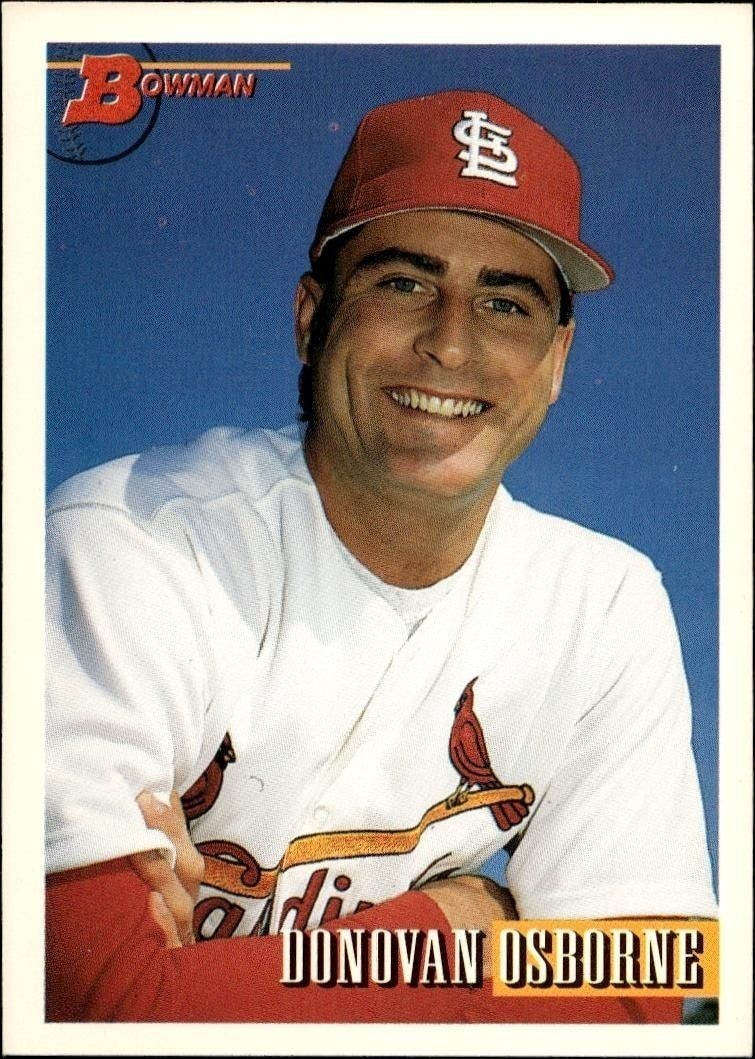


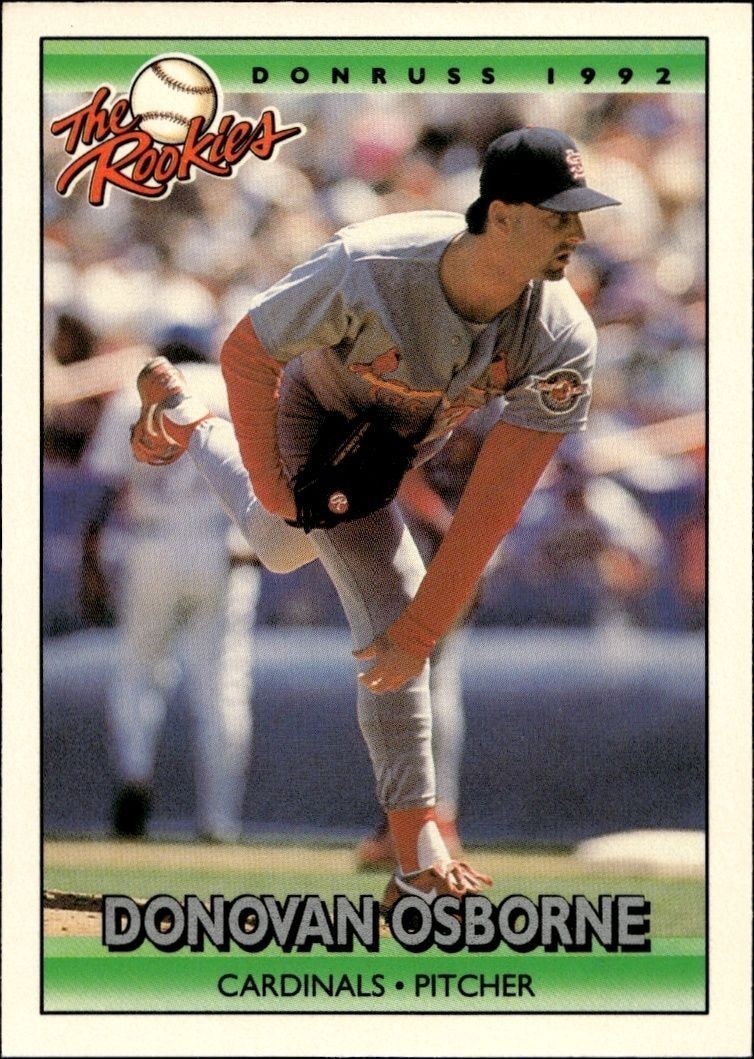
This 1998 Topps Series 2 Donovan Osborne baseball card, numbered 370, represents a specific entry in the vintage sports card market.
1998 • Topps • Series 2
Major League Baseball • St. Louis Cardinals
Near Mint
370
New
Shipping Calculated at Checkout
Arrives in 5-7 daysEstimated delivery October 23, 2026 - October 25, 2026
Seller returns October 19, 2026.30-day Returns| Condition | Value | Source | Trend | Price Details |
|---|---|---|---|---|
$0.55 | Guide Estimate | |||
Raw / Ungraded
PriceCharting Price Guide · Guide Estimate evidence · captured Oct 15, 2026
History is building. At least two days of matching observations are needed to show a trend.
Each point is the last stored observation that day for this printing, condition, grader, autograph status and source. Gaps mean no observation; guide estimates and asking prices are not completed sales.The 1998 Topps Series 2 Donovan Osborne baseball card, numbered 370, stands as a distinct entry within the broader landscape of vintage sports card collecting. Released during a pivotal era for baseball memorabilia, this card captures the subject during his tenure with the St. Louis Cardinals, offering collectors a tangible link to that specific team's history. For enthusiasts focused on completing sets, this numbered card is an essential component of the Series 2 checklist. Topps has long been recognized for producing iconic designs that define generations of collectors. The 1998 Series 2 release continues this tradition, providing a structured approach to documenting the season's rosters. Donovan Osborne's inclusion in this set allows fans and investors to own a piece of the era's visual identity. The card's design, typical of the manufacturer's output from that time, emphasizes clarity and team affiliation, making it easily identifiable within any collection. Collectors often seek out specific card numbers to complete base sets, and #370 holds its place within the sequence of the 1998 Topps Series 2. Whether you are a dedicated St. Louis Cardinals fan, a generalist building a national league set, or a historian of the sport's trading card evolution, this card offers a focused addition to your inventory. The value of such items often lies in their ability to represent a specific year and set, preserving the aesthetic and commercial standards of late-90s baseball card production. By focusing on the catalog details of the 1998 Topps Series 2 Donovan Osborne card #370, collectors can ensure they are acquiring the correct item for their specific set-building goals. The enduring appeal of Topps products from the 1990s ensures that cards like this remain relevant in conversations about the sport's collectible heritage. It is a straightforward, yet significant, piece for any serious assembler of vintage baseball cards.
22 hours ago
We'll pre-fill the product details from this catalog entry, so your listing lands on this exact page. Just add photos of your copy, pick its condition, and set your price.
The catalog profile below summarizes the card identity, featured subject, and notable collectible traits.
The core identity of the card within the set.
The subject, team, league, and sport context tied to this card.
Production details and format-specific attributes.
Material
Card Stock
Language
English
Compare prices, grades, photos, and shipping from approved sellers.
New
Near Mint
See how many public collections currently include this card.
0 collectors have this card
This 1998 Topps Series 2 Donovan Osborne card represents a baseline entry-level asset, reflecting the general market availability of standard issues from this era. As a non-premium parallel or insert, it sits at the lowest tier of value within the player's portfolio, offering minimal premium over raw condition compared to higher-grade or specialty parallels. Its current positioning indicates it is widely accessible and does not command significant collector interest relative to more sought-after components of the set.
The card is identified as a standard base issue within the Topps Series 2 product, lacking any serial numbering, short-print designations, or limited edition markers that would constrain supply. Without special attributes such as parallels, inserts, or autographs, the scarcity is determined solely by the original print run of the base set, which was produced in high volumes for mass market distribution. Consequently, the supply of available copies remains abundant, preventing any scarcity-driven valuation mechanics from applying.
As a non-rookie card from a mid-1990s base set, this item lacks the rookie-card premium mechanics that typically drive long-term value appreciation for baseball collectibles. The absence of special features or player-specific accolades in the supplied attributes suggests limited demand drivers, restricting its potential for significant market growth. Investors should view this as a low-risk, low-reward inventory piece suitable for completing base set collections rather than a vehicle for capital appreciation.