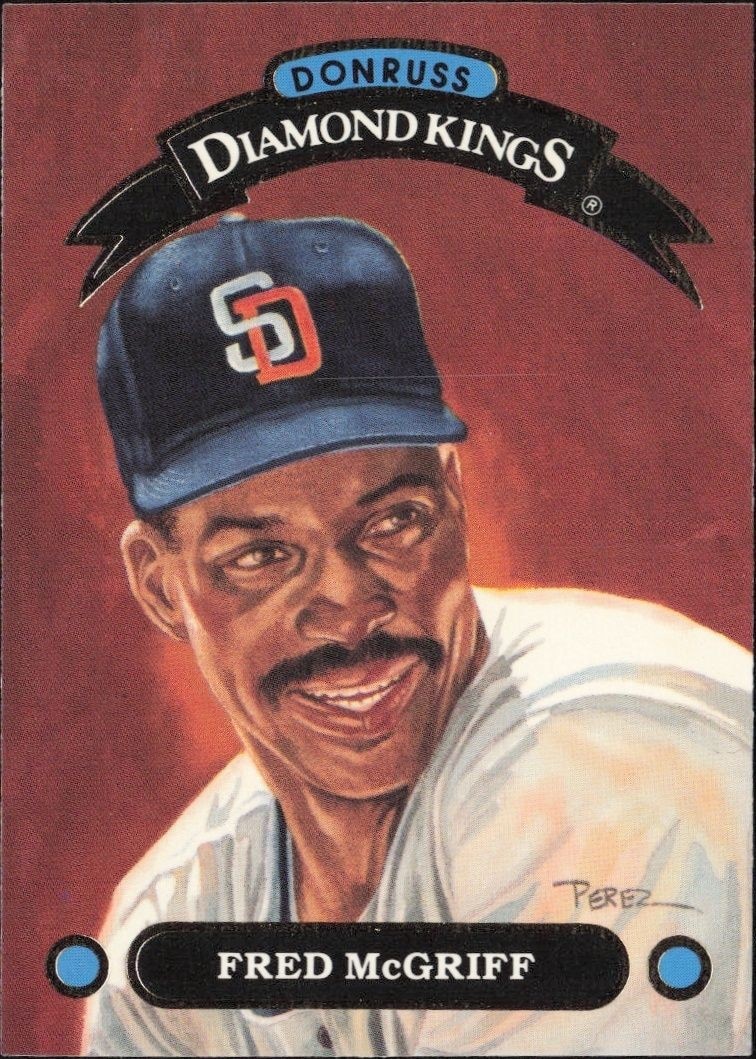





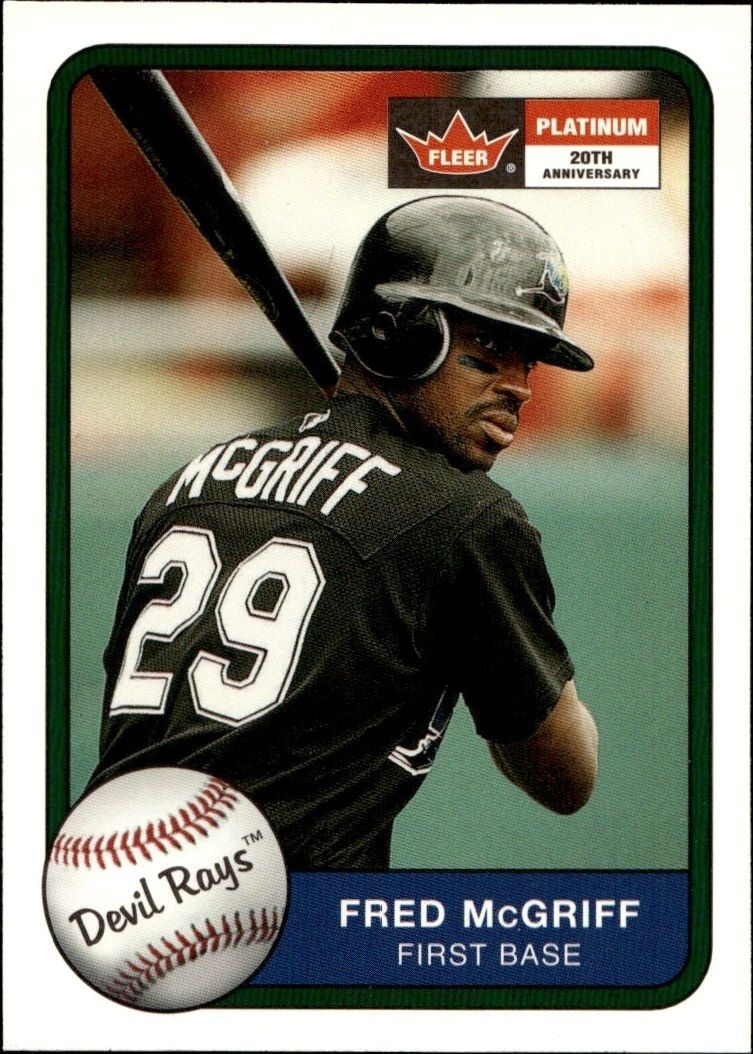
The 1998 Topps Series 2 Fred McGriff #349 sports trading card captures the first baseman's transition to the Tampa Bay Devil Rays. This product covers all available copies for collectors completing the set.
1998 • Topps • Series 2
Major League Baseball • Tampa Bay Devil Rays
Excellent
349
New
Shipping Calculated at Checkout
Arrives in 4-6 daysEstimated delivery October 24, 2026 - October 26, 2026
30-day Returns| Condition | Value | Source | Trend | Price Details |
|---|---|---|---|---|
$1.41 | Guide Estimate | 0% | ||
Raw / Ungraded
PriceCharting Price Guide · Guide Estimate evidence · captured Oct 14, 2026
The 1998 Topps Series 2 Fred McGriff #349 stands as a significant entry for collectors focusing on the Tampa Bay Devil Rays franchise history. Released during the team's inaugural season, this card documents McGriff's arrival in the American League East, marking a pivotal moment for both the player and the expansion club. As a numbered card in the 1998 Topps Series 2 set, it offers a distinct design aesthetic that differs from the base release, appealing to those who appreciate the nuances of parallel variations within the Topps catalog. Fred McGriff, widely known as "The Crime Dog," brought veteran leadership and power-hitting prowess to Tampa Bay in 1998. For investors and hobbyists, cards from this era represent a tangible connection to the early years of Devil Rays baseball. The #349 designation places this card within the specific context of the Series 2 subset, which often features unique borders, color treatments, or thematic elements that distinguish it from the primary set. Collectors frequently seek out Series 2 cards to complete their year-specific collections, as these subsets add depth and variety to the standard Topps experience. Whether you are building a team set for the Tampa Bay Devil Rays or expanding a broader 1998 baseball collection, the McGriff #349 provides a concrete link to this point in sports history. The card's value lies in its role as a documented artifact of the league's expansion era. As you browse the available inventory, consider how this card fits into the larger narrative of 1998 baseball card collecting, where Series 2 releases hold a special place for enthusiasts of design and team history alike.
5 hours ago
We'll pre-fill the product details from this catalog entry, so your listing lands on this exact page. Just add photos of your copy, pick its condition, and set your price.
The catalog profile below summarizes the card identity, featured subject, and notable collectible traits.
The core identity of the card within the set.
The subject, team, league, and sport context tied to this card.
Production details and format-specific attributes.
Material
Card Stock
Language
English
Compare prices, grades, photos, and shipping from approved sellers.
New
Excellent
See how many public collections currently include this card.
0 collectors have this card
This 1998 Topps Series 2 card represents a baseline entry point for Fred McGriff, reflecting his status as a veteran player rather than a rookie or prime-era icon. As a standard base card with no special attributes, it trades at the lower end of his collectible spectrum, serving primarily as an affordable supplement to higher-tier issues. Its current positioning suggests it appeals to budget-conscious completists filling out Tampa Bay Devil Rays subsets rather than investors seeking significant appreciation.
The card lacks any scarcity drivers such as serial numbering, short-print status, or parallel variations, placing it firmly in the mass-produced base set category. Without unique attributes to constrain supply, this issue competes directly with the broader pool of non-premium 1998 Topps releases. The absence of distinguishing features means its availability remains high relative to specialty inserts or autographed variants within the same set.
As a non-rookie, base-level card from the early expansion era of the Devil Rays, this item has limited demand drivers beyond niche team completists. The broad supply and lack of premium attributes suggest minimal upside potential compared to graded copies or special parallels of the same player. Investors should view this as a speculative, low-cost acquisition rather than a stable store of value.