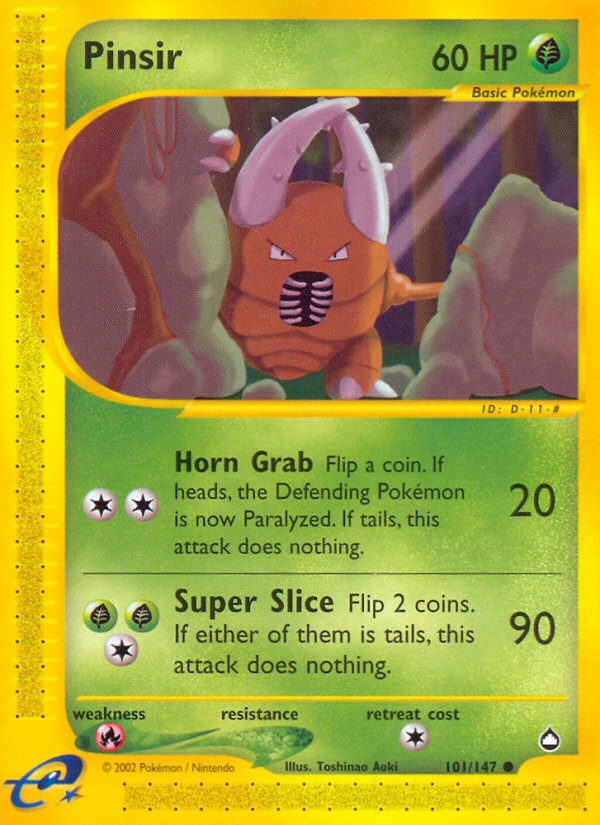
The details of the 2003 Pokémon Aquapolis Pinsir #101 trading card, featuring its Grass typing, 60 HP, and distinct attack mechanics designed by Toshinao Aoki.
2003 • Pokémon • Aquapolis
No listings available right now.
| Condition | Value | Source | Trend | Price Details |
|---|---|---|---|---|
$6.80As of 9/28/2026 | Guide Estimate | |||
$5.99As of 9/28/2026 | Completed Sales | |||
$6.52As of 9/28/2026 | Guide Estimate | |||
$20.54As of 9/28/2026 | Guide Estimate | |||
$32.00As of 9/28/2026 | Guide Estimate | |||
$35.00As of 9/28/2026 | Guide Estimate | |||
$302.00As of 9/28/2026 | Guide Estimate | |||
$30.82As of 9/28/2026 | Guide Estimate | |||
$232.37As of 9/28/2026 | Guide Estimate | |||
$139.00As of 9/28/2026 | Guide Estimate | |||
Raw / Ungraded
PriceCharting Price Guide · Guide Estimate evidence · captured Sep 28, 2026
History is building. At least two days of matching observations are needed to show a trend.
Each point is the last stored observation that day for this printing, condition, grader, autograph status and source. Gaps mean no observation; guide estimates and asking prices are not completed sales.Pinsir card number 101 from the 2003 Pokémon Aquapolis set represents a foundational Grass-type addition for collectors of early Generation 3 cards. Designed by Toshinao Aoki, this Basic Pokémon features 60 Hit Points and serves as a staple in many vintage deck-building strategies. The card’s identity is rooted in the mechanical precision characteristic of the Aquapolis expansion, offering a straightforward yet potent offensive profile for players navigating the meta of that era. For investors and completists, the Aquapolis set holds significant nostalgic value as part of the Hoenn region's initial print run. Pinsir #101 stands out within this group due to its accessibility and the clear, legible text layout that defines the set's aesthetic. Collectors often seek this card number to complete the base 147-card set, making it a consistent target for those building comprehensive collections of Pokémon Trading Card Game history. Gameplay enthusiasts appreciate Pinsir for its dual-attack structure. The Horn Grab attack allows players to flip a coin for a chance to paralyze the opponent, adding a layer of strategic risk and reward. Conversely, the Super Slice attack offers higher damage output but requires flipping two coins, appealing to collectors who value the tactical depth of the era's design philosophy. Understanding these mechanics provides context for why this card remains a favorite among vintage TCG analysts. Whether you are looking to add a piece of Pokémon history to your collection or complete a specific set, Pinsir #101 offers a tangible connection to the 2003 gaming landscape. Its enduring presence in the secondary market reflects the lasting appeal of the original Aquapolis series.
We'll pre-fill the product details from this catalog entry, so your listing lands on this exact page. Just add photos of your copy, pick its condition, and set your price.
The catalog profile below summarizes the card identity, featured subject, and notable collectible traits.
The core identity of the card within the set.
The subject, team, league, and sport context tied to this card.
Featured
Pinsir
Game
Pokémon
Rarity, print treatment, and game-specific stats for this card.
Common
Toshinao Aoki
Card Stock
English
60
Grass
Basic
Fire ×2
1
127
Abilities, attacks, oracle text, and flavor text printed on the card.
Attack: Horn Grab (20)
Flip a coin. If heads, the Defending Pokémon is now Paralyzed. If tails, this attack does nothing.
Attack: Super Slice (90)
Flip 2 coins. If either of them is tails, this attack does nothing.
Explore cards with this name across sets and editions. Check each card’s details before choosing a version.