


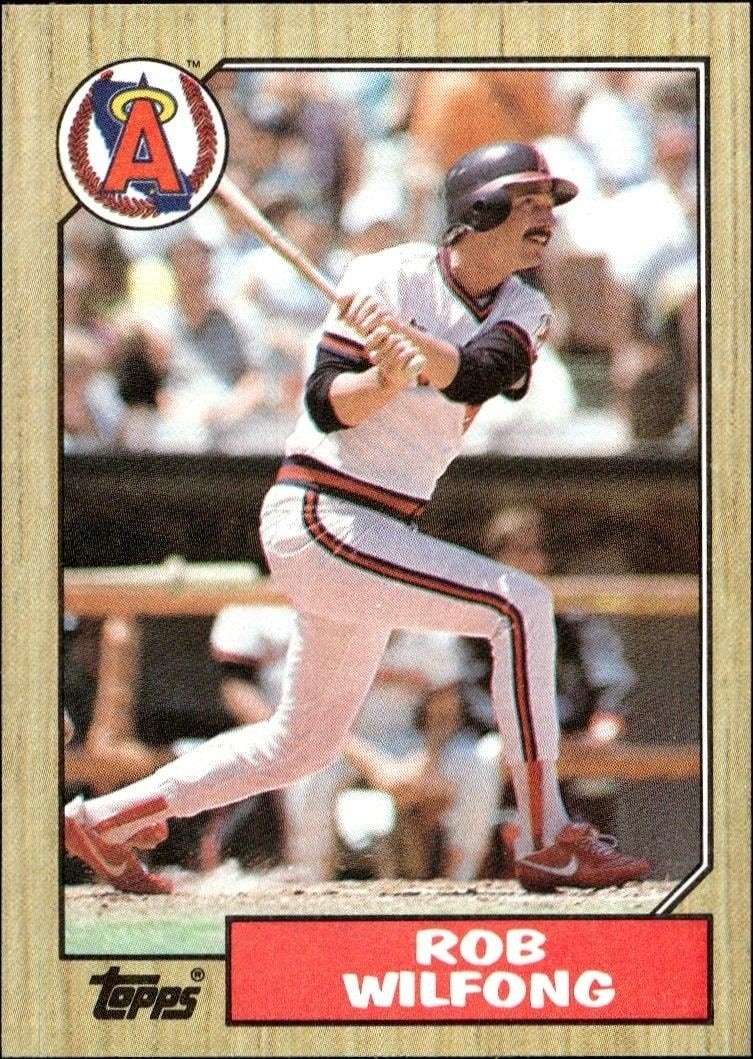
Discover the 1980 Topps Rob Wilfong #238 baseball card, featuring the Minnesota Twins infielder in a classic vintage Topps design.
1980 • Topps
Major League Baseball • Minnesota Twins
Excellent
238
New
Shipping Calculated at Checkout
This seller is away until 10/19/2026 — orders are still accepted and ship after they return.30-day Returns| Condition | Value | Source | Trend | Price Details |
|---|---|---|---|---|
$1.04As of 10/1/2026 | Guide Estimate | |||
$3.92As of 10/1/2026 | Guide Estimate | |||
$9.45As of 10/1/2026 | Guide Estimate | |||
$42.63As of 10/1/2026 | Guide Estimate | |||
$121.00As of 10/1/2026 | Guide Estimate | |||
$56.00As of 10/1/2026 | Guide Estimate | |||
$93.29As of 10/1/2026 | Guide Estimate | |||
$56.00As of 10/1/2026 | Guide Estimate | |||
Raw / Ungraded
PriceCharting Price Guide · Guide Estimate evidence · captured Oct 1, 2026
History is building. At least two days of matching observations are needed to show a trend.
Each point is the last stored observation that day for this printing, condition, grader, autograph status and source. Gaps mean no observation; guide estimates and asking prices are not completed sales.Rob Wilfong appeared in the 1980 Topps baseball card set as card number 238, representing his tenure with the Minnesota Twins. This release captures a moment in the mid-1980s MLB landscape, offering collectors a tangible connection to the era's on-field talent. As part of the expansive 1980 Topps collection, this card is recognized for its straightforward design and historical documentation of the player's career path. Collectors often seek out 1980 Topps baseball cards for their nostalgic value and role in vintage sports memorabilia. The set remains a cornerstone for those building comprehensive collections of 1980s MLB history. Wilfong's inclusion here provides a snapshot of his time with the Twins, making it a relevant piece for fans of the team and the period. The card's catalog number, 238, allows for easy identification and organization within the broader set structure. For investors and hobbyists alike, vintage trading cards from this era continue to hold significance in the collectibles market. The 1980 Topps brand is synonymous with a specific aesthetic and printing style that defines a generation of baseball card collecting. Acquiring cards from this set helps preserve the history of the sport and the players who shaped it. Whether you are completing a set of Minnesota Twins cards or focusing on the entire 1980 Topps base set, this card serves as an essential component.
9 hours ago
We'll pre-fill the product details from this catalog entry, so your listing lands on this exact page. Just add photos of your copy, pick its condition, and set your price.
The catalog profile below summarizes the card identity, featured subject, and notable collectible traits.
The subject, team, league, and sport context tied to this card.
Production details and format-specific attributes.
Material
Card Stock
Language
English
Compare prices, grades, photos, and shipping from approved sellers.
New
Excellent
See how many public collections currently include this card.
0 collectors have this card
As a 1980 Topps card, this item sits in a highly accessible entry-level tier for vintage baseball collectors, reflecting the brand's ubiquitous nature during that era. The current market positioning indicates it trades as a common base card, lacking the scarcity premiums associated with rookie or high-grade examples. Its value is driven primarily by nostalgic demand for the era rather than exceptional player status or card rarity.
This card is identified as a standard base issue with no noted special attributes such as serial numbering, short-print status, or parallel variations. Consequently, it carries the highest possible supply within the 1980 Topps set, meaning no scarcity mechanics are at play to constrain availability. The lack of unique identifiers ensures it remains a mass-produced item rather than a limited edition piece.
Investment potential is limited by the card's status as a common base release from a non-premium brand, which typically sees minimal appreciation over time. While it serves as an affordable component for building comprehensive team or era collections, it does not exhibit the collector demand drivers associated with rookie cards or graded high-end parallels. Long-term value retention relies on the general stability of the vintage baseball market rather than individual card scarcity.