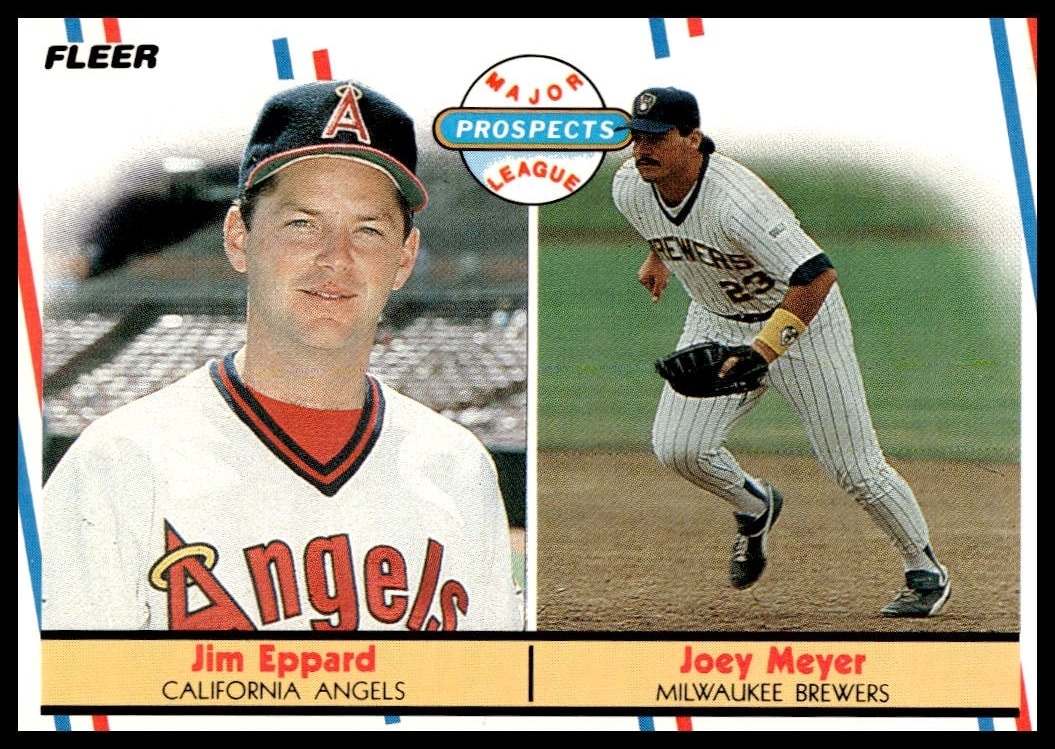

The 1989 Topps Jim Eppard #42 baseball card features the Los Angeles Angels player in one of the most recognized trading card sets of the late 1980s.
1989 • Topps
Major League Baseball • Los Angeles Angels
Excellent
42
New
Shipping Calculated at Checkout
This seller is away until 10/19/2026 — orders are still accepted and ship after they return.30-day Returns| Condition | Value | Source | Trend | Price Details |
|---|---|---|---|---|
$1.19 | Guide Estimate | 0% | ||
$24.00 | Guide Estimate | 0% | ||
$11.00 | Guide Estimate | 0% | ||
$18.26 | Guide Estimate | 0% | ||
$11.00 | Guide Estimate | 0% | ||
Raw / Ungraded
PriceCharting Price Guide · Guide Estimate evidence · captured Oct 16, 2026
The 1989 Topps Jim Eppard #42 card represents a specific moment in the history of the Los Angeles Angels franchise during the late 1980s. As a member of the 1989 Topps baseball set, this card is part of a massive release that defined the aesthetic of sports card collecting for a generation. The design relies on the brand's signature white border and bold typography, creating a clean, recognizable look that remains a staple in vintage collections today. For collectors, the 1989 Topps Jim Eppard #42 serves as a tangible connection to a specific season in MLB history. The card features Eppard during his tenure with the Los Angeles Angels, offering a snapshot of the roster composition from that year. While not a rookie card, it holds value for those building comprehensive sets of the 1989 Topps release or focusing on Angels history. The high print run of the base set means that finding this card is generally accessible, making it a popular entry point for new hobbyists and a practical addition for seasoned investors looking to complete base set runs. The enduring appeal of the 1989 Topps Jim Eppard #42 lies in its status as a standard-issue relic from a pivotal era in baseball. Collectors often seek out these cards to document team lineups, track player movements, or simply appreciate the design evolution of the sport's primary manufacturer. Whether you are compiling a year-by-year collection of Topps baseball cards or focusing on specific franchises, this card offers a straightforward and authentic piece of the hobby's heritage. For those interested in the Los Angeles Angels' recent past, this card is an essential component of the narrative, preserving the memory of the players who wore the uniform during the 1989 season.
11 hours ago
We'll pre-fill the product details from this catalog entry, so your listing lands on this exact page. Just add photos of your copy, pick its condition, and set your price.
The catalog profile below summarizes the card identity, featured subject, and notable collectible traits.
The subject, team, league, and sport context tied to this card.
Production details and format-specific attributes.
Material
Card Stock
Language
English
Compare prices, grades, photos, and shipping from approved sellers.
New
Excellent
See how many public collections currently include this card.
0 collectors have this card
This 1989 Topps Jim Eppard card sits in an accessible entry-level tier, reflecting the typical market dynamics for players who did not achieve long-term stardom. Its current pricing indicates a stable, low-volume asset that trades in line with standard base cards from this era, lacking the significant premiums associated with rookie status or legendary career achievements. The absence of special attributes keeps it firmly rooted in the generalist market rather than attracting specialized collector interest.
As a standard base card within the 1989 Topps set, this item carries no inherent scarcity mechanisms such as serial numbering, short-print designations, or parallel variations. The supply is effectively unlimited relative to specific high-end subsets, as it represents the mass-produced core of the product line. Consequently, individual copies are plentiful and do not benefit from the supply constraints that drive value in limited-edition releases.
Investment potential is limited by the card's position as a non-rookie, base-set item from a highly saturated era of baseball card production. Collector demand is likely driven by niche nostalgia or specific team completeness rather than broad market appreciation. Without unique attributes or a prominent career trajectory to sustain interest, the card is best viewed as a low-cost portfolio filler rather than a high-growth asset.