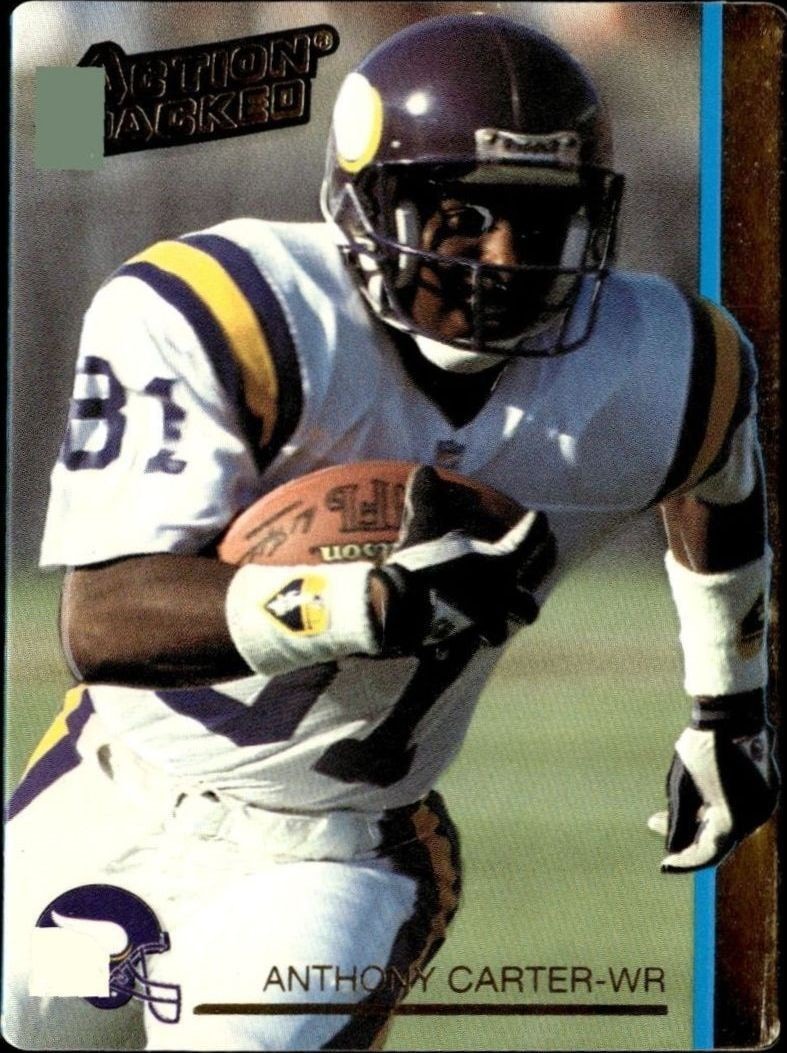



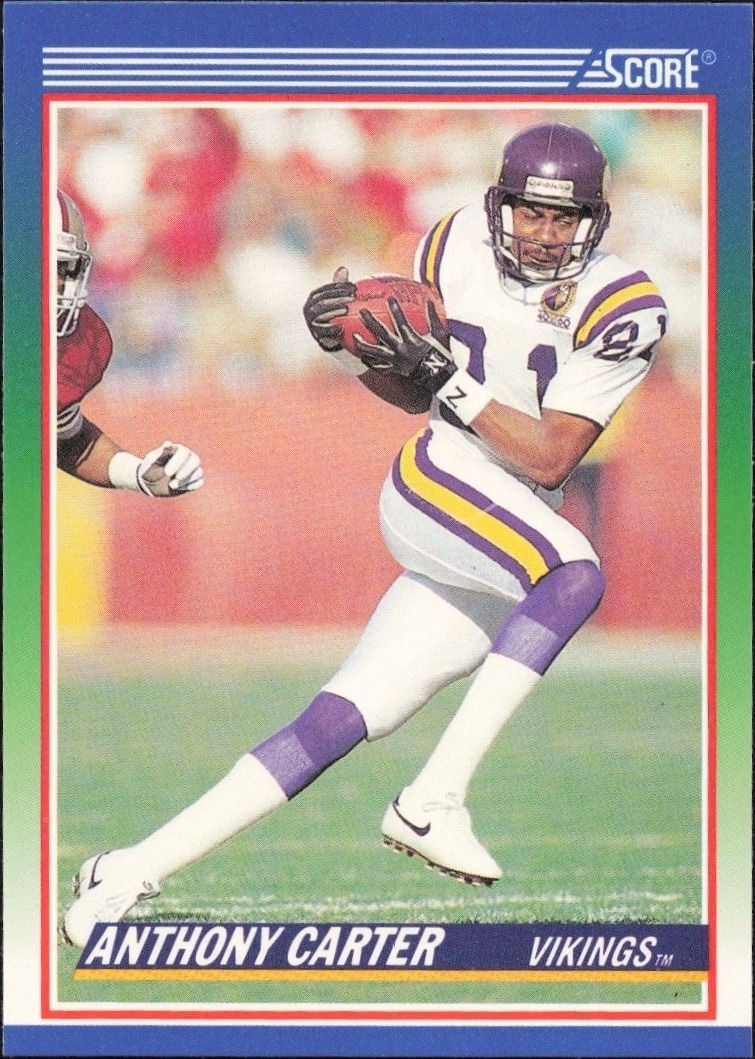
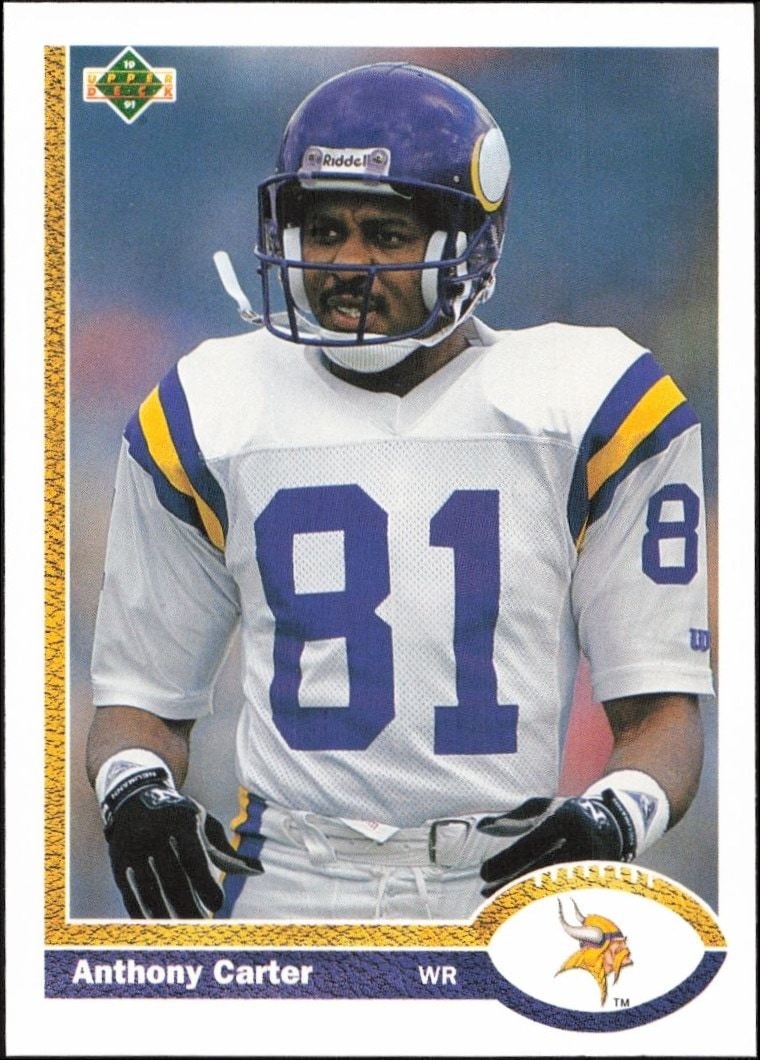
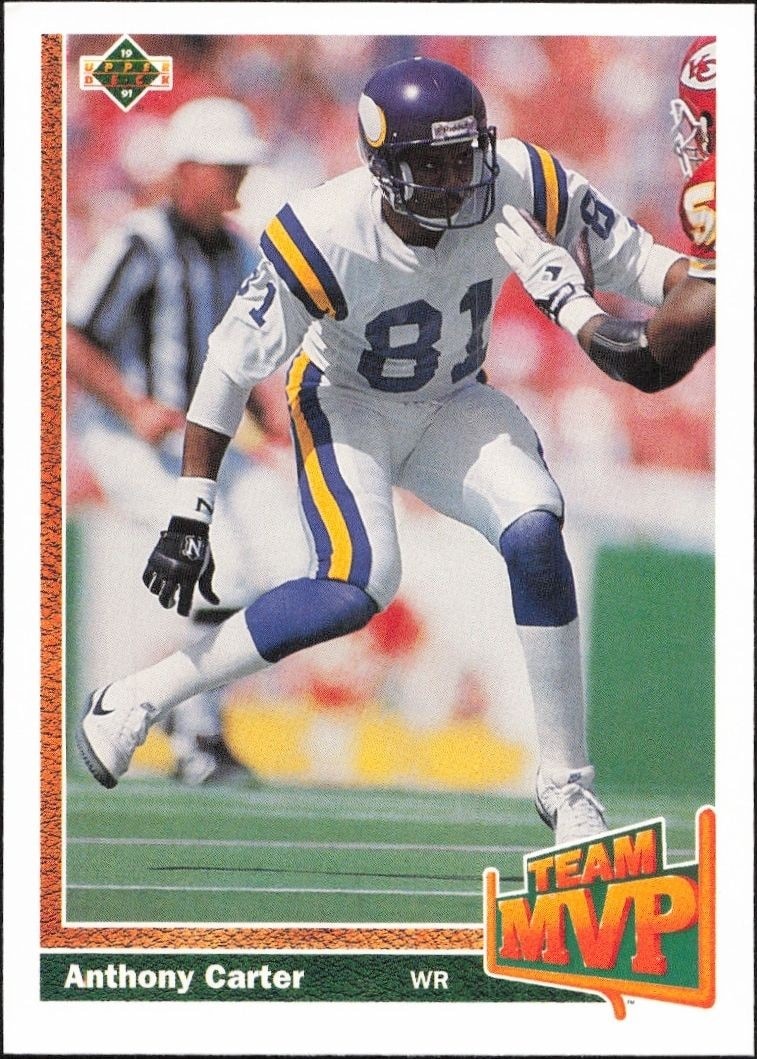
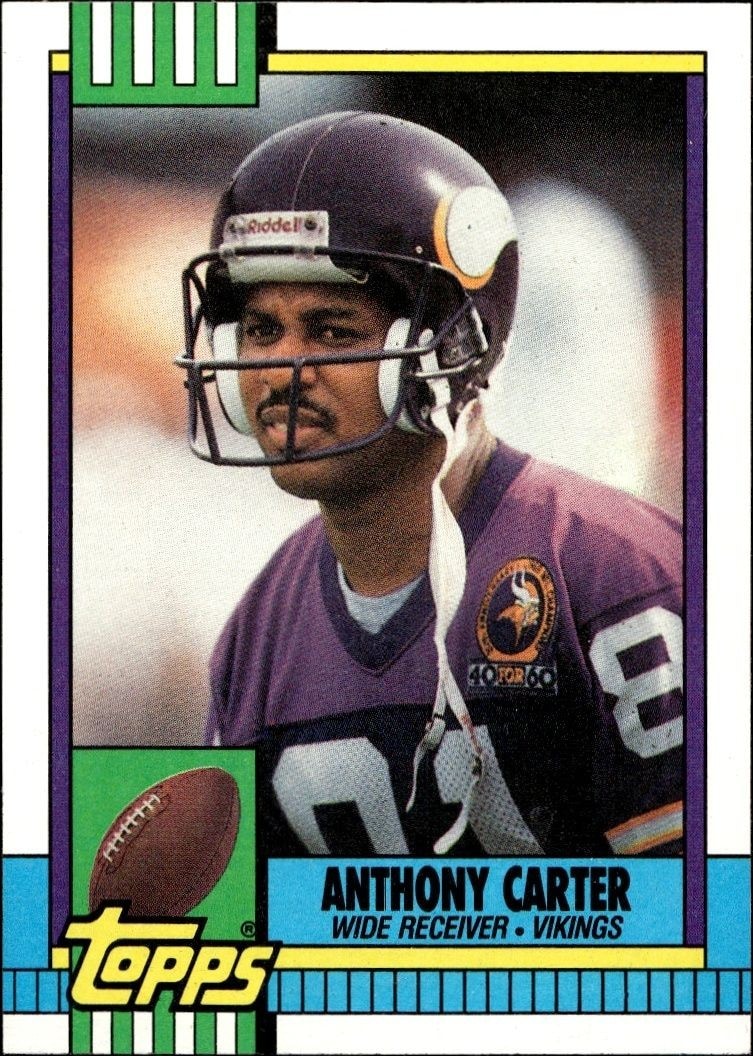
Discover the 1990 Topps Anthony Carter #26 Minnesota Vikings card, featuring the 1000 Yard Club subset for dedicated football collectors.
1990 • Topps • 1000 Yard Club
National Football League • Minnesota Vikings
Near Mint
26
New
Shipping Calculated at Checkout
Arrives in 4-6 daysEstimated delivery October 23, 2026 - October 25, 2026
Seller returns October 19, 2026.30-day Returns| Condition | Value | Source | Trend | Price Details |
|---|---|---|---|---|
$1.00 | Guide Estimate | -2% | ||
$2.76 | Guide Estimate | 0% | ||
$7.50 | Guide Estimate | 0% | ||
$8.00 | Guide Estimate | 0% | ||
Raw / Ungraded
PriceCharting Price Guide · Guide Estimate evidence · captured Oct 18, 2026
The 1990 Topps Anthony Carter #26 card captures a specific moment in Minnesota Vikings history, highlighting the running back's contribution during the early 1990s NFL season. As part of the 1000 Yard Club subset, this card is designed to honor players who achieved significant rushing milestones, making it a distinct entry within the broader 1990 Topps football set. Collectors often seek out subset cards to diversify their collections beyond the base set, appreciating the thematic focus on individual statistical achievements. Anthony Carter was a key figure for the Vikings during this era, and this card serves as a tangible connection to his time with the team. The 1000 Yard Club subset provides a specialized angle for hobbyists who focus on statistical milestones and player development. For those building a comprehensive collection of 1990s football cards, this entry offers a unique perspective on the league's offensive landscape. Whether you are completing a set of 1990 Topps football cards or focusing on specific players like Anthony Carter, understanding the subset design helps in identifying the card's place in the series. The 1000 Yard Club cards are particularly notable for their thematic consistency, appealing to those who enjoy collecting by achievement rather than just by player. For investors in sports memorabilia, cards from the 1990s represent a nostalgic era of football that continues to draw interest. The 1990 Topps Anthony Carter #26 card stands as a piece of that legacy, documenting a player's role in the NFL. Collectors interested in the Vikings' history or the broader narrative of 1990s football will find this card to be a meaningful addition to their archive. It is a standard component for anyone looking to round out their understanding of the era's roster depth.
1 day ago
We'll pre-fill the product details from this catalog entry, so your listing lands on this exact page. Just add photos of your copy, pick its condition, and set your price.
The catalog profile below summarizes the card identity, featured subject, and notable collectible traits.
The core identity of the card within the set.
The subject, team, league, and sport context tied to this card.
Production details and format-specific attributes.
Material
Card Stock
Language
English
Compare prices, grades, photos, and shipping from approved sellers.
New
Near Mint
See how many public collections currently include this card.
0 collectors have this card
This 1990 Topps base card represents a low-tier entry point for Anthony Carter collectors, reflecting the era's massive print runs and the subject's status as a role player rather than a franchise cornerstone. While it lacks the premium associated with rookie or parallel variations, it serves as the foundational benchmark for the player's early career inventory. The current listing availability suggests a thin market, yet the price point indicates it trades below the average for more sought-after vintage football assets.
As a standard base card with no noted special attributes, this item carries the highest possible supply within the 1990 Topps football set. It lacks the scarcity mechanics of short prints, serial numbering, or parallels, meaning its value is derived entirely from condition and availability rather than limited production. Consequently, it sits at the bottom of the rarity hierarchy compared to any specialty inserts or autographed versions of the same player.
The investment potential for this specific card is limited by its mass-produced nature and the lack of rookie card designation, which typically drives long-term value retention in vintage football. Demand is likely confined to completists seeking specific year gaps or budget-conscious collectors building broad player sets. Without unique scarcity features or career-defining rookie status, this card is better suited for collection completion than as a speculative asset.