




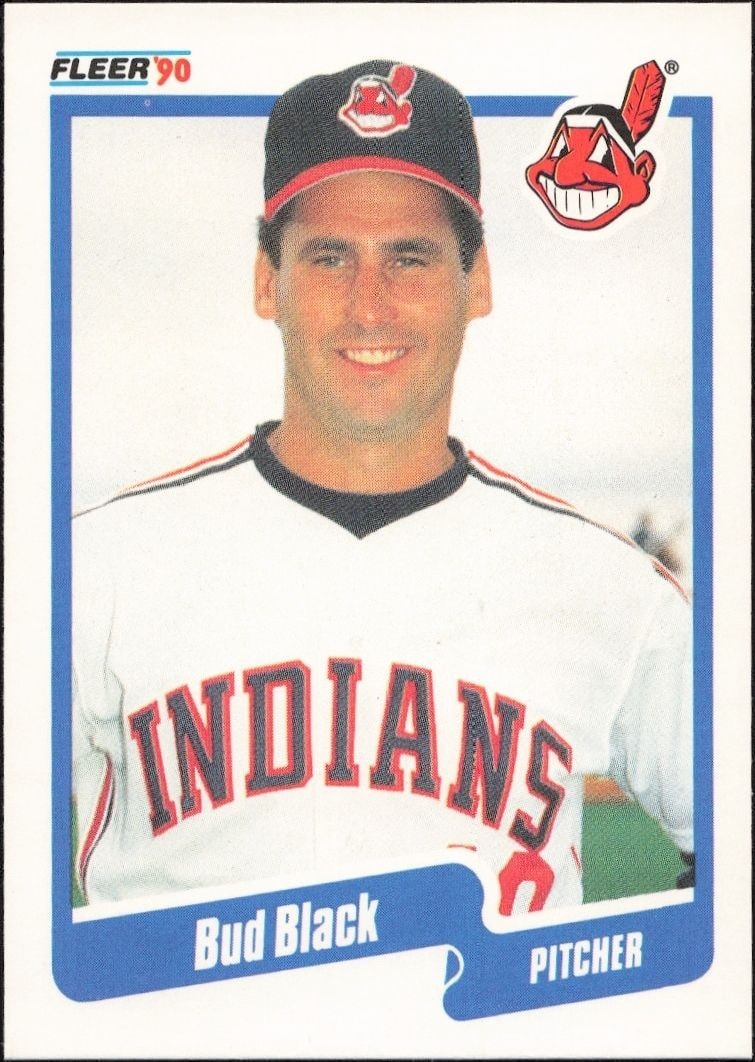


Acquire the 1990 Topps #144 Bud Black baseball card featuring the Cleveland Indians player. This vintage sports card is a staple for collectors of 1990s baseball memorabilia.
1990 • Topps
Major League Baseball • Cleveland Indians
Near Mint
144
New
Shipping Calculated at Checkout
Arrives in 4-6 daysEstimated delivery October 30, 2026 - November 1, 2026
30-day Returns| Condition | Value | Source | Trend | Price Details |
|---|---|---|---|---|
$0.99 | Guide Estimate | |||
$12.95 | Guide Estimate | |||
$14.00 | Guide Estimate | |||
$148.00 | Guide Estimate | |||
$68.00 | Guide Estimate | |||
$114.00 | Guide Estimate | |||
$68.00 | Guide Estimate | |||
Raw / Ungraded
PriceCharting Price Guide · Guide Estimate evidence · captured Oct 14, 2026
History is building. At least two days of matching observations are needed to show a trend.
Each point is the last stored observation that day for this printing, condition, grader, autograph status and source. Gaps mean no observation; guide estimates and asking prices are not completed sales.The 1990 Topps Bud Black #144 baseball card captures a specific moment in Cleveland Indians history, offering collectors a tangible link to the era. As part of the renowned 1990 Topps set, this card features Bud Black in his role with the Cleveland Indians, representing one of the most recognizable brands in trading card production. For those building a comprehensive collection of vintage baseball cards, the 1990 Topps Bud Black #144 offers a distinct identity within the broader catalog. Collectors often seek out specific numbers like #144 to complete their base set runs, valuing the uniform aesthetic that defines the entire 1990 release. While Bud Black may not have been a household name in 1990, his presence on this card appeals to those interested in the developmental stages of players who later transitioned into managerial roles, adding a layer of historical interest for dedicated fans. Whether you are focused on the Cleveland Indians franchise or the wider landscape of 1990s baseball trading cards, this product serves as a key component for set builders. The enduring popularity of the 1990 Topps brand ensures that cards like #144 remain relevant in the secondary market, offering both nostalgic value and a structured collecting goal for new and experienced hobbyists alike.
5 days ago
We'll pre-fill the product details from this catalog entry, so your listing lands on this exact page. Just add photos of your copy, pick its condition, and set your price.
The catalog profile below summarizes the card identity, featured subject, and notable collectible traits.
The subject, team, league, and sport context tied to this card.
Production details and format-specific attributes.
Material
Card Stock
Language
English
Compare prices, grades, photos, and shipping from approved sellers.
New
Near Mint
See how many public collections currently include this card.
0 collectors have this card
This 1990 Topps Bud Black card represents a mass-produced base issue with minimal market traction, currently hovering near the lower bound of the collectible spectrum. As a non-rookie, non-star card from a high-print-run set, it lacks the scarcity or player significance required to command any meaningful premium over raw face value. It serves primarily as a filler piece for casual completionists rather than a value-holding asset.
The card carries no special scarcity attributes, existing solely as a standard base parallel within a widely distributed annual set. Without serial numbering, short-print designations, or unique manufacturing processes, the supply is effectively infinite relative to collector demand. This unvarnished nature means there are no mechanical constraints on availability to support rarity-based valuation.
Given the absence of rookie card status and the player's limited historical impact on the hobby, there are no fundamental demand drivers to suggest future appreciation. The card's positioning as a common base item in a saturated market indicates it will likely remain stagnant with negligible liquidity. Investors should view this as a consumable collectible for personal enjoyment rather than a vehicle for capital growth.
