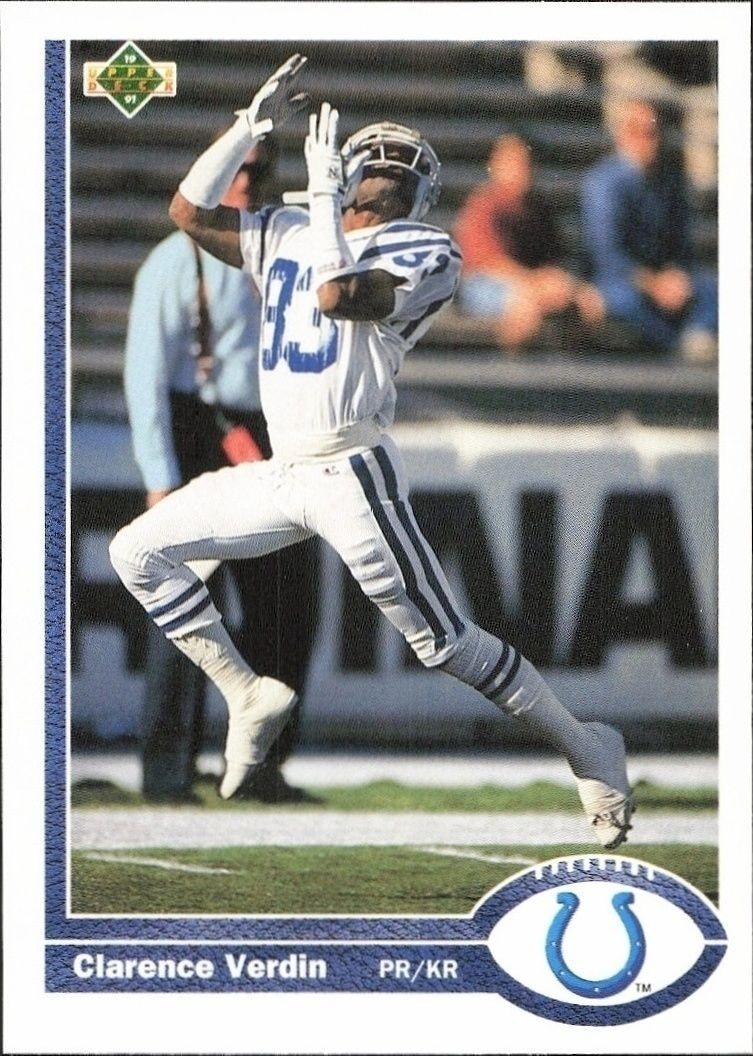

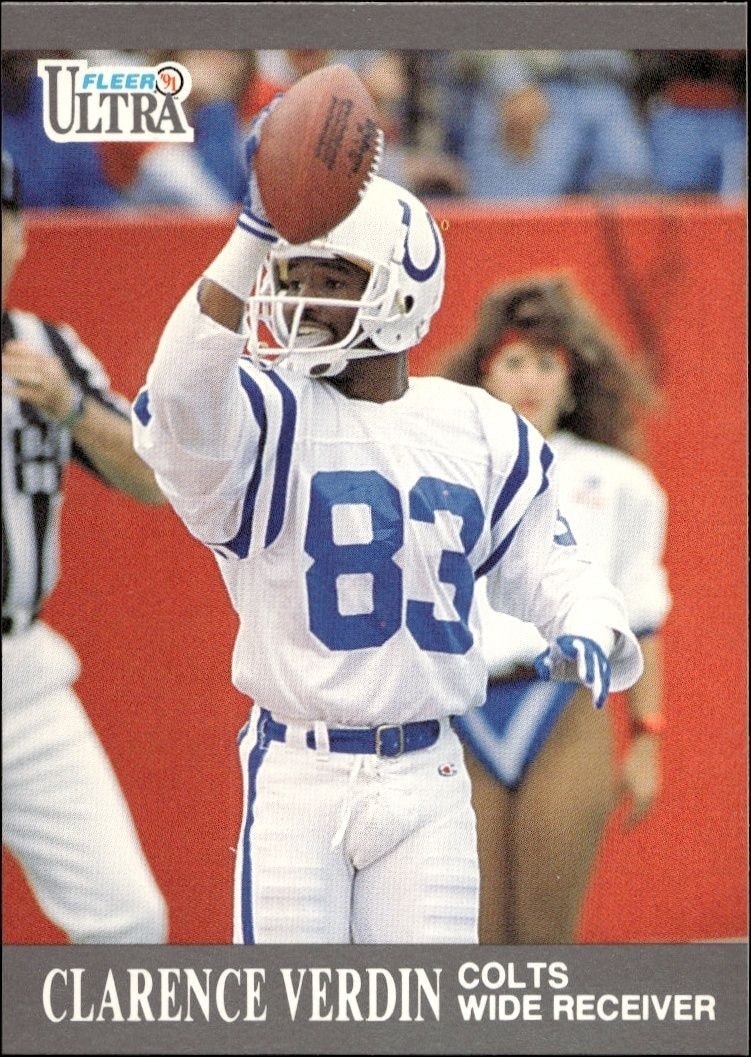
This 1990 Topps football card features Indianapolis Colts running back Clarence Verdin as card #307 in the iconic annual series.
1990 • Topps
National Football League • Indianapolis Colts
Excellent
307
New
Shipping Calculated at Checkout
Arrives in 5-7 daysEstimated delivery October 23, 2026 - October 25, 2026
Seller returns October 19, 2026.30-day Returns| Condition | Value | Source | Trend | Price Details |
|---|---|---|---|---|
$0.99As of 9/22/2026 | Guide Estimate | |||
$26.00As of 9/22/2026 | Guide Estimate | |||
$12.00As of 9/22/2026 | Guide Estimate | |||
$20.00As of 9/22/2026 | Guide Estimate | |||
$12.00As of 9/22/2026 | Guide Estimate | |||
Raw / Ungraded
PriceCharting Price Guide · Guide Estimate evidence · captured Sep 22, 2026
History is building. At least two days of matching observations are needed to show a trend.
Each point is the last stored observation that day for this printing, condition, grader, autograph status and source. Gaps mean no observation; guide estimates and asking prices are not completed sales.The 1990 Topps football card featuring Indianapolis Colts running back Clarence Verdin, designated as card number 307, represents a distinct era in sports memorabilia. Released during a pivotal time for the NFL, this card captures Verdin’s tenure with the Colts, offering collectors a tangible connection to the team's roster from the early 1990s. For investors and completists alike, the 1990 Topps Clarence Verdin #307 provides an accessible entry point into vintage football collecting. Verdin’s role as a key contributor to the Colts’ backfield during this period adds historical context to the card, enhancing its value as a piece of sports history. Collectors often seek out specific cards like this to fill gaps in their sets or to highlight particular players from their favorite teams. The 1990 Topps Clarence Verdin card is a staple for those interested in the NFL’s gridiron legacy, offering a clean and classic design that stands the test of time. Whether you are a long-time fan of the Colts or a dedicated collector of 1990s football cards, this product serves as a fundamental component of a well-rounded vintage collection. Its enduring popularity ensures that it remains a sought-after piece for anyone looking to preserve the history of the game. The card’s place in the 1990 Topps series makes it a versatile addition to any collection, bridging the gap between casual fandom and serious numismatic appreciation.
13 hours ago
We'll pre-fill the product details from this catalog entry, so your listing lands on this exact page. Just add photos of your copy, pick its condition, and set your price.
The catalog profile below summarizes the card identity, featured subject, and notable collectible traits.
The subject, team, league, and sport context tied to this card.
Production details and format-specific attributes.
Material
Card Stock
Language
English
Compare prices, grades, photos, and shipping from approved sellers.
New
Excellent
See how many public collections currently include this card.
0 collectors have this card
This 1990 Topps card of Clarence Verdin sits at the lower end of the market value spectrum, reflecting his status as a rotational player rather than a franchise cornerstone. The current pricing indicates a modest premium over raw bulk, typical for common base inserts featuring players without significant long-term Hall of Fame recognition. Its value is largely driven by nostalgia for the early 1990s era rather than elite player performance metrics.
As a standard base card without any noted parallel, short-print, or serial-numbered attributes, this item represents the highest tier of supply within the 1990 Topps set. The lack of special foil treatments or limited edition markers means it was produced in mass quantities, making individual copies widely available. Consequently, scarcity is minimal, and the card does not possess any unique physical characteristics that would constrain its distribution.
Investment potential is limited by the card's position as a common base issue in a highly saturated market segment. While the early 1990s nostalgia factor provides a stable collector base, the absence of rookie-card status or high-grade scarcity mechanisms caps its appreciation potential. It is better suited for completing basic set builds rather than serving as a primary store of value for speculative investors.