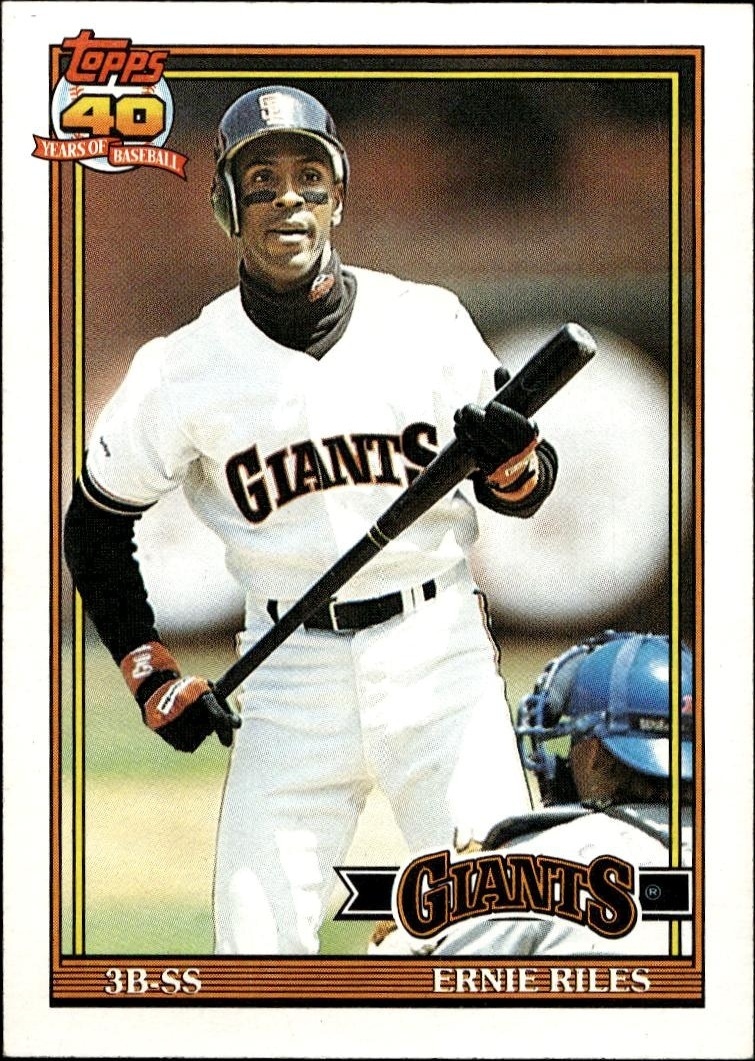


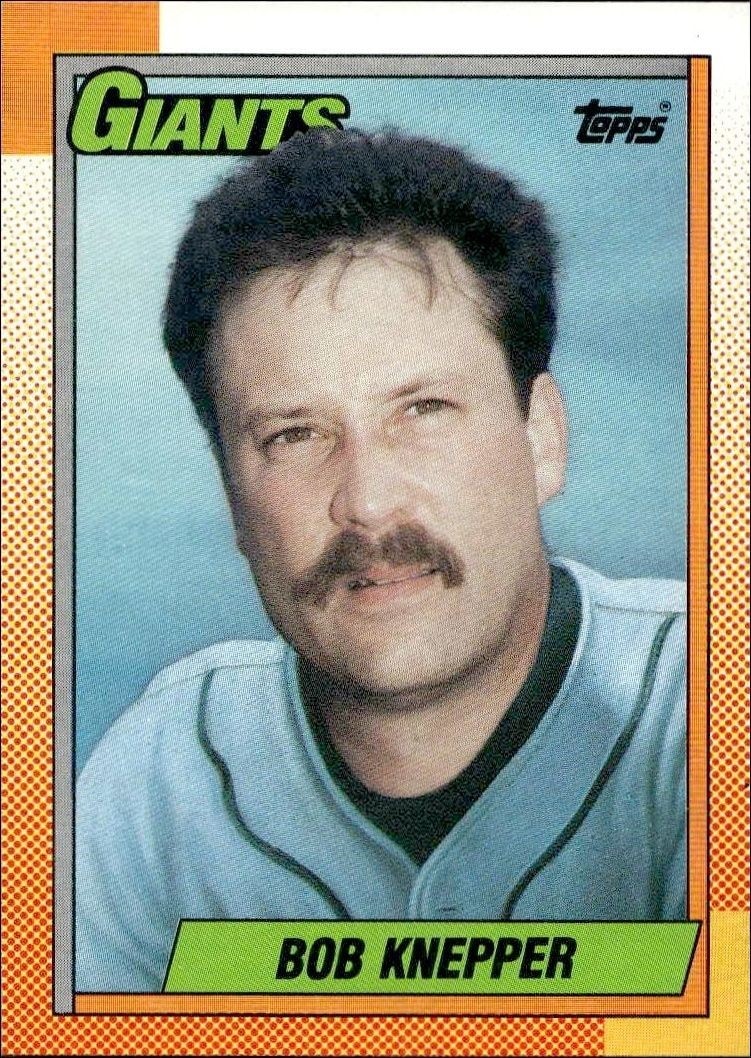

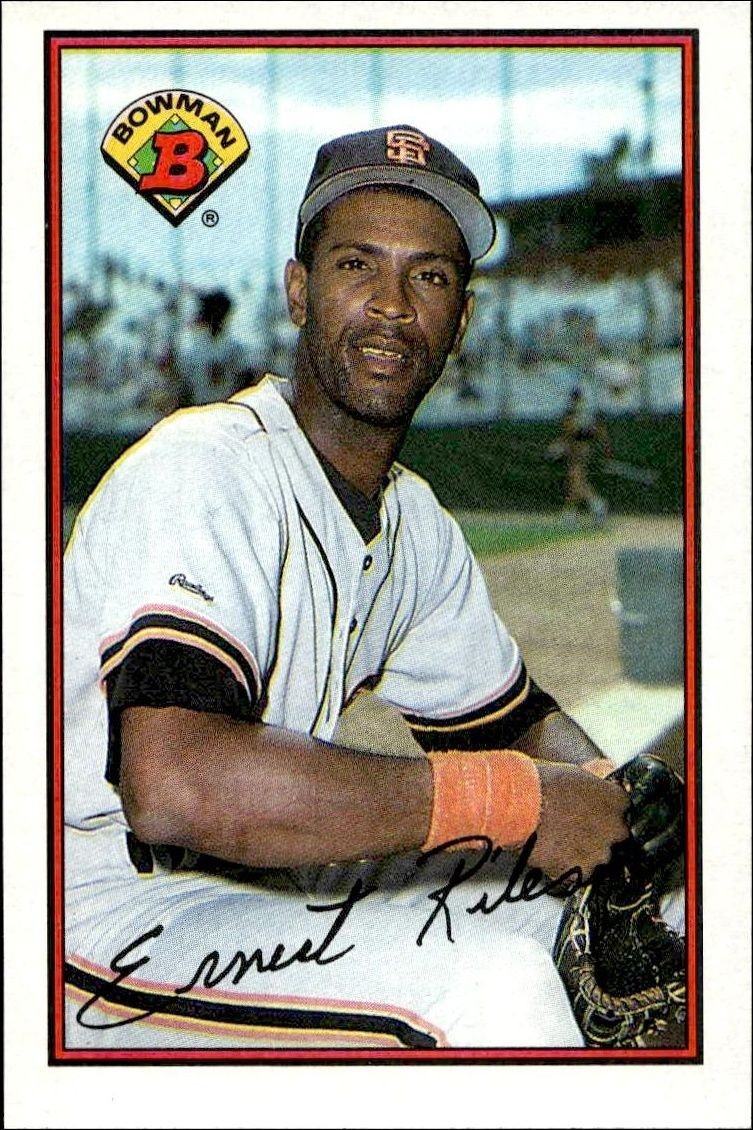
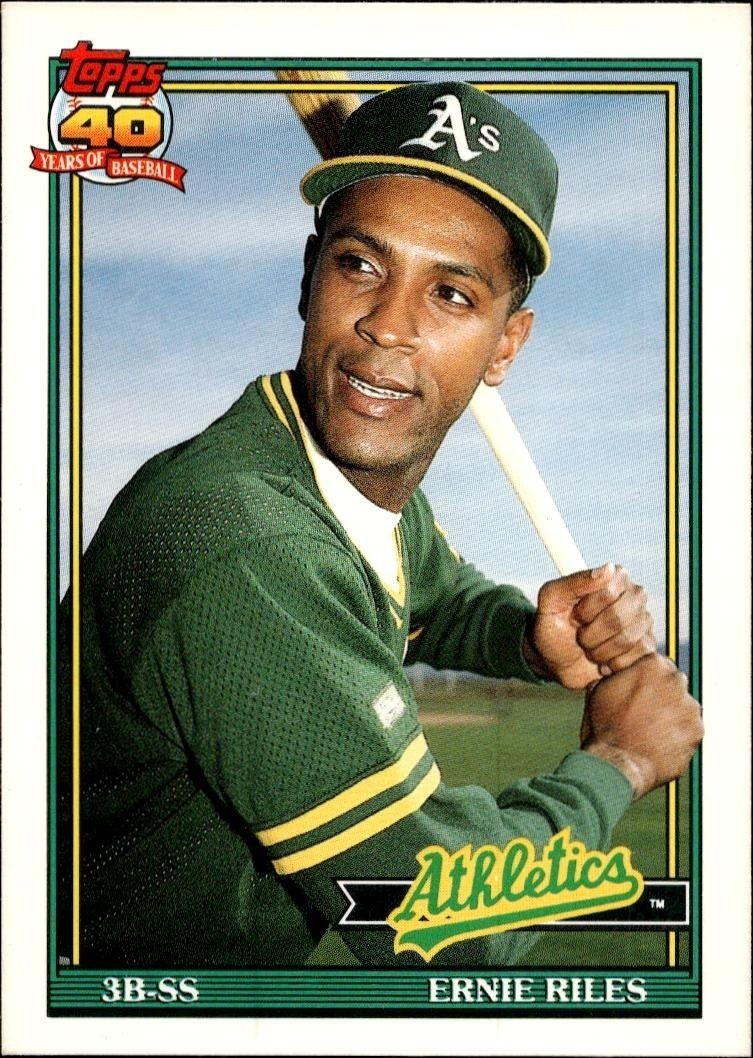


The 1990 Topps #732 Ernie Riles baseball card captures a snapshot of the San Francisco Giants' roster from the 1990 season. This collectible sports card is a staple for vintage baseball enthusiasts and set builders looking to complete their Topps collections.
1990 • Topps
Major League Baseball • San Francisco Giants
Excellent
732
New
Shipping Calculated at Checkout
Arrives in 4-6 daysEstimated delivery October 30, 2026 - November 1, 2026
30-day Returns| Condition | Value | Source | Trend | Price Details |
|---|---|---|---|---|
$1.00 | Asking Prices | 0% | ||
$16.38 | Guide Estimate | 0% | ||
$18.00 | Guide Estimate | 0% | ||
Raw / Ungraded
eBay Active Listings · Asking Prices evidence · captured Oct 24, 2026
Among the base set, card number 732 features Ernie Riles, who was listed on the San Francisco Giants roster during that year. For collectors focused on team history or specific player rosters, this card serves as a tangible link to the 1990 MLB season. Ernie Riles' appearance in the 1990 Topps series offers a glimpse into the depth of the Giants' lineup during that era. The card's catalog number, 732, places it within the high-numbered section of the standard 792-card base set, a common placement for reserve players or late-season call-ups. Collectors often seek out these cards to round out complete team sets or to track the career paths of players who had brief stints in the major leagues. The 1990 Topps brand is recognized for its durability and iconic status in the trading card industry. Whether you are a dedicated Giants fan, a specialist in 1990s baseball memorabilia, or a general hobbyist, the 1990 Topps Ernie Riles #732 provides a specific piece of sports history. It is a catalog-level item that allows collectors to document the full scope of the Giants' 1990 roster without needing to hunt for rarer inserts or parallels. For those building a collection of vintage sports cards, focusing on complete base sets is a popular strategy. The 1990 Topps release offers a wide array of players, making it accessible for new collectors while still holding nostalgic value for veterans. This card stands as a standard entry in the series, representing the everyday nature of professional baseball rosters. By acquiring this card number, collectors contribute to a broader understanding of the 1990 season's player landscape.
5 days ago
We'll pre-fill the product details from this catalog entry, so your listing lands on this exact page. Just add photos of your copy, pick its condition, and set your price.
The catalog profile below summarizes the card identity, featured subject, and notable collectible traits.
The subject, team, league, and sport context tied to this card.
Production details and format-specific attributes.
Material
Card Stock
Language
English
Compare prices, grades, photos, and shipping from approved sellers.
New
Excellent
See how many public collections currently include this card.
0 collectors have this card
This 1990 Topps Ernie Riles card trades at the lowest tier of the market, reflecting its status as a common base card with minimal collector interest. While the price point is accessible, the lack of special attributes or grading premiums limits its ability to command any value above standard bulk pricing. It serves primarily as a fill-in piece for complete set builders rather than a standalone investment asset.
The card carries no scarcity attributes, being a standard base issue from the 1990 Topps set without serial numbering, short-print status, or parallel finishes. As a mass-produced item from a major brand, supply is effectively unlimited relative to demand, ensuring it remains one of the most abundant items in the hobby. This absence of limiting mechanics means its value is driven entirely by its condition and availability rather than exclusivity.
With no rookie card designation or unique set positioning, the demand drivers for this item are limited to basic set completion needs rather than speculative growth. The absence of special attributes or high-grade examples suggests a flat outlook with little potential for appreciation over time. Investors should view this as a low-cost acquisition for fillers rather than a vehicle for capital preservation or growth.