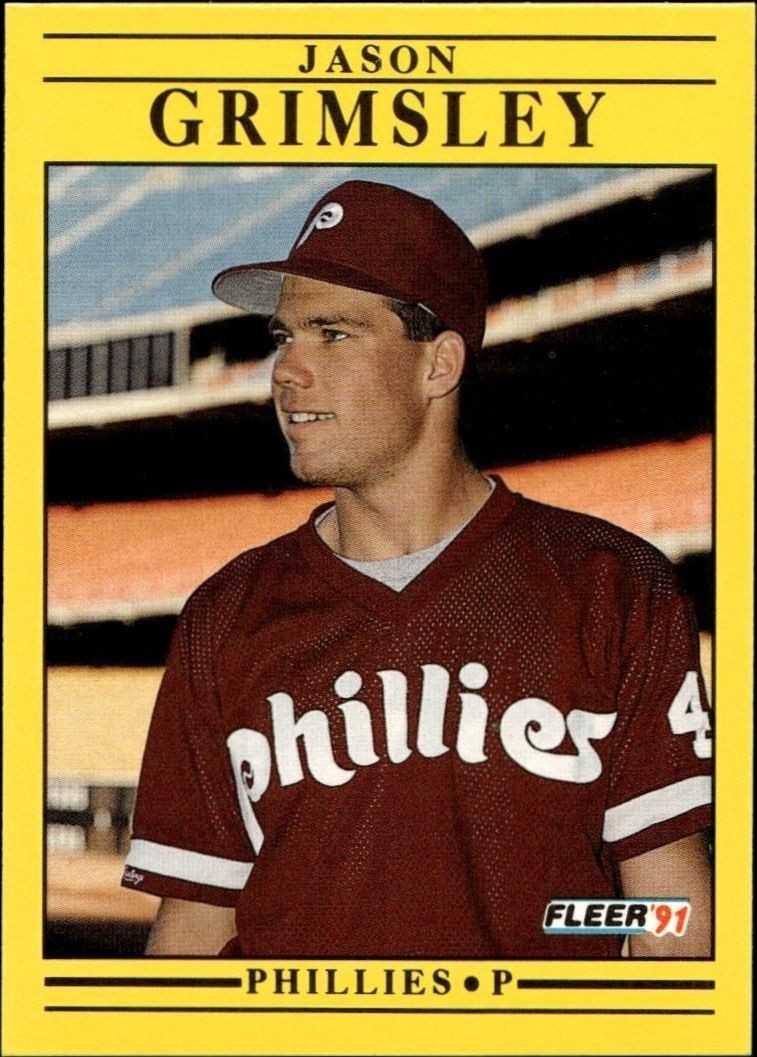

This 1990 Topps Jason Grimsley #493 baseball card features the Philadelphia Phillies pitcher in a standard release from the renowned Topps brand.
1990 • Topps
Major League Baseball • Philadelphia Phillies
Excellent
493
New
Shipping Calculated at Checkout
Arrives in 6-8 daysEstimated delivery October 23, 2026 - October 25, 2026
Seller returns October 19, 2026.30-day Returns| Condition | Value | Source | Trend | Price Details |
|---|---|---|---|---|
$1.55 | Guide Estimate | |||
Raw / Ungraded
PriceCharting Price Guide · Guide Estimate evidence · captured Oct 14, 2026
History is building. At least two days of matching observations are needed to show a trend.
Each point is the last stored observation that day for this printing, condition, grader, autograph status and source. Gaps mean no observation; guide estimates and asking prices are not completed sales.The 1990 Topps Jason Grimsley #493 baseball card stands as a definitive piece of vintage sports memorabilia, capturing the essence of early 1990s baseball culture. Issued by Topps, this card represents a specific moment in the career of Jason Grimsley during his tenure with the Philadelphia Phillies. For collectors focused on the 1990 Topps set, card number 493 serves as a key identifier within the larger catalog, offering a tangible connection to the era's design standards and printing techniques. This issue features Jason Grimsley, allowing enthusiasts of the Philadelphia Phillies or those who followed his journey in Major League Baseball to complete their series. The card's straightforward design reflects the manufacturing priorities of the time, prioritizing clear player identification and team affiliation over complex graphical elements. Collecting vintage baseball cards often involves seeking out specific years and brands that mark significant points in a player's history or the sport's evolution. The 1990 Topps Jason Grimsley #493 card provides a straightforward entry point for those building a collection based on set completion or player focus. As a standard release, it offers a consistent reference point for comparing different copies and understanding the market for vintage sports cards. Whether you are a long-time fan of the Philadelphia Phillies or a dedicated historian of baseball card manufacturing, this card represents a solid addition to any serious collection. The 1990 Topps brand continues to hold a prominent place in the hobby, and owning cards from this year allows collectors to preserve a piece of baseball history. By acquiring this card, you are investing in a well-documented artifact from a pivotal time in sports trading card production.
1 day ago
We'll pre-fill the product details from this catalog entry, so your listing lands on this exact page. Just add photos of your copy, pick its condition, and set your price.
The catalog profile below summarizes the card identity, featured subject, and notable collectible traits.
The subject, team, league, and sport context tied to this card.
Production details and format-specific attributes.
Material
Card Stock
Language
English
Compare prices, grades, photos, and shipping from approved sellers.
New
Excellent
See how many public collections currently include this card.
0 collectors have this card
As a non-premium base card from a major national set, this item occupies a lower tier in the market value hierarchy compared to parallel or insert variations of Jason Grimsley. The current pricing reflects its status as a common entry point rather than a high-value asset, typical for standard issues from this era. While it lacks the scarcity premiums of special variants, it remains accessible for casual collectors focusing on the Philadelphia Phillies or 1990 Topps sets.
This card is identified as a standard base issue with no noted special attributes such as serial numbering, short-print designation, or parallel coating. Consequently, it represents the highest volume subset within the 1990 Topps product, meaning supply is abundant and not constrained by limited production mechanics. The absence of unique identifiers or limited edition markers ensures it does not benefit from the scarcity premiums that drive value in other subsets.
The investment potential is primarily driven by the broader nostalgia for 1990s baseball and the general demand for Topps base cards, rather than specific rarity factors. Since it is not a rookie card and lacks special print attributes, it does not command a collector premium beyond its face value as a set-building component. Long-term value stability relies on the continued activity in the vintage baseball market rather than individual player performance metrics or card exclusivity.