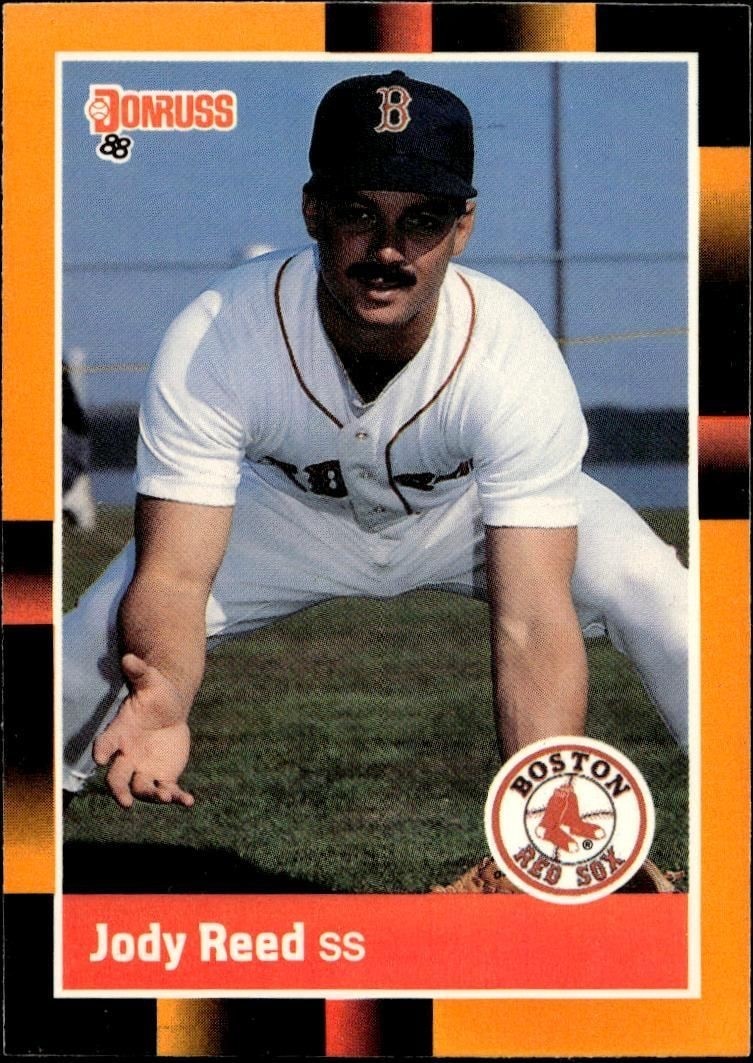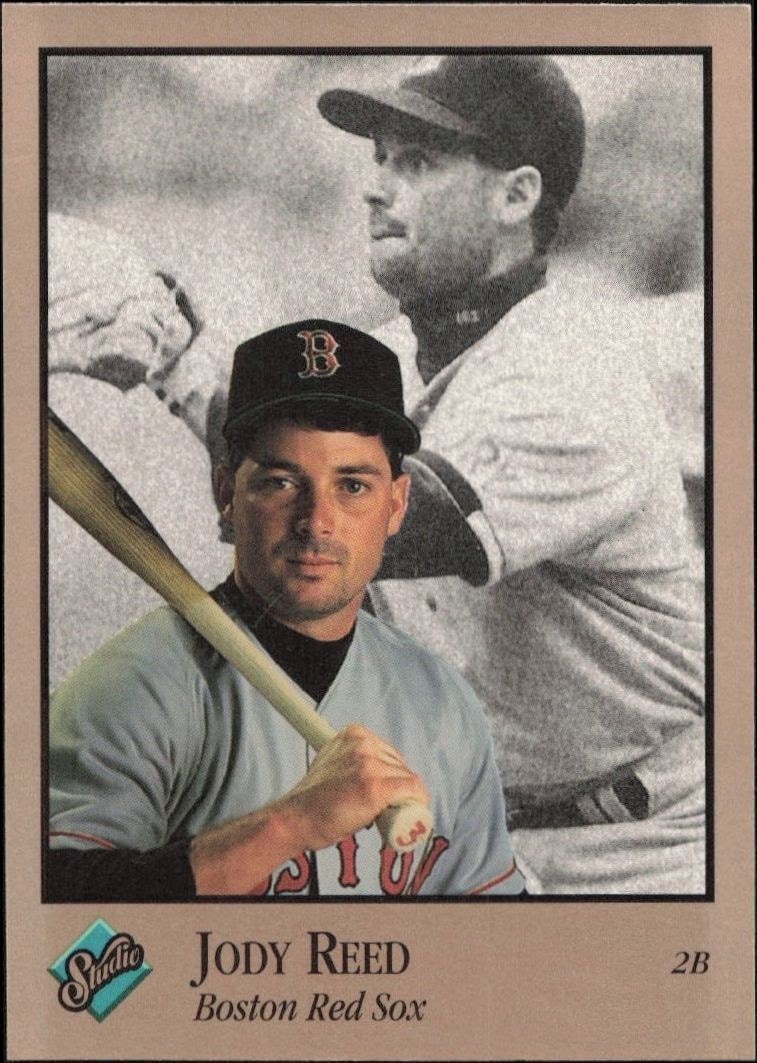
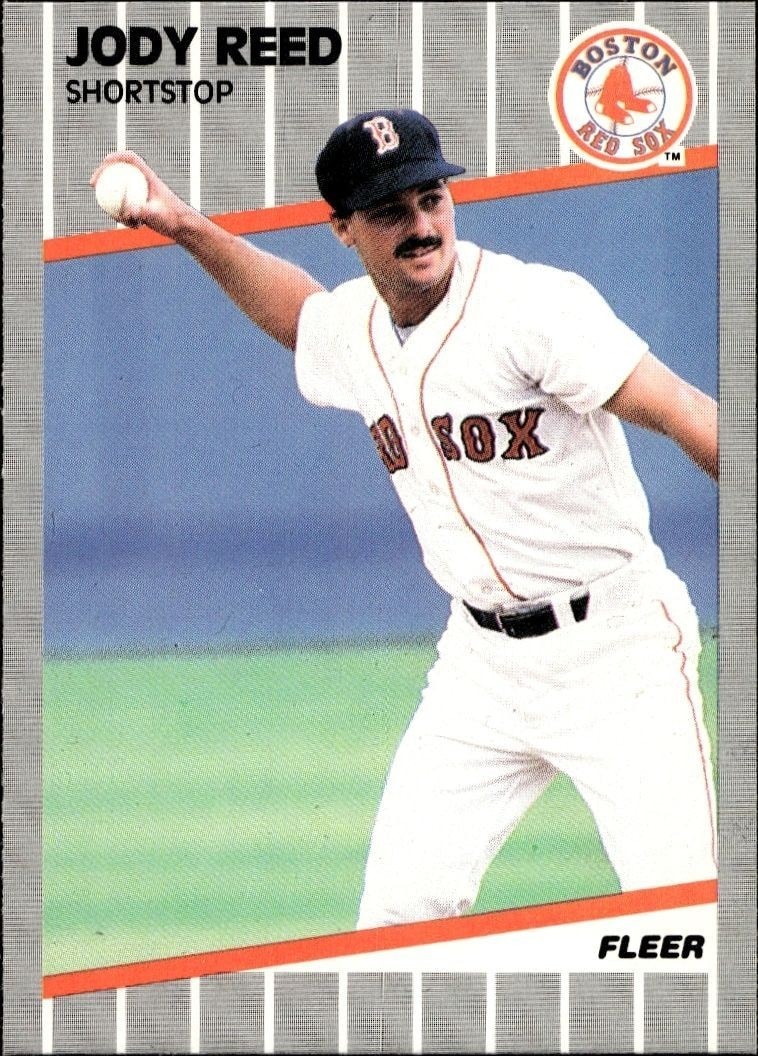

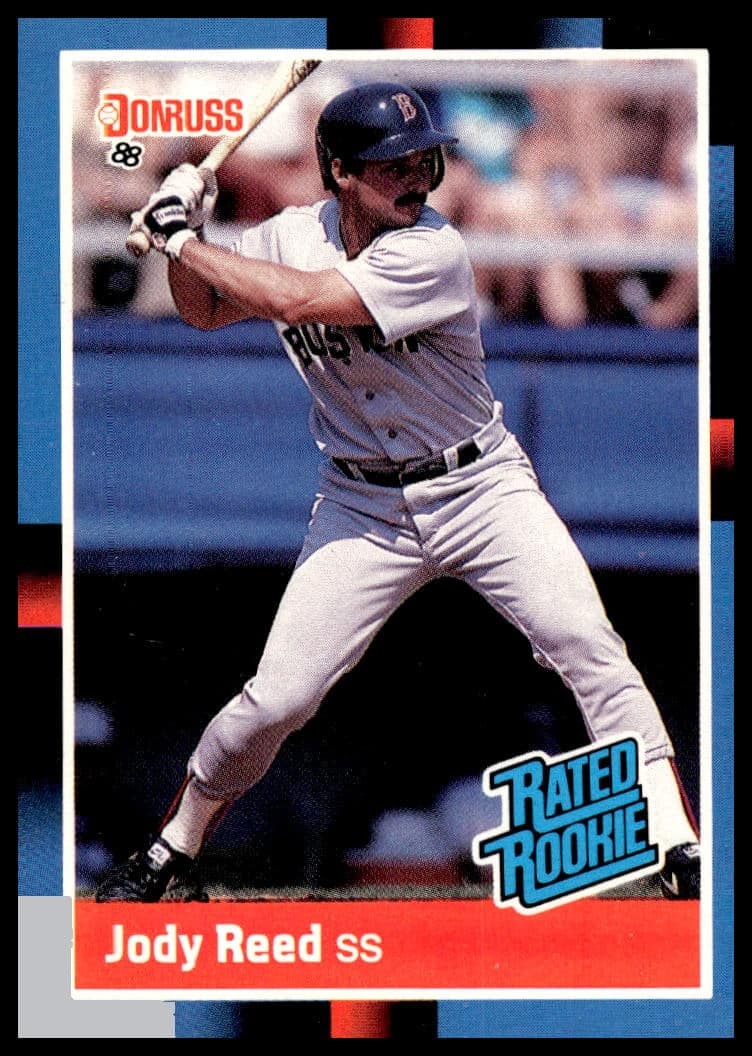

Explore the 1990 Topps Jody Reed #96 baseball card, featuring the Boston Red Sox infielder in one of the most recognizable designs in sports card history.
1990 • Topps
Major League Baseball • Boston Red Sox
Excellent
96
New
Shipping Calculated at Checkout
Arrives in 5-7 daysEstimated delivery October 23, 2026 - October 25, 2026
Seller returns October 19, 2026.30-day Returns| Condition | Value | Source | Trend | Price Details |
|---|---|---|---|---|
$1.00As of 9/21/2026 | Guide Estimate | |||
$9.99As of 9/21/2026 | Guide Estimate | |||
$11.00As of 9/21/2026 | Guide Estimate | |||
Raw / Ungraded
PriceCharting Price Guide · Guide Estimate evidence · captured Sep 21, 2026
History is building. At least two days of matching observations are needed to show a trend.
Each point is the last stored observation that day for this printing, condition, grader, autograph status and source. Gaps mean no observation; guide estimates and asking prices are not completed sales.Released in 1990, the Topps brand defined the era of baseball card collecting with its distinctive white border and bold typography. Jody Reed, #96 in this series, is featured prominently among the Boston Red Sox roster cards that capture the team's mid-90s identity. For collectors, this card number represents a tangible piece of 1990s baseball culture, offering a straightforward yet essential entry point for those focusing on Red Sox history or completing the base set. The design relies on the era's classic aesthetic, allowing the player's image and statistics to take center stage without distraction. Whether you are building a team collection or seeking a nostalgic piece from the pre-digital age of hobbies, this card provides a reliable connection to that period. The card serves as a historical record of Reed's tenure with the Sox, making it a valuable addition for fans of the franchise's past rosters. ## What is the significance of the 1990 Topps baseball card set? The 1990 Topps set is widely regarded as one of the last great classic design sets before the industry shifted to glossy and textured finishes. Collectors appreciate the clean, white-bordered look that became synonymous with the brand's golden age. ## Why is Jody Reed #96 sought after by Boston Red Sox fans? Jody Reed played for the Boston Red Sox during the early 1990s, and this card documents his time with the team. Fans often collect this card to complete their personal archives of Red Sox players from that specific decade. ## How does the 1990 Topps design differ from modern cards? Unlike modern cards that often feature complex graphics, parallel variations, and holographic elements, the 1990 Topps design is minimalist. It focuses on a straightforward layout that highlights the player's action shot and basic biographical data.
16 hours ago
We'll pre-fill the product details from this catalog entry, so your listing lands on this exact page. Just add photos of your copy, pick its condition, and set your price.
The catalog profile below summarizes the card identity, featured subject, and notable collectible traits.
The subject, team, league, and sport context tied to this card.
Production details and format-specific attributes.
Material
Card Stock
Language
English
Compare prices, grades, photos, and shipping from approved sellers.
New
Excellent
See how many public collections currently include this card.
0 collectors have this card
This 1990 Topps Jody Reed card occupies the lower tier of the hobby's mass-produced staples, trading significantly below the premium tier associated with franchise icons. Its current valuation reflects a surplus of high-grade examples in circulation, resulting in minimal condition premiums for standard copies. While it lacks the speculative heat of rookie cards, it remains an accessible entry point for set completists focusing on the Boston Red Sox era.
The card possesses no special scarcity attributes, existing solely as a base parallel within the main 1990 Topps product. This standard production method implies a high print run, ensuring that supply vastly outstrips collector demand for non-essential players. Consequently, the item lacks the serial numbering or short-print mechanics that typically constrain availability and drive secondary market value.
As a non-rookie card for a player without Hall of Fame tenure, the investment outlook is stable but offers limited upside potential. Demand is primarily driven by nostalgia and set completion rather than speculation on career trajectory or grading trends. Collectors should view this as a budget-friendly acquisition for filling gaps rather than a vehicle for capital appreciation.