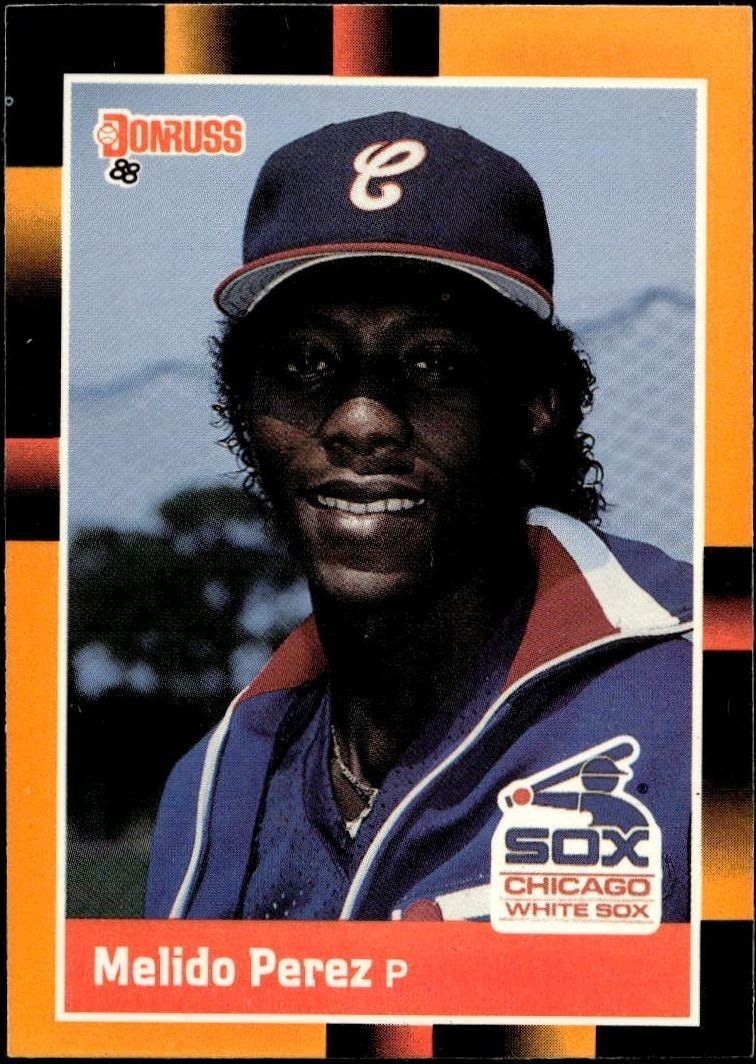




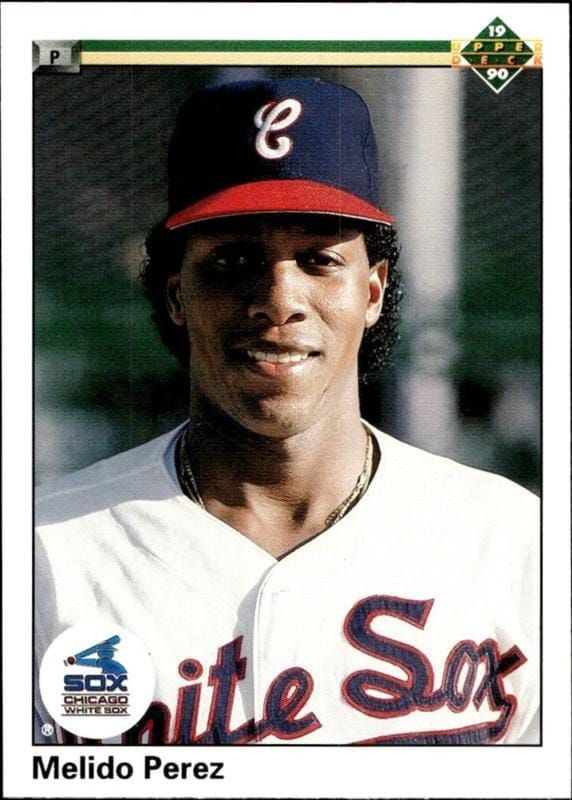


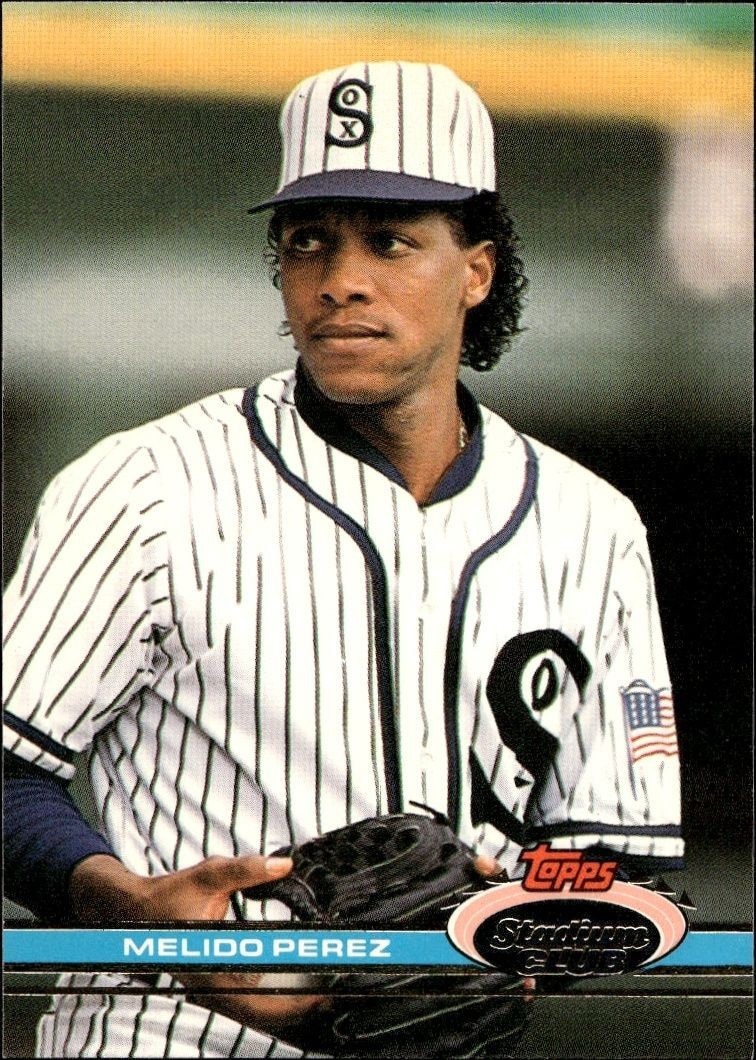
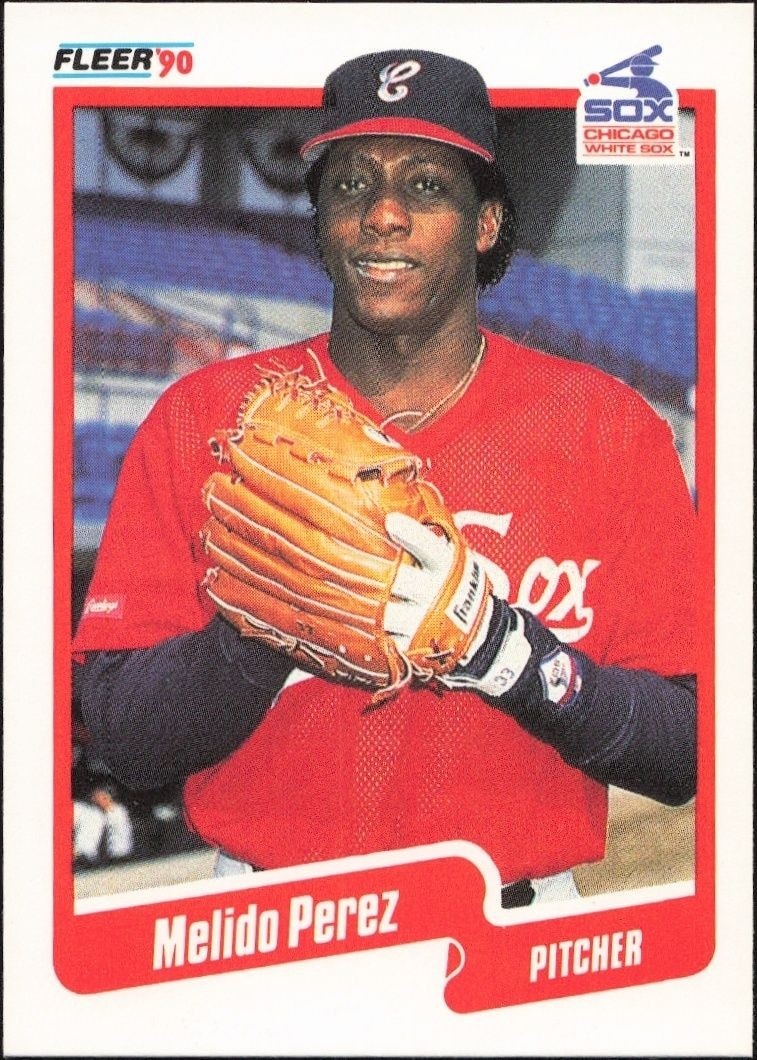
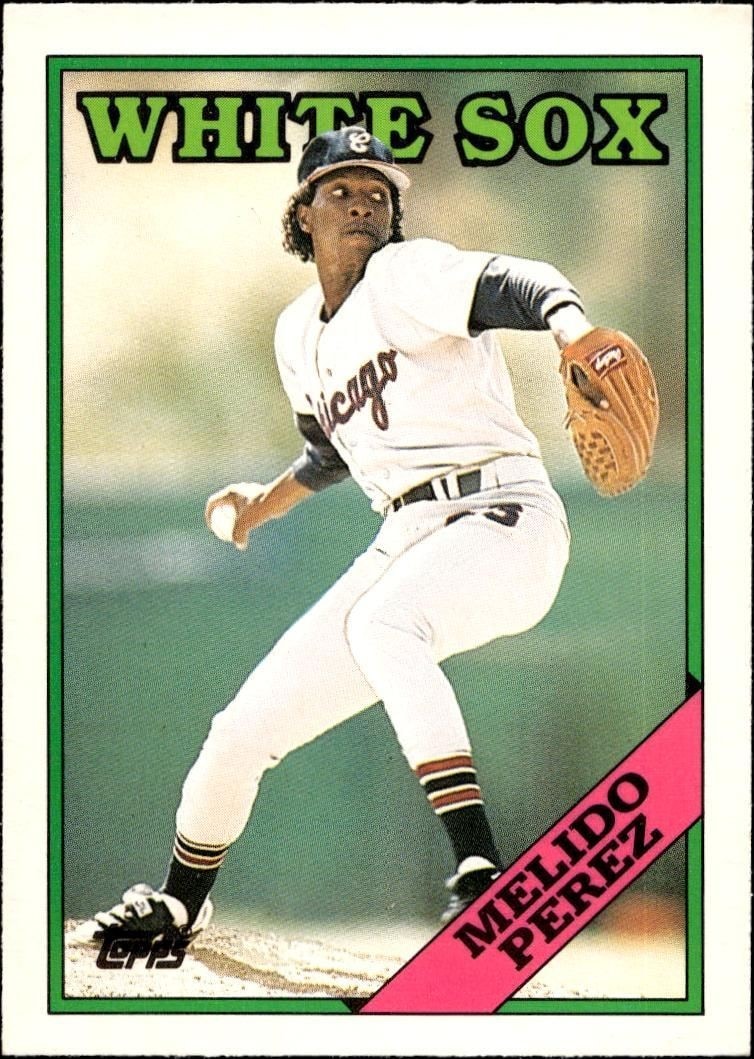
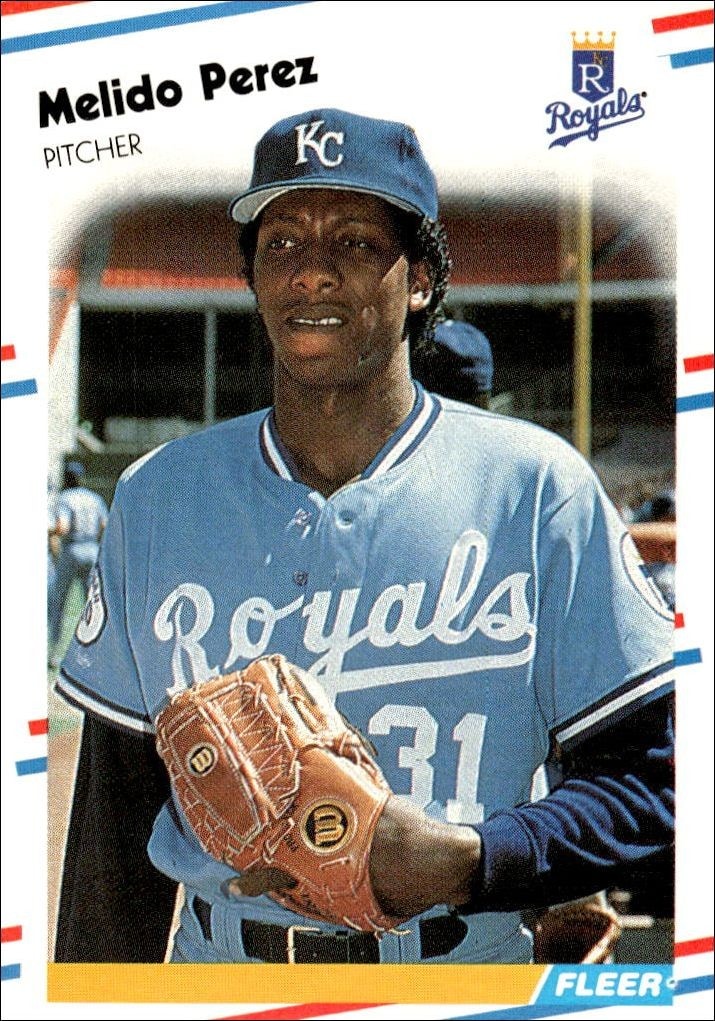
The 1990 Topps Melido Perez #621 is a standard baseball trading card featuring the Chicago White Sox pitcher. This catalog entry represents the base release from the 1990 Topps series.
1990 • Topps
Major League Baseball • Chicago White Sox
Excellent
621
New
Shipping Calculated at Checkout
Arrives in 4-6 daysEstimated delivery October 24, 2026 - October 26, 2026
30-day Returns| Condition | Value | Source | Trend | Price Details |
|---|---|---|---|---|
$0.50As of 10/5/2026 | Guide Estimate | |||
Raw / Ungraded
PriceCharting Price Guide · Guide Estimate evidence · captured Oct 5, 2026
History is building. At least two days of matching observations are needed to show a trend.
Each point is the last stored observation that day for this printing, condition, grader, autograph status and source. Gaps mean no observation; guide estimates and asking prices are not completed sales.The 1990 Topps Melido Perez #621 represents a specific moment in Major League Baseball history, capturing the career of the Chicago White Sox pitcher during the 1990 season. Collectors often seek cards from this year to build comprehensive sets or to trace the progression of players who appeared in the major leagues during that time. Melido Perez's inclusion in the 1990 Topps catalog highlights his role with the White Sox organization. For investors and hobbyists, the 1990 release holds a distinct place in the hobby's timeline, bridging the gap between the vintage era and the modern boom. The card's identity is rooted in its catalog number, 621, which allows collectors to easily track and organize their holdings within the broader series. When considering the 1990 Topps Melido Perez #621, it is important to understand its context within the sports card market. The card serves as a tangible link to the 1990 baseball season, offering a piece of memorabilia that appeals to those with an interest in the White Sox or Perez's professional journey. Whether used to complete a year-specific collection or as a standalone piece of baseball history, this product remains a relevant item for enthusiasts of the sport. Collectors focusing on the 1990 Topps set will find this card an essential component of their assembly. The standard design of the release emphasizes the player's information and team affiliation, providing a clear and concise representation of the athlete at that point in time. For those building a library of baseball cards, maintaining a diverse selection of years and teams is key, and the 1990 Topps series offers a robust foundation for such endeavors.
5 hours ago
We'll pre-fill the product details from this catalog entry, so your listing lands on this exact page. Just add photos of your copy, pick its condition, and set your price.
The catalog profile below summarizes the card identity, featured subject, and notable collectible traits.
The subject, team, league, and sport context tied to this card.
Production details and format-specific attributes.
Material
Card Stock
Language
English
Compare prices, grades, photos, and shipping from approved sellers.
New
Excellent
See how many public collections currently include this card.
0 collectors have this card
This entry represents a standard base card from the 1990 Topps set, reflecting the typical low-tier market positioning associated with mass-produced baseball cards from the early 1990s. As Melido Perez is not a marquee franchise icon, the card trades at the lower end of the price spectrum, driven primarily by its status as a common base issue rather than any significant career accolades. The current market value is minimal, consistent with the abundant supply of non-premium inserts from this era.
The card possesses no special scarcity attributes, lacking any serial numbering, short-print designations, or parallel variations that would constrain its supply. It is a standard base card within the 1990 Topps product, meaning its availability is determined by the original mass print run rather than limited edition mechanics. Consequently, the supply is effectively unlimited relative to collector demand, offering no structural rarity to support value retention.
As a non-rookie card from a high-volume set, this item lacks the primary demand drivers that typically fuel long-term appreciation in the vintage sports card market. The absence of rookie status or premium parallel features suggests that collector interest will remain niche, limited largely to those completing specific team or year sets. Without unique attributes to differentiate it from the broader population, it is unlikely to outperform the general market trends for common 1990s baseball cards.