











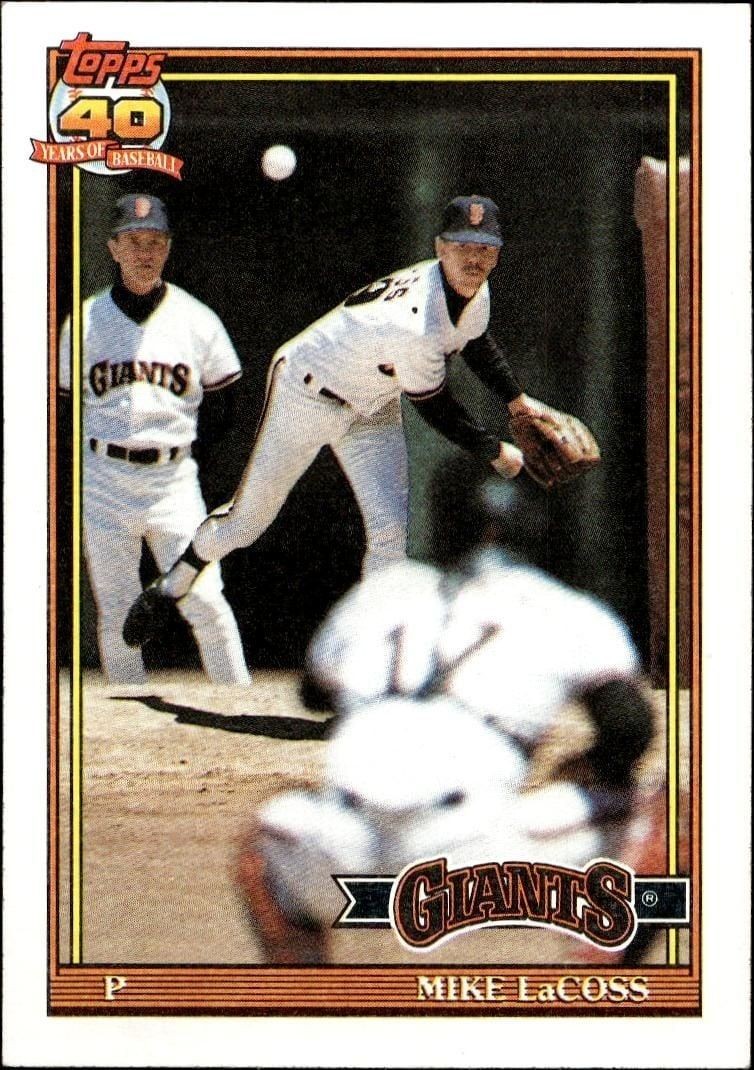




The 1990 Topps Mike LaCoss #53 baseball card captures the San Francisco Giants player in the iconic Topps design of the early 1990s.
1990 • Topps
Major League Baseball • San Francisco Giants
Excellent
53
New
Shipping Calculated at Checkout
Arrives in 5-7 daysEstimated delivery October 23, 2026 - October 25, 2026
Seller returns October 19, 2026.30-day Returns| Condition | Value | Source | Trend | Price Details |
|---|---|---|---|---|
$0.27As of 9/26/2026 | Guide Estimate | 0% | ||
Raw / Ungraded
PriceCharting Price Guide · Guide Estimate evidence · captured Sep 27, 2026
The 1990 Topps Mike LaCoss #53 baseball card stands as a recognizable piece of early 1990s sports memorabilia. Released by Topps, this product is a staple for enthusiasts looking to complete their 1990 Topps set or build a focused collection around the San Francisco Giants. Card number 53 features Mike LaCoss, providing a tangible link to the roster composition of that specific baseball season. Collectors often gravitate toward this card due to its straightforward design and historical context. For those building a library of Giants history or tracking the careers of players from this period, the Mike LaCoss card offers a concrete entry point. It represents a snapshot of the player's tenure with the team, preserved in the standardized format that Topps established during this decade. Whether you are a seasoned investor in vintage sports cards or a casual hobbyist starting a new series, this card holds a distinct place in the broader Topps catalog. The 1990 release is particularly significant for its production volume and widespread distribution, making it accessible yet highly collectible. Mike LaCoss, as featured on card 53, allows fans to connect with the specific lineup of the San Francisco Giants from over three decades ago. This product serves as a fundamental component for anyone documenting the history of the sport through its primary trading card products. The combination of the Topps brand, the 1990 year, and the specific player makes this product for any organized collection focused on this era of baseball.
13 hours ago
We'll pre-fill the product details from this catalog entry, so your listing lands on this exact page. Just add photos of your copy, pick its condition, and set your price.
The catalog profile below summarizes the card identity, featured subject, and notable collectible traits.
The subject, team, league, and sport context tied to this card.
Production details and format-specific attributes.
Material
Card Stock
Language
English
Compare prices, grades, photos, and shipping from approved sellers.
New
Excellent
See how many public collections currently include this card.
0 collectors have this card
This 1990 Topps Mike LaCoss card represents a baseline entry point for collectors focusing on San Francisco Giants roster pieces from the early 1990s era. Its current valuation suggests it trades below the premium tier typically associated with star players or vintage key cards, reflecting its status as a common base card. The listing availability indicates a stable but low-demand market, positioning it as an affordable acquisition for niche team completists rather than a high-value investment piece.
The card lacks any special scarcity attributes such as serial numbering, short printing, or parallel variations, classifying it as a standard base issue from the 1990 Topps set. This mass-produced nature means supply is effectively unlimited relative to collector demand, as no print run limits or unique identifiers constrain its availability. Consequently, it does not benefit from the scarcity mechanics that typically drive value appreciation in limited-edition sports collectibles.
As a non-rookie base card for a player who did not achieve long-term stardom, the collector demand drivers are limited primarily to team-specific completion sets. The lack of rookie-card premium or significant career accolades noted in the attributes suggests minimal upside potential for price appreciation. Investors should view this item as a functional component for set building rather than a vehicle for financial growth, given its common status within the broader baseball card market.
