


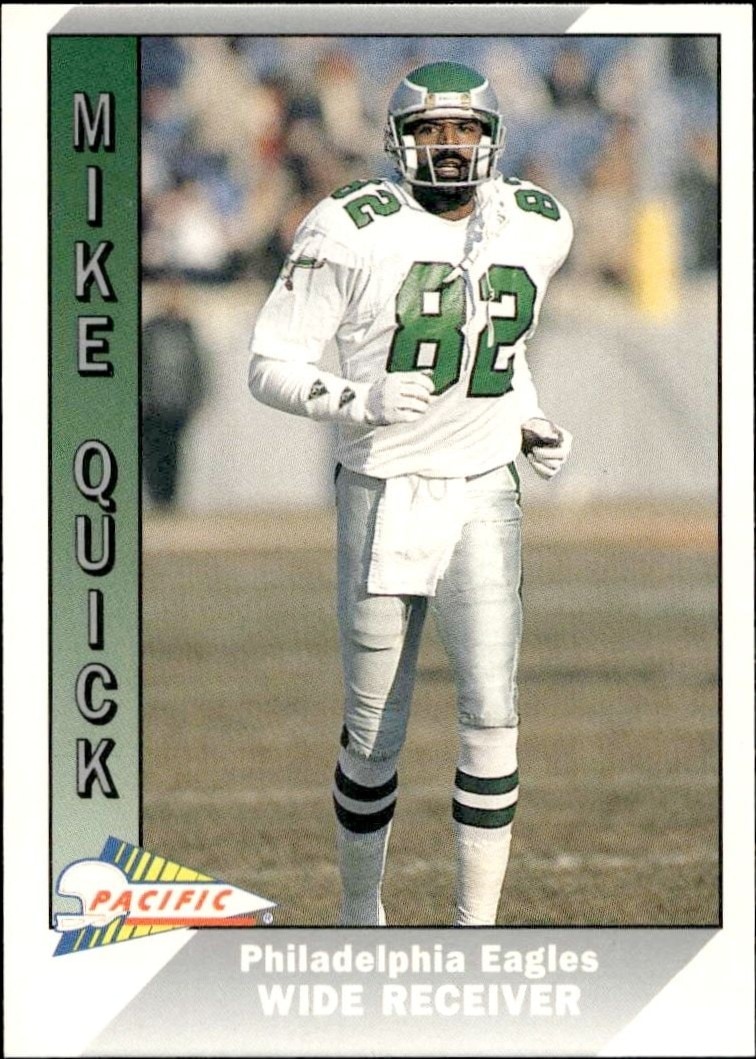

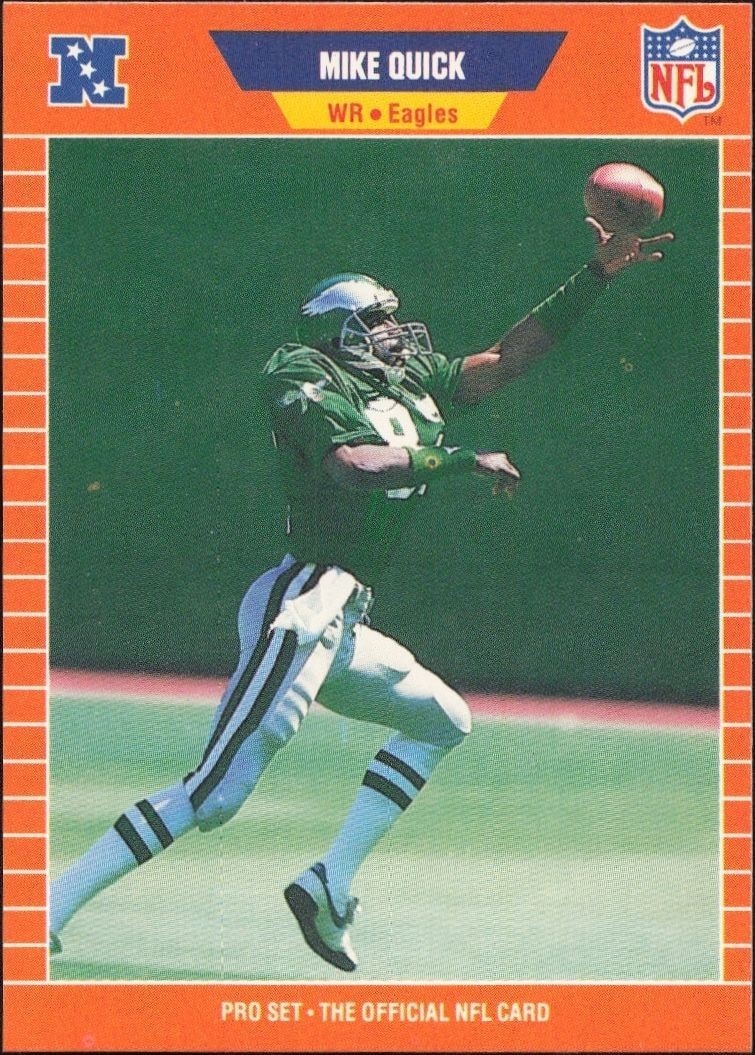

The 1990 Topps Mike Quick #95 card captures the Philadelphia Eagles receiver during his tenure in the NFL, featuring standard Topps design elements.
1990 • Topps
National Football League • Philadelphia Eagles
Excellent
95
New
Shipping Calculated at Checkout
Arrives in 5-7 daysEstimated delivery October 23, 2026 - October 25, 2026
Seller returns October 19, 2026.30-day Returns| Condition | Value | Source | Trend | Price Details |
|---|---|---|---|---|
$0.99 | Asking Prices | |||
Raw / Ungraded
eBay Active Listings · Asking Prices evidence · captured Oct 11, 2026
History is building. At least two days of matching observations are needed to show a trend.
Each point is the last stored observation that day for this printing, condition, grader, autograph status and source. Gaps mean no observation; guide estimates and asking prices are not completed sales.The 1990 Topps Mike Quick #95 card stands as a tangible piece of 1990s NFL history, featuring the Philadelphia Eagles receiver during a pivotal era of the league. Mike Quick established himself as a reliable target for the Eagles throughout his career, and this card documents his presence on the roster during the 1990 season. The card itself adheres to the standard Topps format of the time, offering a straightforward presentation of the player that appeals to both casual fans and dedicated set completers. For those building a collection of Eagles memorabilia or focusing on the 1990 Topps set, this card number provides a clear connection to the team's lineup from that year. Collecting vintage football cards has seen a resurgence, with enthusiasts seeking out specific seasons and players to complete their arrays. The 1990 Topps set remains a staple in many collections due to its nostalgic value and the iconic status of the brand. Whether you are looking to fill a gap in your Philadelphia Eagles subset or simply appreciate the design aesthetics of early 90s sports cards, the Mike Quick #95 card offers a solid addition. It represents a specific moment in time, capturing the player in his Eagles uniform without the complexity of parallels or inserts, making it an accessible entry point for new collectors or a necessary component for veteran hobbyists aiming for a complete base set run.
22 hours ago
We'll pre-fill the product details from this catalog entry, so your listing lands on this exact page. Just add photos of your copy, pick its condition, and set your price.
The catalog profile below summarizes the card identity, featured subject, and notable collectible traits.
The subject, team, league, and sport context tied to this card.
Production details and format-specific attributes.
Material
Card Stock
Language
English
Compare prices, grades, photos, and shipping from approved sellers.
New
Excellent
See how many public collections currently include this card.
0 collectors have this card
This 1990 Topps base card of Mike Quick sits at the lower end of the value spectrum for Eagles-era football cards, reflecting its status as a common issue rather than a premium insert. While it lacks the grading premiums associated with higher-grade examples or rare parallels, it remains accessible for collectors seeking affordable representation of the 1990 NFL season. The card's value is driven by its accessibility and the nostalgic appeal of early 90s football design rather than scarcity or high-grade availability.
As a standard base card from a mass-produced 1990 Topps football set, this item carries no inherent scarcity mechanics such as serial numbering, short-printing, or one-of-one status. The supply is effectively unlimited relative to collector demand, meaning there is no structural constraint on availability through print runs or limited editions. Consequently, the card does not benefit from the supply-side dynamics that typically drive value appreciation in the secondary market.
Investment potential for this specific card is limited due to its position as a common base issue with abundant market supply. While it may hold modest interest for casual Eagles or Mike Quick completists, it lacks the rookie-card premium, set significance, or parallel attributes that typically drive sustained collector demand. Long-term value growth is unlikely without exceptional condition upgrades or broader market trends favoring early 90s football nostalgia.