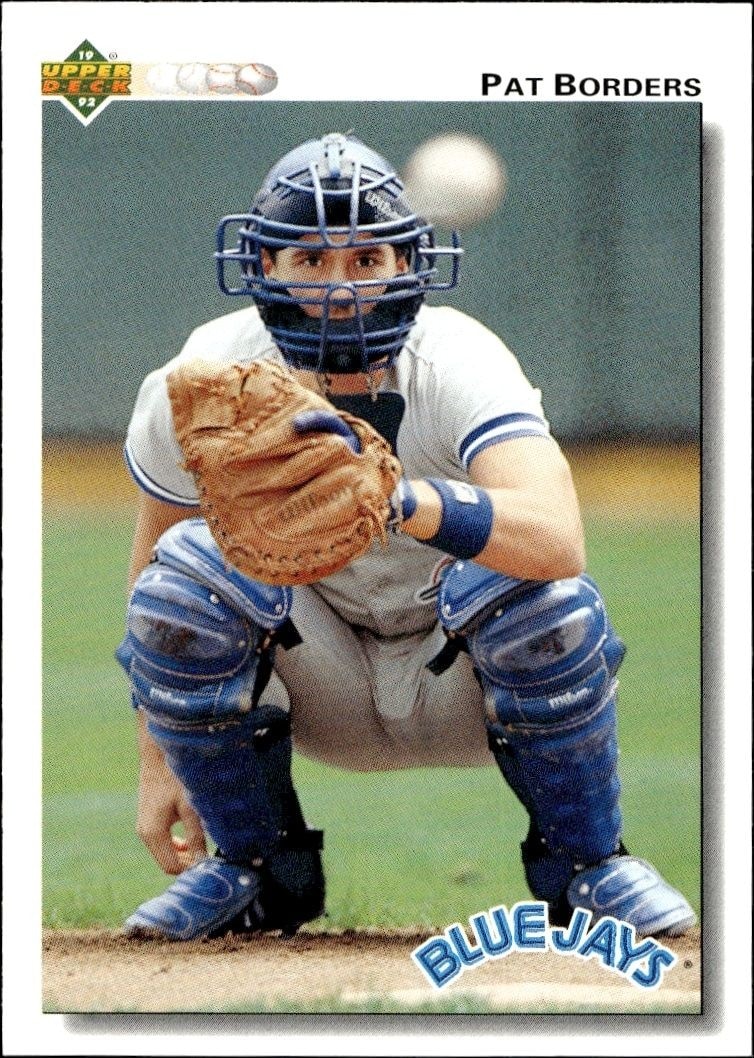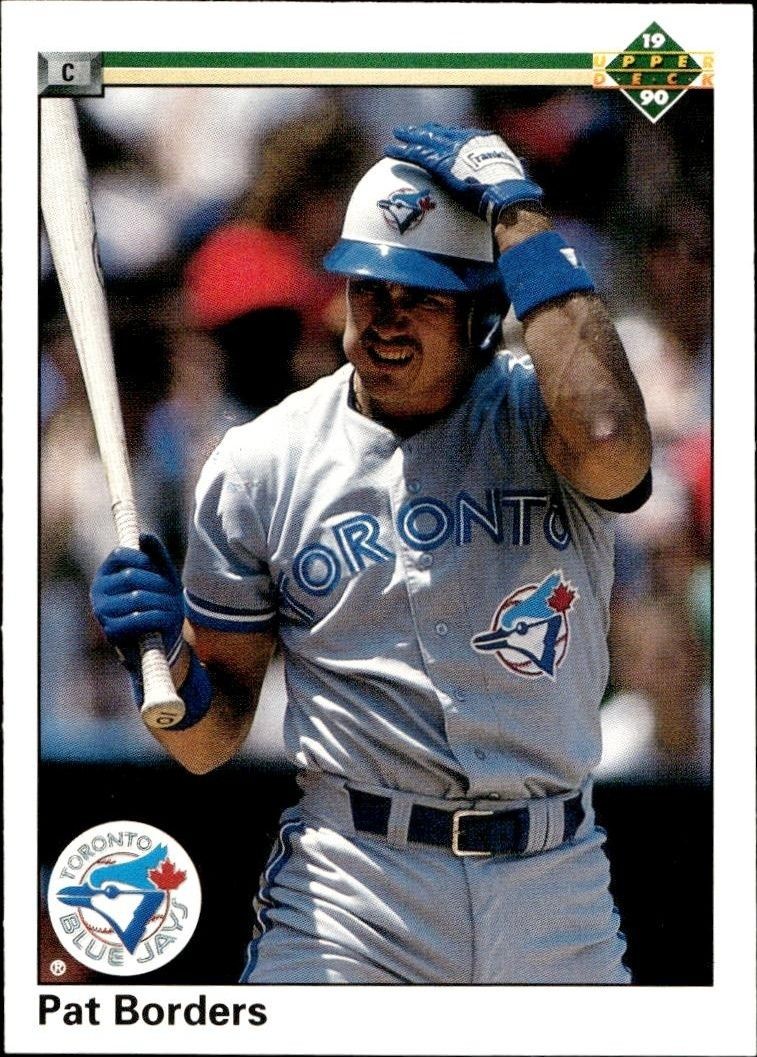
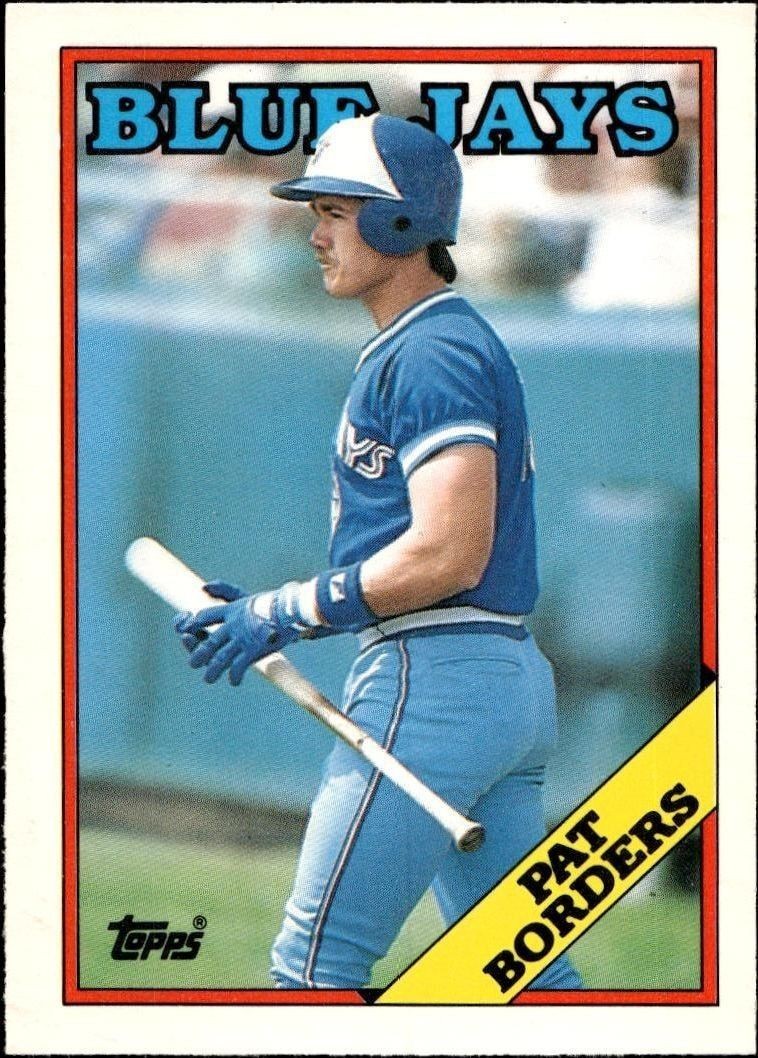
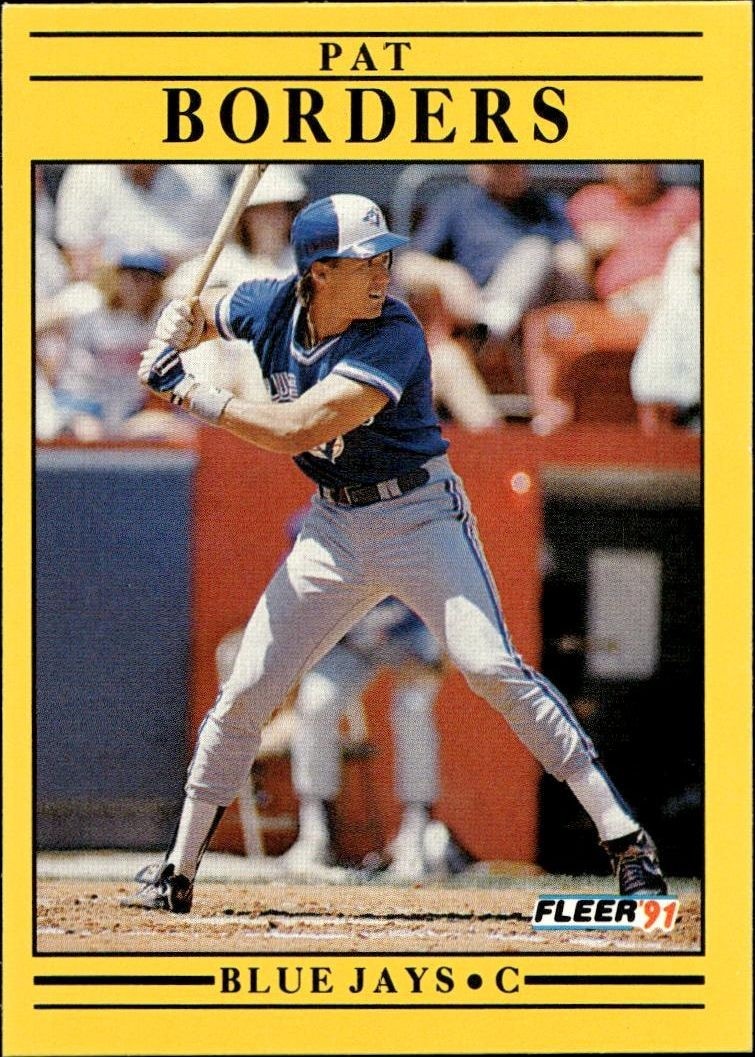

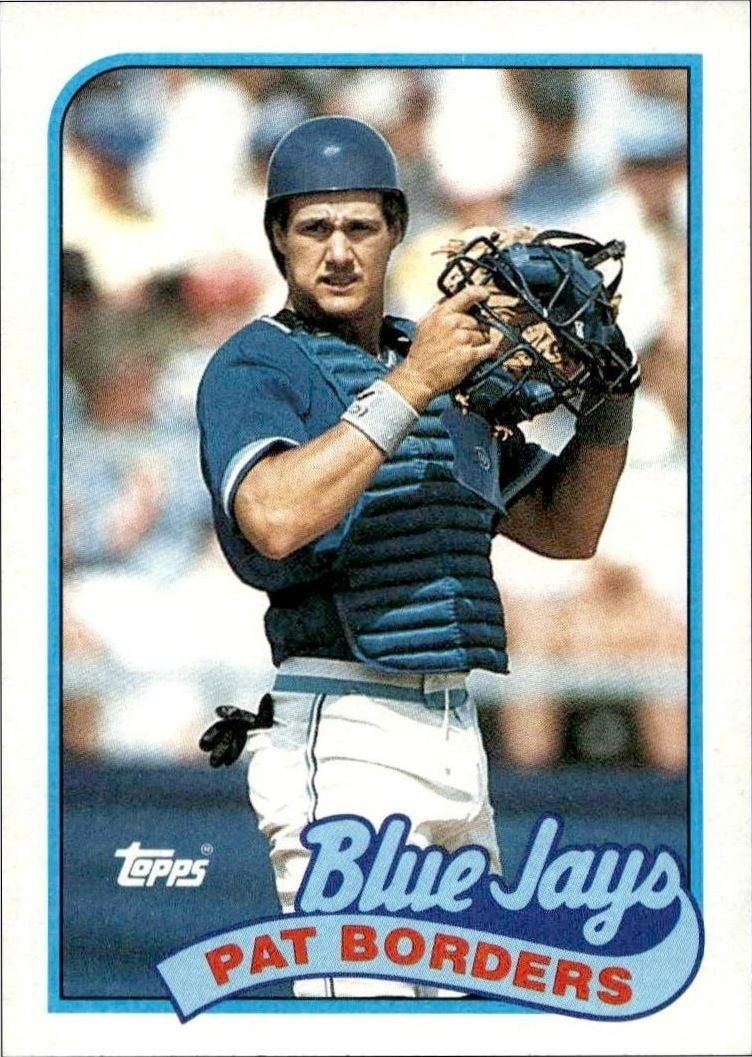

The 1990 Topps Pat Borders #191 is a vintage baseball card featuring the Toronto Blue Jays catcher. This product represents the standard release from the 1990 Topps brand.
1990 • Topps
Major League Baseball • Toronto Blue Jays
Excellent
191
New
Shipping Calculated at Checkout
Arrives in 5-7 daysEstimated delivery October 23, 2026 - October 25, 2026
Seller returns October 19, 2026.30-day Returns| Condition | Value | Source | Trend | Price Details |
|---|---|---|---|---|
$0.92 | Guide Estimate | 0% | ||
Raw / Ungraded
PriceCharting Price Guide · Guide Estimate evidence · captured Oct 16, 2026
The 1990 Topps Pat Borders #191 is a foundational piece for collectors focusing on the Toronto Blue Jays franchise or the broader 1990 Topps baseball set. As a standard issue from one of the most recognizable brands in sports card history, this card captures a specific moment in the career of Pat Borders during his tenure with the Blue Jays. The 1990 Topps product is renowned for its consistent design and widespread distribution, making it a staple for those building comprehensive collections or seeking specific team cards from the early 1990s era. Collectors often target this card to complete a set of 1990 Topps releases, where finding key players can vary in difficulty depending on print runs and distribution. Pat Borders was a significant figure for the Blue Jays during this period, and his inclusion in the base set offers a tangible connection to that team's history. The card’s catalog number, 191, places it within the sequential ordering typical of the Topps format, which aids in organization for serious hobbyists. Whether you are looking to add a vintage piece to your personal archive or seeking a specific card for a team-based collection, the 1990 Topps Pat Borders #191 represents a clear and identifiable entry in the trading card market. Its status as a standard issue ensures it remains a relevant item for those interested in the visual and historical record of 1990s baseball. The enduring popularity of the Topps brand means that cards from this year continue to hold a place in the hearts of collectors who value the era's design and the players who defined it. This card serves as a direct link to the 1990 season, offering a straightforward yet valuable addition to any sports card portfolio focused on the Toronto Blue Jays or the 1990 Topps series.
13 hours ago
We'll pre-fill the product details from this catalog entry, so your listing lands on this exact page. Just add photos of your copy, pick its condition, and set your price.
The catalog profile below summarizes the card identity, featured subject, and notable collectible traits.
The subject, team, league, and sport context tied to this card.
Production details and format-specific attributes.
Material
Card Stock
Language
English
Compare prices, grades, photos, and shipping from approved sellers.
New
Excellent
See how many public collections currently include this card.
0 collectors have this card
This 1990 Topps base card represents a low-tier entry point for Pat Borders, reflecting his role as a reserve catcher rather than a franchise cornerstone for the Toronto Blue Jays. The current valuation suggests minimal collector interest compared to premier rookies or star athletes, positioning it as an affordable bulk item. Its status as a standard base card without special parallels further limits its price ceiling relative to more desirable subset releases.
As a standard issue from the 1990 Topps set, this card carries no unique scarcity mechanics such as serial numbering, short-print status, or one-of-one designation. The supply is determined by the original mass production run of the base set, which was extensive and widely distributed. Consequently, the card lacks the supply-constrained attributes that typically drive premium valuations in the secondary market.
The prospect for appreciation is limited given the card's position within a high-volume base set and the subject's non-stellar career profile in baseball. While it holds nostalgic value for Blue Jays fans from the early 1990s, it does not possess the rookie-card premium or specialized parallel attributes that attract serious investment capital. Collectors are more likely to acquire this for completion purposes rather than as a standalone financial asset.