










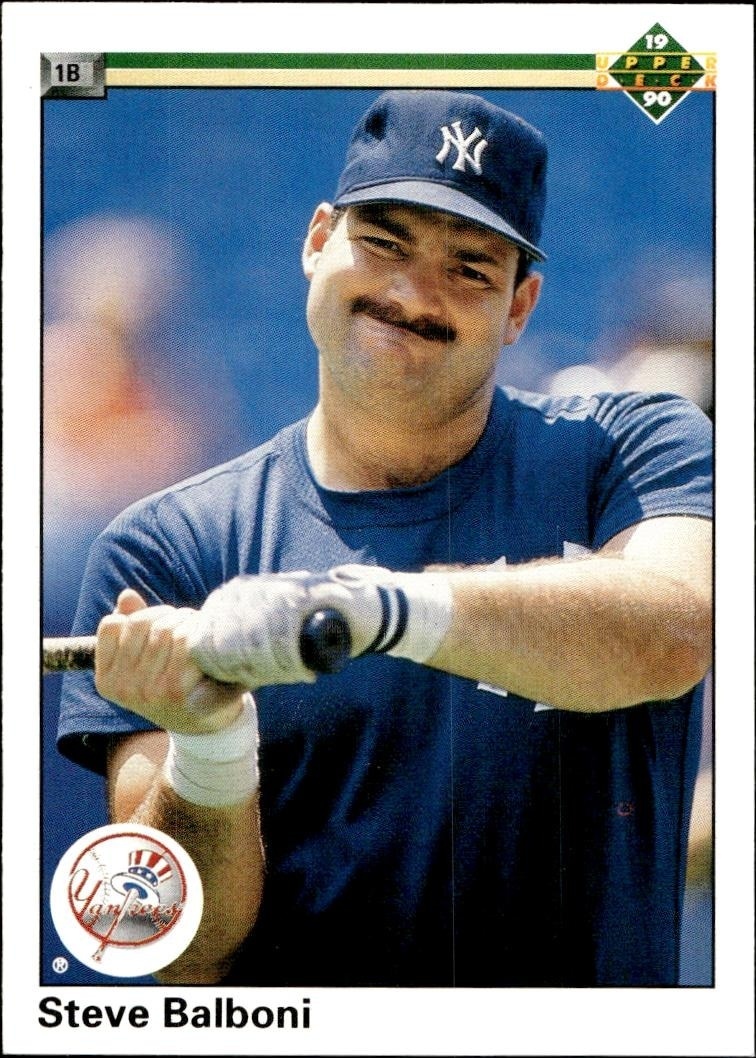

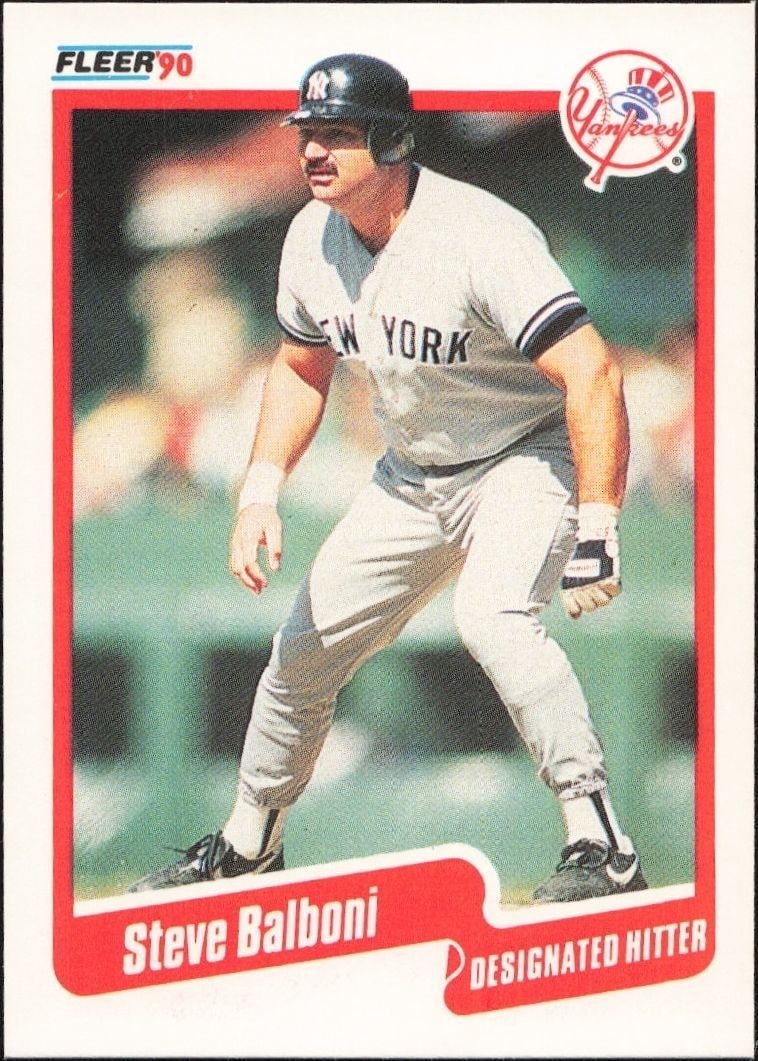


The 1990 Topps #716 card featuring Steve Balboni of the New York Yankees is a staple of 1990s baseball card collecting.
1990 • Topps
Major League Baseball • New York Yankees
Excellent
716
New
Shipping Calculated at Checkout
Arrives in 5-7 daysEstimated delivery October 23, 2026 - October 25, 2026
Seller returns October 19, 2026.30-day Returns| Condition | Value | Source | Trend | Price Details |
|---|---|---|---|---|
$1.54 | Guide Estimate | +4.1% | ||
$12.75 | Guide Estimate | -15.7% | ||
$32.97 | Guide Estimate | 0% | ||
$38.46 | Guide Estimate | +1.6% | ||
$128.00 | Guide Estimate | +2.4% | ||
$59.00 | Guide Estimate | +1.7% | ||
$98.56 | Guide Estimate | +2.3% | ||
$59.00 | Guide Estimate | +1.7% | ||
Raw / Ungraded
PriceCharting Price Guide · Guide Estimate evidence · captured Oct 16, 2026
The 1990 Topps #716 card featuring Steve Balboni of the New York Yankees represents a specific moment in baseball history for collectors of vintage sports memorabilia. The card identifies Balboni in his Yankees uniform, serving as a tangible piece of MLB history for enthusiasts who track player rosters from this period. Collectors often seek out this card number to complete base sets or to build collections focused on New York Yankees history. The 1990 Topps brand remains one of the most significant names in the industry, known for its consistent annual releases that capture the league's landscape each year. For investors and hobbyists, the 1990 Topps Steve Balboni #716 card offers a straightforward entry point into vintage baseball collecting, requiring no special authentication beyond standard grading for preservation. The appeal of this product lies in its accessibility and historical context. While Balboni’s career spanned multiple teams, this card specifically documents his tenure with the Yankees, making it a targeted collectible for franchise-specific fans. The straightforward design of the 1990 Topps set allows the subject to stand out, providing a clean aesthetic that appeals to those who prefer classic card layouts. Whether you are adding to a long-term collection or looking for a gift for a baseball historian, this card holds its place in the broader narrative of 1990s sports card culture. The enduring popularity of 1990s baseball cards ensures that items like the 1990 Topps Steve Balboni #716 card remain relevant in the secondary market.
11 hours ago
We'll pre-fill the product details from this catalog entry, so your listing lands on this exact page. Just add photos of your copy, pick its condition, and set your price.
The catalog profile below summarizes the card identity, featured subject, and notable collectible traits.
The subject, team, league, and sport context tied to this card.
Production details and format-specific attributes.
Material
Card Stock
Language
English
Compare prices, grades, photos, and shipping from approved sellers.
New
Excellent
See how many public collections currently include this card.
0 collectors have this card
As a 1990 Topps card of Steve Balboni, this item sits in the lower tier of the broader Yankees collection, reflecting its status as a common base card from a mature set. While it lacks the condition premiums associated with graded examples or key rookies, it maintains a stable presence for collectors targeting specific team subsets. The current pricing reflects its accessibility rather than scarcity, appealing to budget-conscious completists.
This card is a standard base issue with no special attributes such as serial numbering, short-print designations, or parallel variants noted. Its supply is determined entirely by the original print run of the 1990 Topps baseball set, making it widely available in the secondary market. Consequently, the scarcity mechanic is neutral, offering no inherent value boost through limited edition features.
Investment potential is limited due to the absence of rookie card status or significant career milestones highlighted in this specific base set release. Demand is likely driven primarily by nostalgia for the early 1990s Yankees era rather than speculative growth. Collectors should view this as a low-cost acquisition for set completion rather than a vehicle for capital appreciation.
