



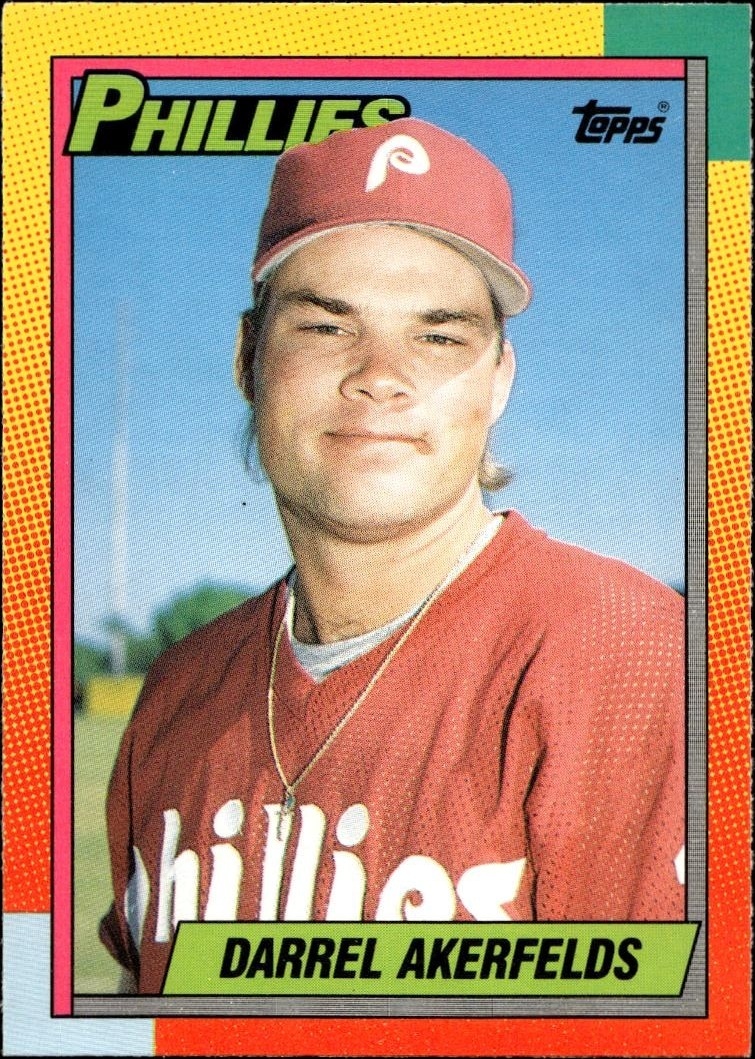
Explore the 1991 Fleer Darrel Akerfelds #386 baseball card, a staple of the classic Fleer baseball set from the early 1990s.
1991 • Fleer
Major League Baseball • Philadelphia Phillies
Near Mint
386
New
Shipping Calculated at Checkout
30-day Returns| Condition | Value | Source | Trend | Price Details |
|---|---|---|---|---|
$1.54As of 9/30/2026 | Asking Prices | |||
Raw / Ungraded
eBay Active Listings · Asking Prices evidence · captured Sep 30, 2026
History is building. At least two days of matching observations are needed to show a trend.
Each point is the last stored observation that day for this printing, condition, grader, autograph status and source. Gaps mean no observation; guide estimates and asking prices are not completed sales.Darrel Akerfelds is featured on card number 386 in the 1991 Fleer baseball series, representing his tenure with the Philadelphia Phillies. This release is part of the iconic 1991 Fleer set, widely recognized by collectors for its distinctive design and glossy finish that defined sports card aesthetics in the early 1990s. As a foundational product in the hobby, Fleer cards from this era remain highly sought after for their nostalgic value and historical significance in the evolution of trading card design. Collectors often target this card when working to complete the base set, making it a relevant addition for enthusiasts of vintage baseball memorabilia. The card captures Akerfelds in his Phillies uniform, serving as a tangible link to the team's history during that period. Whether you are building a comprehensive collection of 1990s baseball cards or focusing on specific teams, understanding the context of this release helps in appreciating its place in the hobby. For investors and long-term holders, cards from this period represent a stable segment of the vintage market, driven by consistent demand from older collectors and new hobbyists alike. By focusing on the identity of the player and the brand, collectors can better evaluate the historical importance of each card in the broader narrative of sports card collecting.
1 hour ago
We'll pre-fill the product details from this catalog entry, so your listing lands on this exact page. Just add photos of your copy, pick its condition, and set your price.
The catalog profile below summarizes the card identity, featured subject, and notable collectible traits.
The subject, team, league, and sport context tied to this card.
Production details and format-specific attributes.
Material
Card Stock
Language
English
Compare prices, grades, photos, and shipping from approved sellers.
New
Near Mint
See how many public collections currently include this card.
0 collectors have this card
This 1991 Fleer base card of Darrel Akerfelds occupies the entry-level price tier within his overall portfolio, reflecting its status as a common issue from a mid-era set. The current valuation is consistent with bulk-grade examples of mainstream players from this era who lack significant rookie or star status. It trades at a modest level relative to more sought-after parallels or rookie cards in the Fleer lineup, serving primarily as a filler piece for complete set builders rather than a standalone investment asset.
The card carries no special scarcity attributes, indicating it is a standard base card from the 1991 Fleer baseball set. As a non-parallel, non-serial numbered item, its supply is defined by the original mass production run typical of major brands during this period. This lack of limiting factors means the card is widely available in the secondary market, keeping its rarity profile low compared to short-printed or specially marked variants from the same set.
As a non-rookie base card from a standard set, this item lacks the premium mechanics that typically drive significant appreciation in the baseball market. Collector demand is likely limited to those completing specific year-and-manufacturer sets, resulting in stable but low-growth potential. Without unique attributes or rookie status, the card serves better as a cost-effective component for collection completion rather than a vehicle for capital appreciation.