






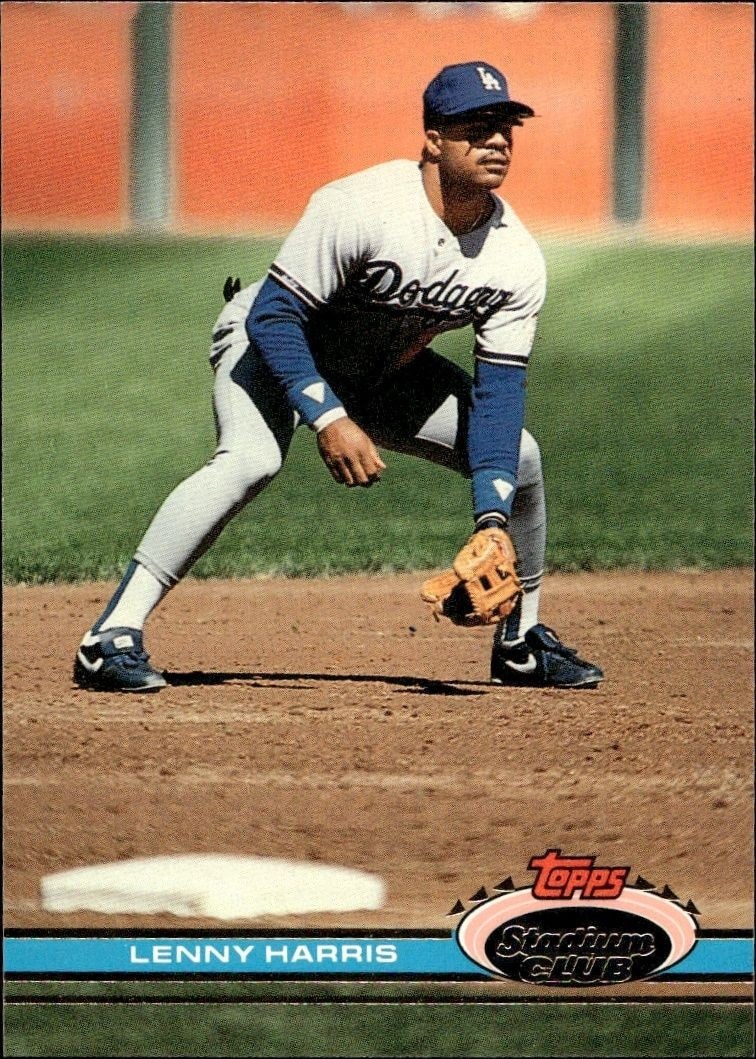
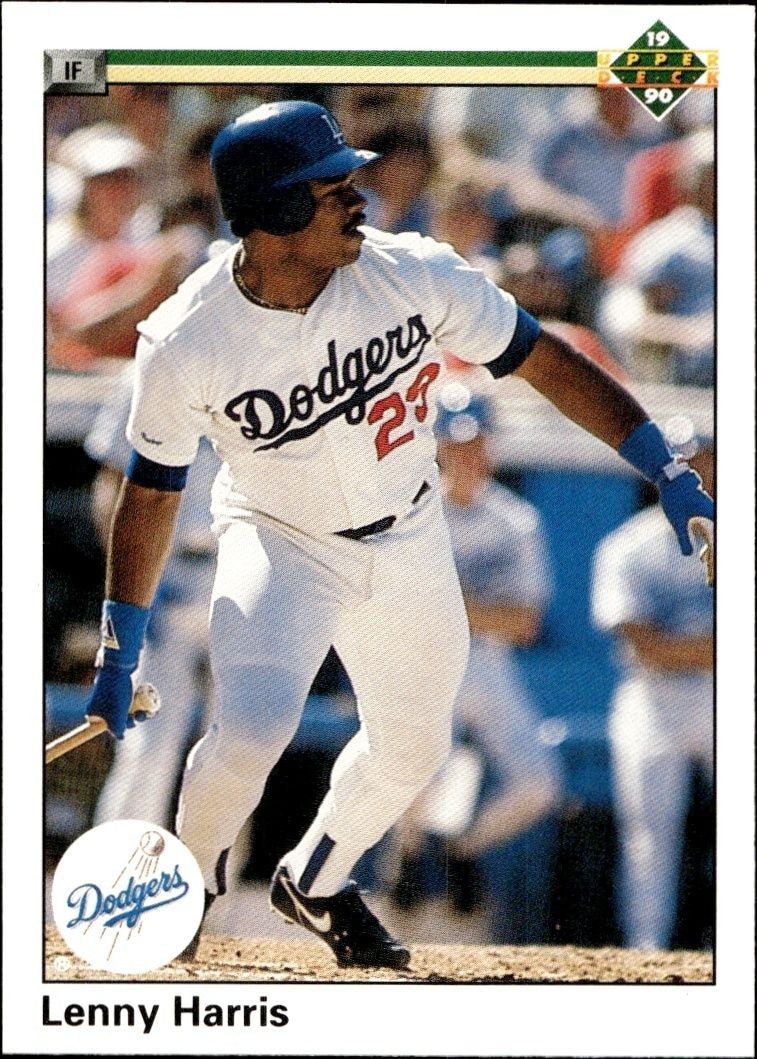
The 1991 Topps Lenny Harris #453 Los Angeles Dodgers sports card captures a key roster member during the franchise's successful early 90s era.
1991 • Topps
Major League Baseball • Los Angeles Dodgers
Excellent
453
New
Shipping Calculated at Checkout
Arrives in 5-7 daysEstimated delivery October 23, 2026 - October 25, 2026
Seller returns October 19, 2026.30-day Returns| Condition | Value | Source | Trend | Price Details |
|---|---|---|---|---|
$1.17As of 9/21/2026 | Guide Estimate | |||
$39.00As of 9/21/2026 | Guide Estimate | |||
$18.00As of 9/21/2026 | Guide Estimate | |||
$29.82As of 9/21/2026 | Guide Estimate | |||
$18.00As of 9/21/2026 | Guide Estimate | |||
Raw / Ungraded
PriceCharting Price Guide · Guide Estimate evidence · captured Sep 21, 2026
History is building. At least two days of matching observations are needed to show a trend.
Each point is the last stored observation that day for this printing, condition, grader, autograph status and source. Gaps mean no observation; guide estimates and asking prices are not completed sales.The 1991 Topps Lenny Harris #453 Los Angeles Dodgers sports card represents a specific snapshot of Major League Baseball during a vibrant period for the franchise. As a standard issue from the flagship Topps annual release, this card features Lenny Harris in his Dodgers uniform, reflecting his role as a versatile utility player on the team's roster. Collectors often seek out this card number to complete base set collections, as it documents a roster spot that changed frequently during the decade. Lenny Harris established himself as a reliable presence in the National League, known for his defensive versatility and ability to fill multiple infield and outfield positions. For investors and historians of the sport, this card serves as a tangible record of his career trajectory with the Los Angeles Dodgers. For hobbyists building a collection of vintage baseball cards, this product offers an accessible entry point into early 1990s MLB history. The card's catalog number, 453, places it within the middle segment of the base set, a range often targeted by dedicated set builders looking for completeness. Whether you are focusing on Los Angeles Dodgers memorabilia or broader National League history, this card provides a concrete link to Harris's time in the league. This product appeals to those who appreciate the tangible nature of sports trading cards as historical artifacts. The combination of the Topps brand, the specific year, and the player's team affiliation makes it a distinct item for cataloging. It stands as a reminder of the depth of talent within the Dodgers organization during a competitive era of MLB.
1 day ago
We'll pre-fill the product details from this catalog entry, so your listing lands on this exact page. Just add photos of your copy, pick its condition, and set your price.
The catalog profile below summarizes the card identity, featured subject, and notable collectible traits.
The subject, team, league, and sport context tied to this card.
Production details and format-specific attributes.
Material
Card Stock
Language
English
Compare prices, grades, photos, and shipping from approved sellers.
New
Excellent
See how many public collections currently include this card.
0 collectors have this card
This 1991 Topps base card of Lenny Harris represents an accessible entry point for Dodgers collectors, trading at a modest tier relative to major stars in the same era. Its value is driven by nostalgic appeal rather than premium condition scarcity, as it lacks the grading premiums associated with higher-tier issues. The card reflects the standard market behavior for non-star position players from this specific print run.
As a standard base card with no noted special attributes, this item does not benefit from serial numbering, short-print designations, or parallel variations that typically constrain supply. The unaltered nature of the card means its availability is determined solely by the original print run's scale, resulting in a high population of ungraded examples. Consequently, rarity is not a value driver here, distinguishing it from its more scarce counterparts in the 1991 Topps set.
Investment potential is limited by the card's status as a common base issue, which lacks the rookie-card premium mechanics often sought by serious investors. Collector demand is likely sustained only by general Dodgers memorabilia interest rather than speculative growth. Long-term value retention depends on broader market trends for 1990s baseball rather than specific attributes of this individual card.